DK Custom Products Freewheeler Rear Suspension Kit

As noted in a previous post, I was disabled in a work accident in 2004. After numerous attempts to stay on two wheels or somehow trike my faithful old shovelhead, I finally broke down and bought a 2016 FLRT Freewheeler, which I’ve named The Box Turtle.

If you’ve never ridden a trike, let me warn you up front that they are very different from a two-wheeled (solo) ride. For starters, Harley trikes have no lean, which means you’re fighting centrifugal force in turns. It’s disconcerting, at best, to feel that the machine you’re on is about to tip over on you…. and, for the record and contrary to popular belief, trikes can tip over if not handled correctly! I use my upper body as a counterweight in hard turns, and closely monitor my throttle input, and (knock wood) seem to get along.

Then there’s the steering, the exact opposite of a solo ride. We’re taught to countersteer on a two-wheeler, e.g.: to push out on the right handgrip in order to lean into a righthand curve. Do that on a trike and you will find yourself going left, and fast! It’s the same with sidecar rigs, too. That trick can be pretty distracting (and/or terrifying) until you get used to it! 😱

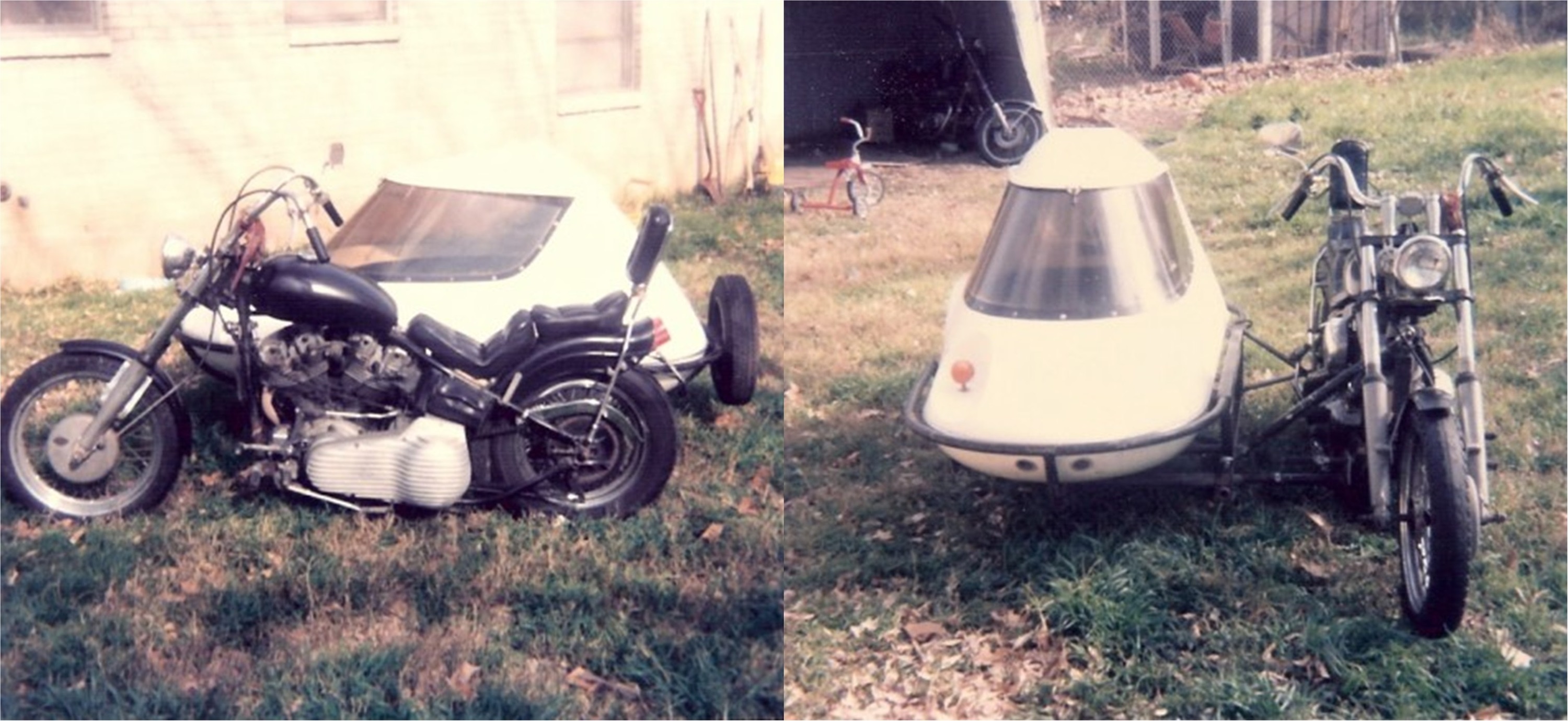
My prior experience with three-wheeled machines was limited to test-riding the shovel-powered trike we built for a wheelchair rider in the early ’80s….
….and the sidecar rig I assembled in the mid-’80s.

Knowing this, I approached my trike as if I’d never ridden before, taking slow putts around the neighborhood, and going to the church parking lot at the top of the hill to get more familiar with turning and response. I took my time, and gradually built up to where I could take short errands. Then I graduated to rides on the rural roads around Central Texas, building speed and confidence in my machine and my abilities.
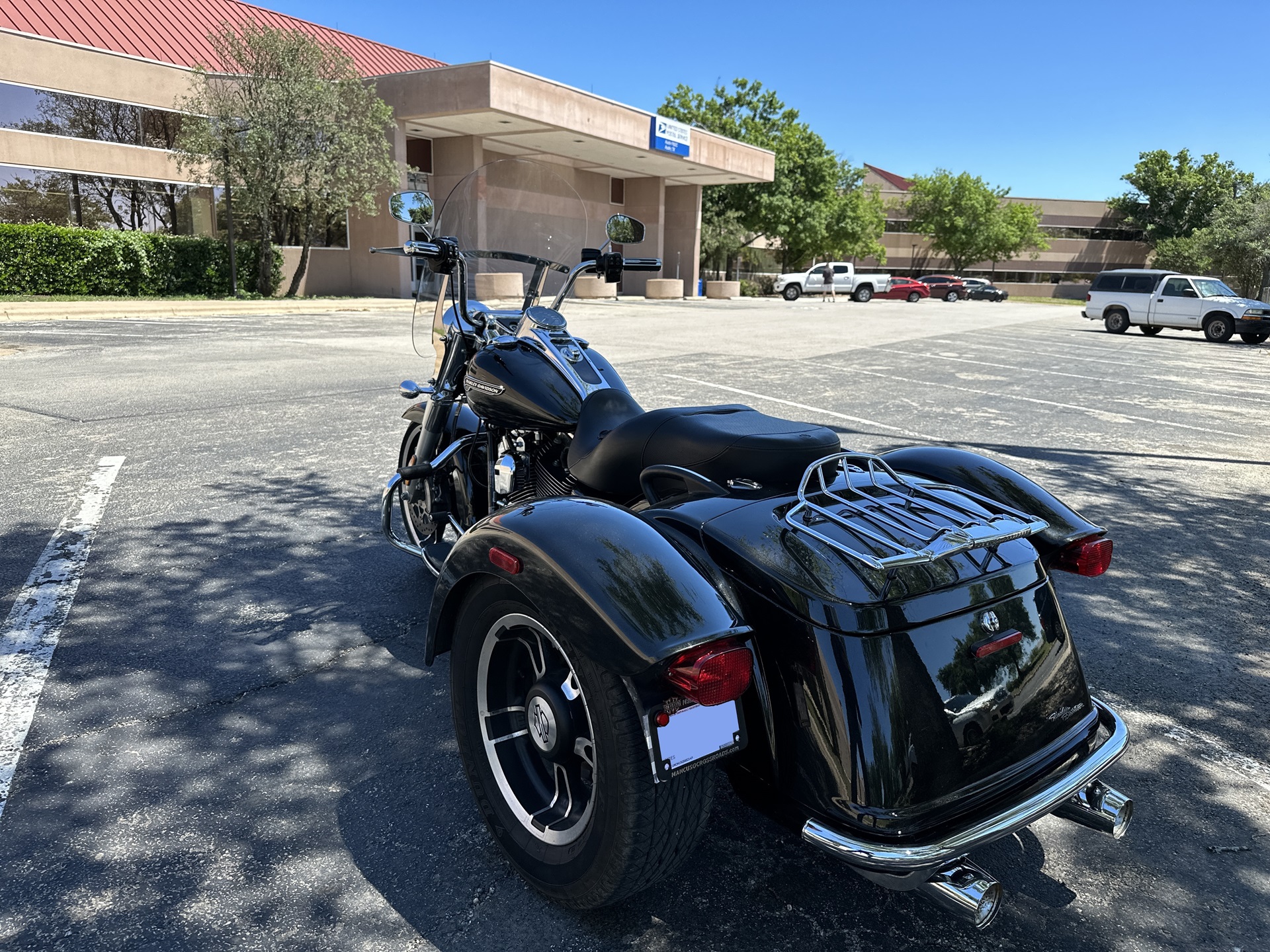
My first ‘big’ ride on The Box Turtle was a run to the Post Office.

Now? Now I take it out in the Hill Country, on routes like the Twisted Sisters, and ride it like a damn canyon carver. 😎
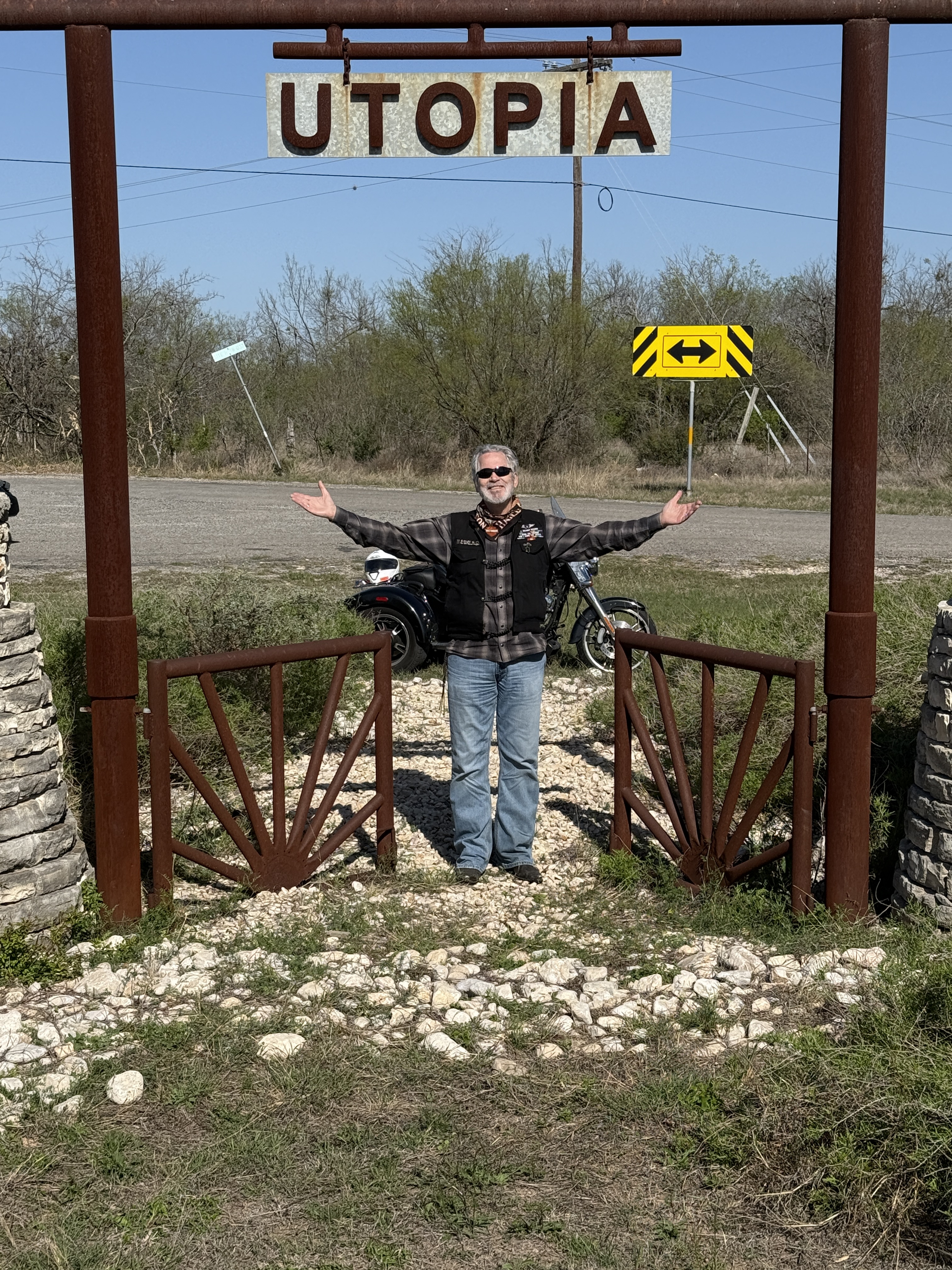
Utopia, Texas!

Once I was familiar with the machine, I began adapting it to my disabilities.
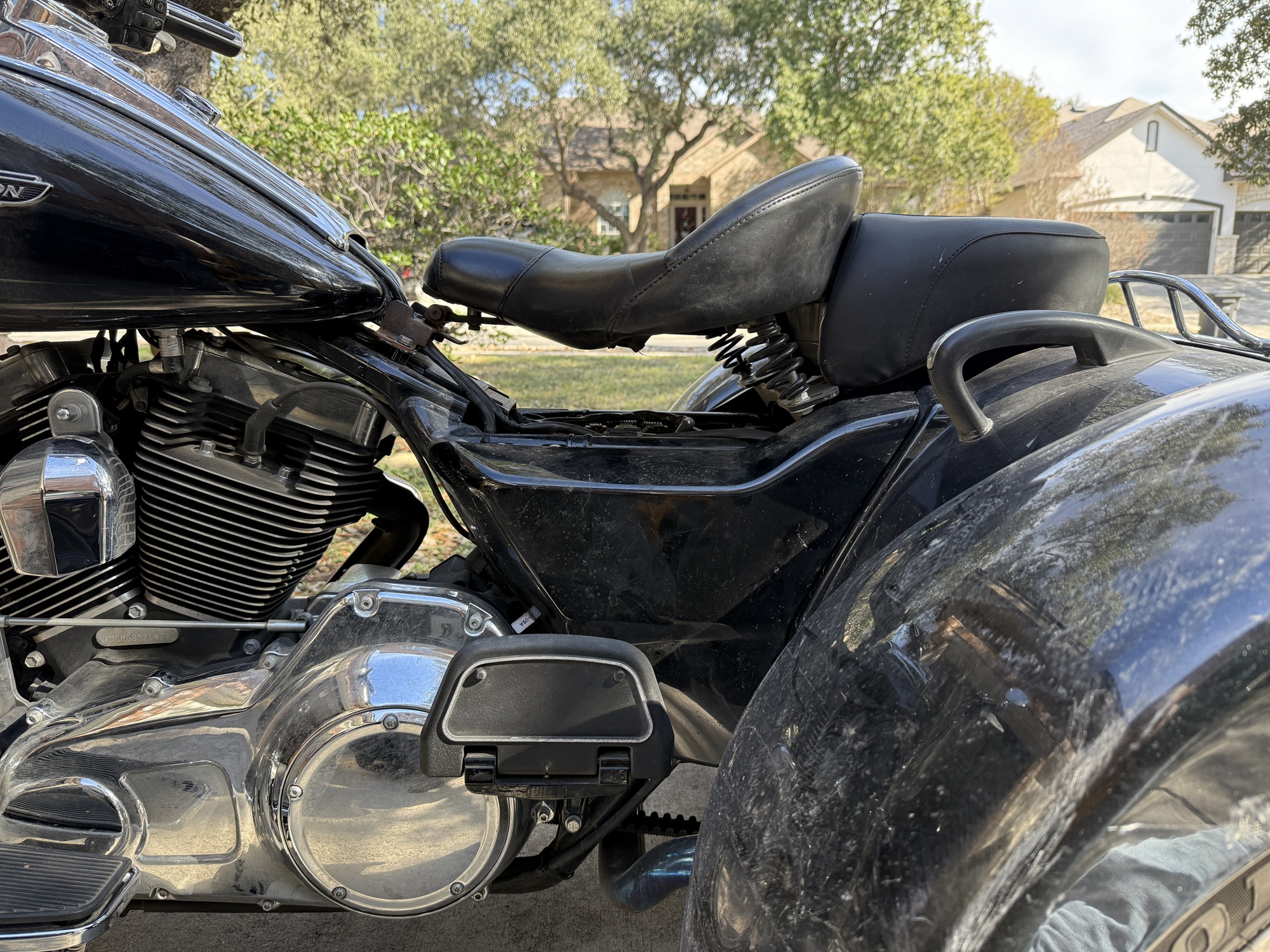
I started with the FXRP cop saddle I’d souvenired off my late great FXRS. I had a welder fashion a mount for the nose, and used the OEM springs and brackets for the rear. Then I had Bob Lee PeΓ±a over at Texas Steelhorse Saddles build me a pillion pad. I highly recommend Bob and Steelhorse, BTW. That pad fits and looks like a factory item!

I also played with the controls, including removing the heel shifter and adjusting the handlebars. The trike came with a windshield (essential so I’m not fighting the wind with my messed-up back muscles) so I was spared any expense there. I still need taller bars, to compensate for the raised saddle height, but otherwise the trike was set up just the way I needed it, except that….

….the rear suspension liked to beat me half to death on anything other than the smoothest pavement. I rode rigid for decades, so it’s not as if I’m unaccustomed to ‘road sense’ but this was worse than any rigid I ever rode, and there didn’t seem to be any way to adjust for it. The stock shock absorbers allegedly had some adjustment in them, but you couldn’t prove it by me!

I found a trike forum and searched a bit, and finally asked for recommendations for replacement shocks. A bunch of folks chimed in, and DK Custom Products seemed to be the favorite. I went to their website and followed the prompts – model, ride preference, rider weight, luggage weight, two-up or solo – and, just to be sure, called customer service.

Then I ordered accordingly: 13″ shocks and a lift kit. It wasn’t cheap, but much less than kits from other outfits like Progressive and Legends.

Installation:
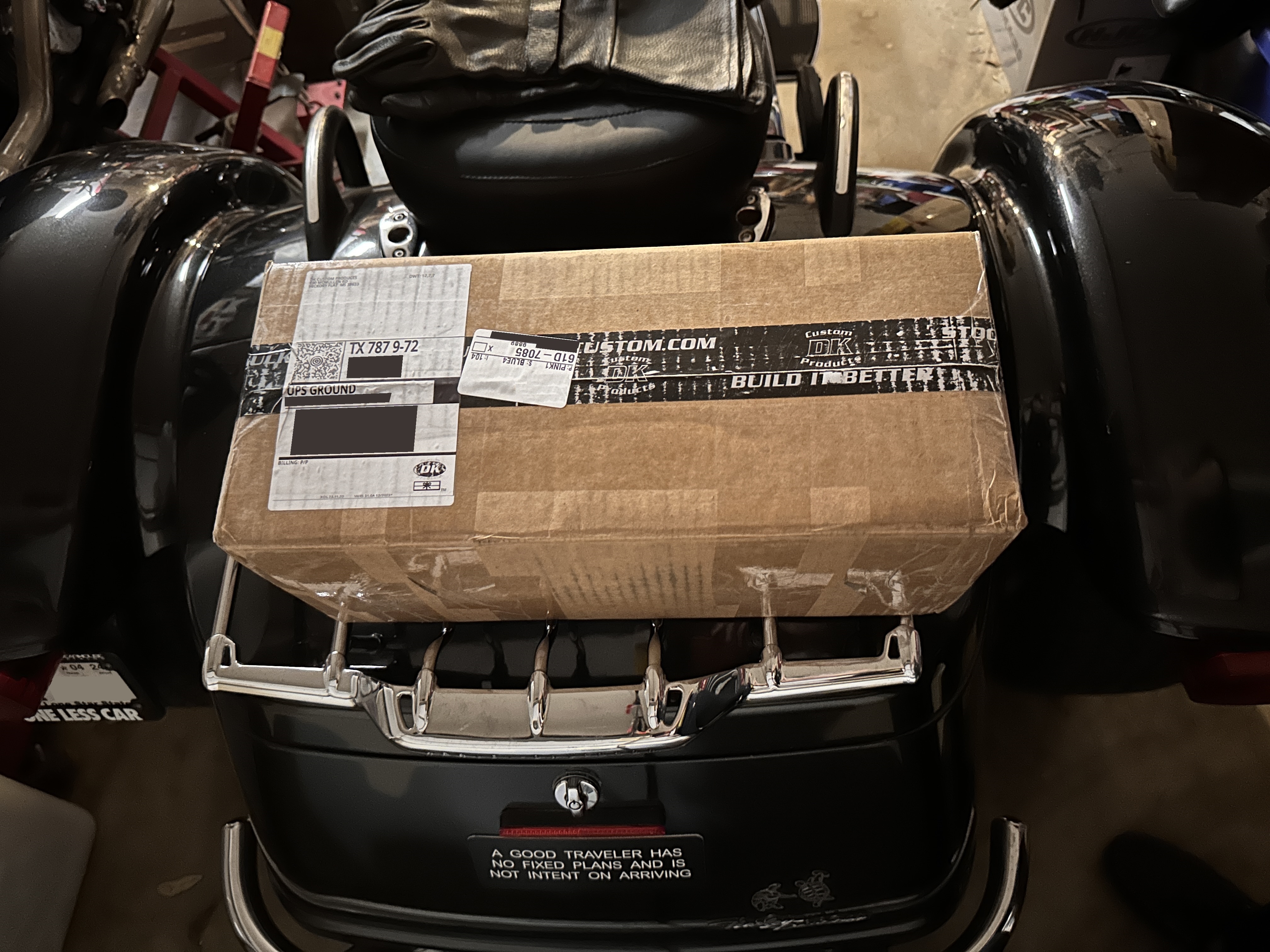
Two days door-to-door!

For starters, DL’s shipping was fast; the kit was on my doorstep within two days. And the stuff looked well made, too. The instructions seemed clear, and I had all the tools and experience, so I dug in.
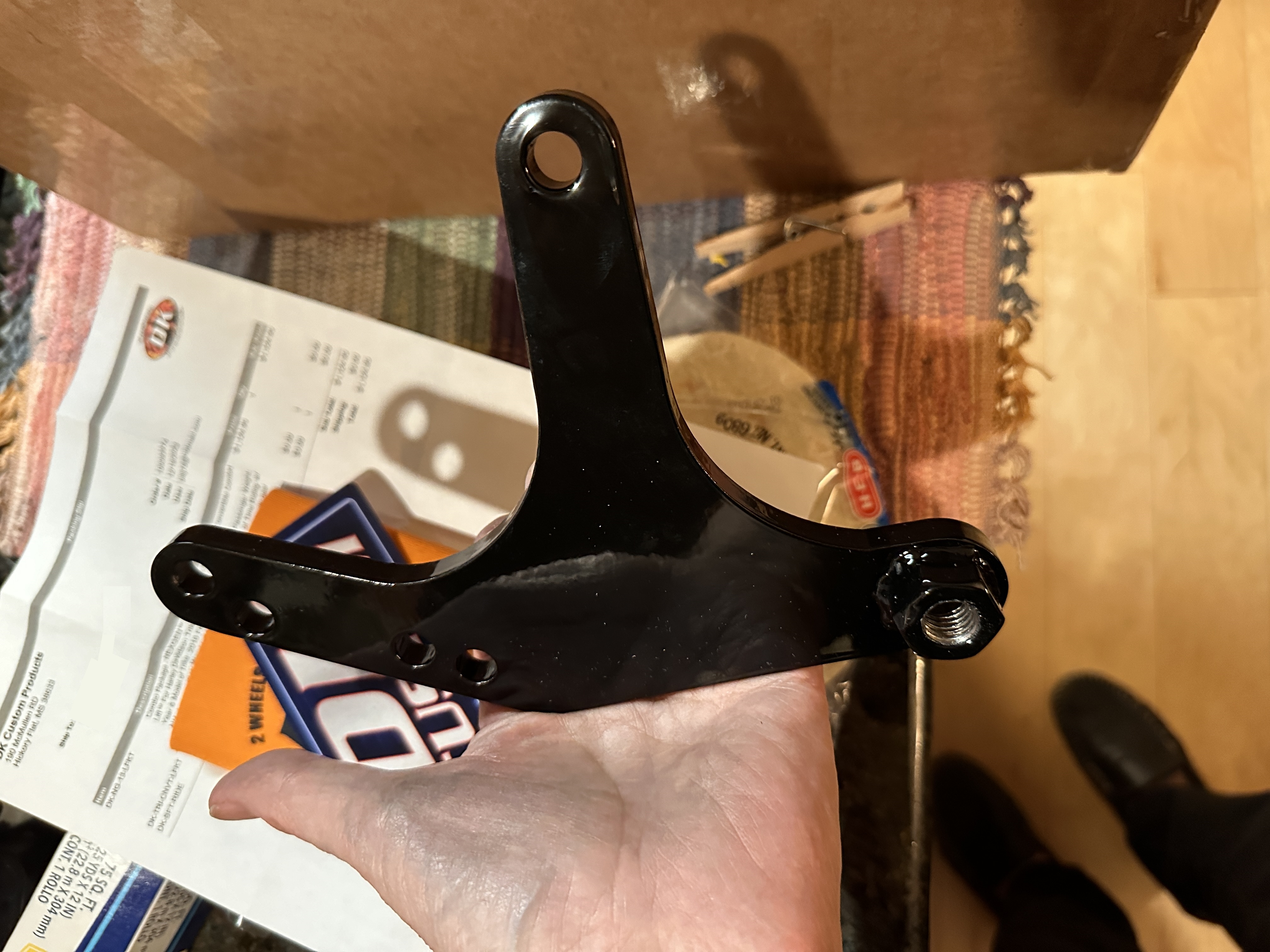
The lift kit brackets.
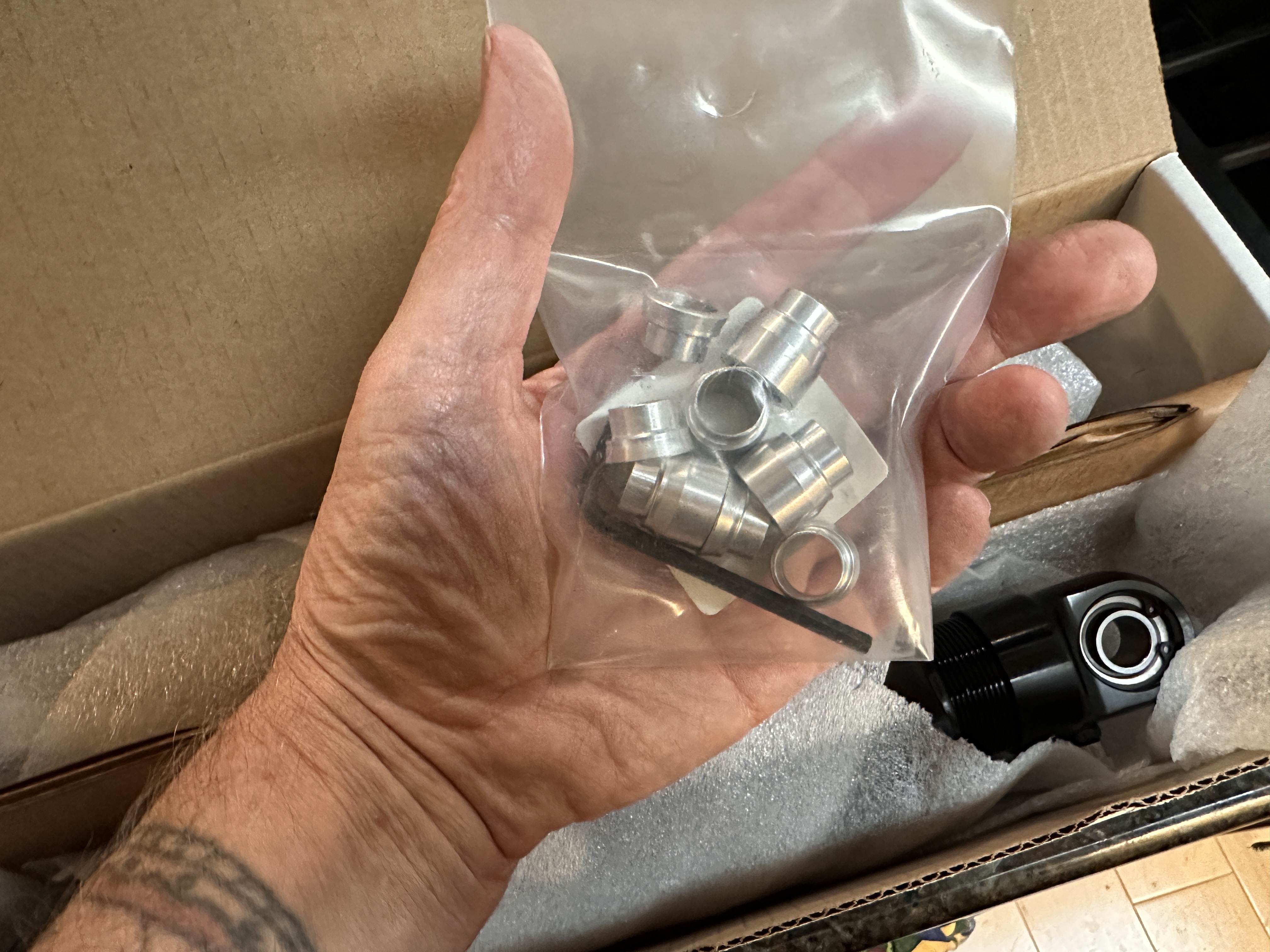
Bushings and Allen wrench.
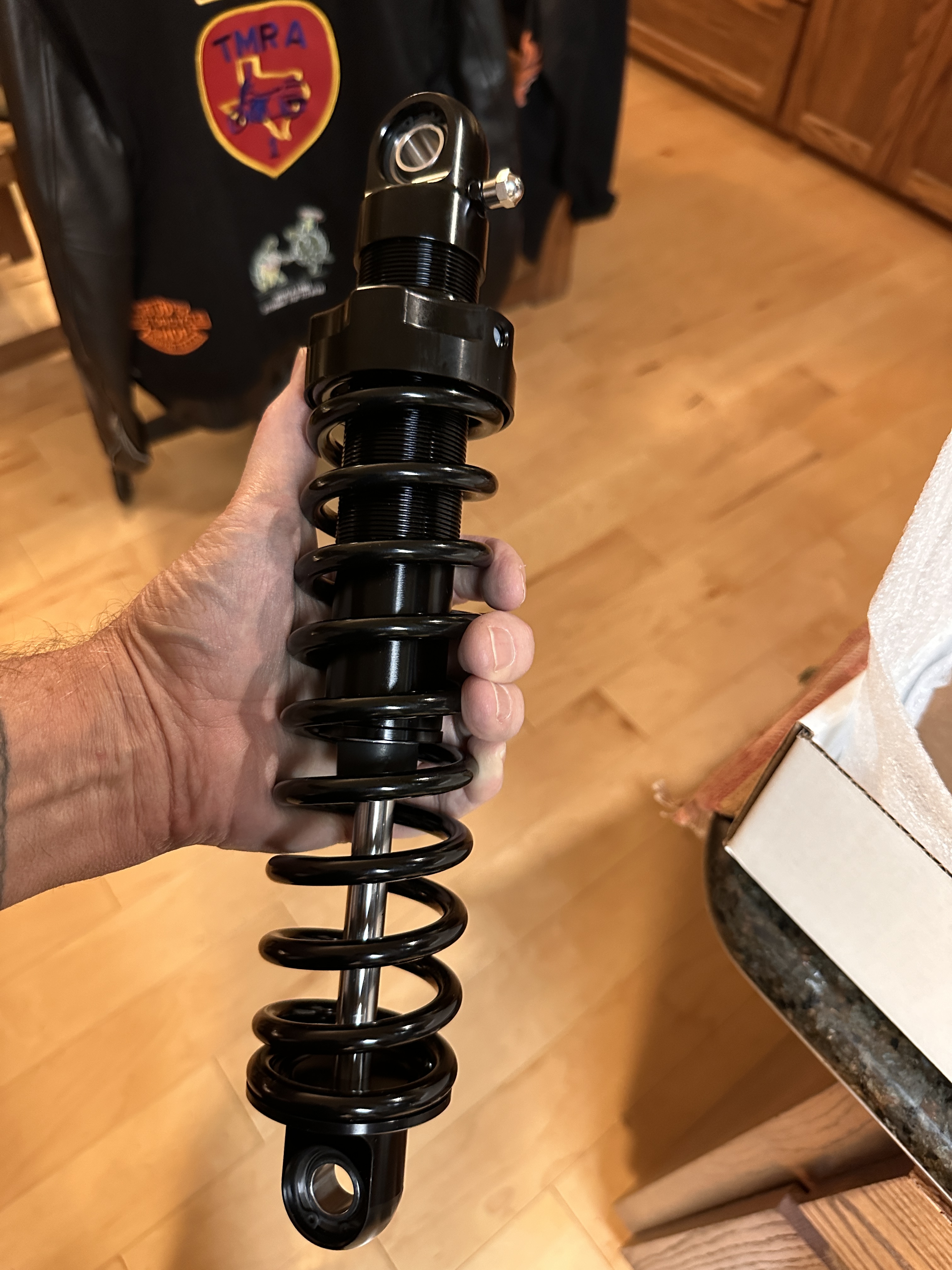
Pretty! Shiny! Space Age looking!

DK would have me believe I can R&R the shocks without removing the taco box from the trike. Maybe so, but I didn’t see it, so I removed the taco box first. No big thing: a handful of bolts and an electrical connector, and someone to help me wrestle the weighty, awkward sumbitch off the frame. Done and dusted!
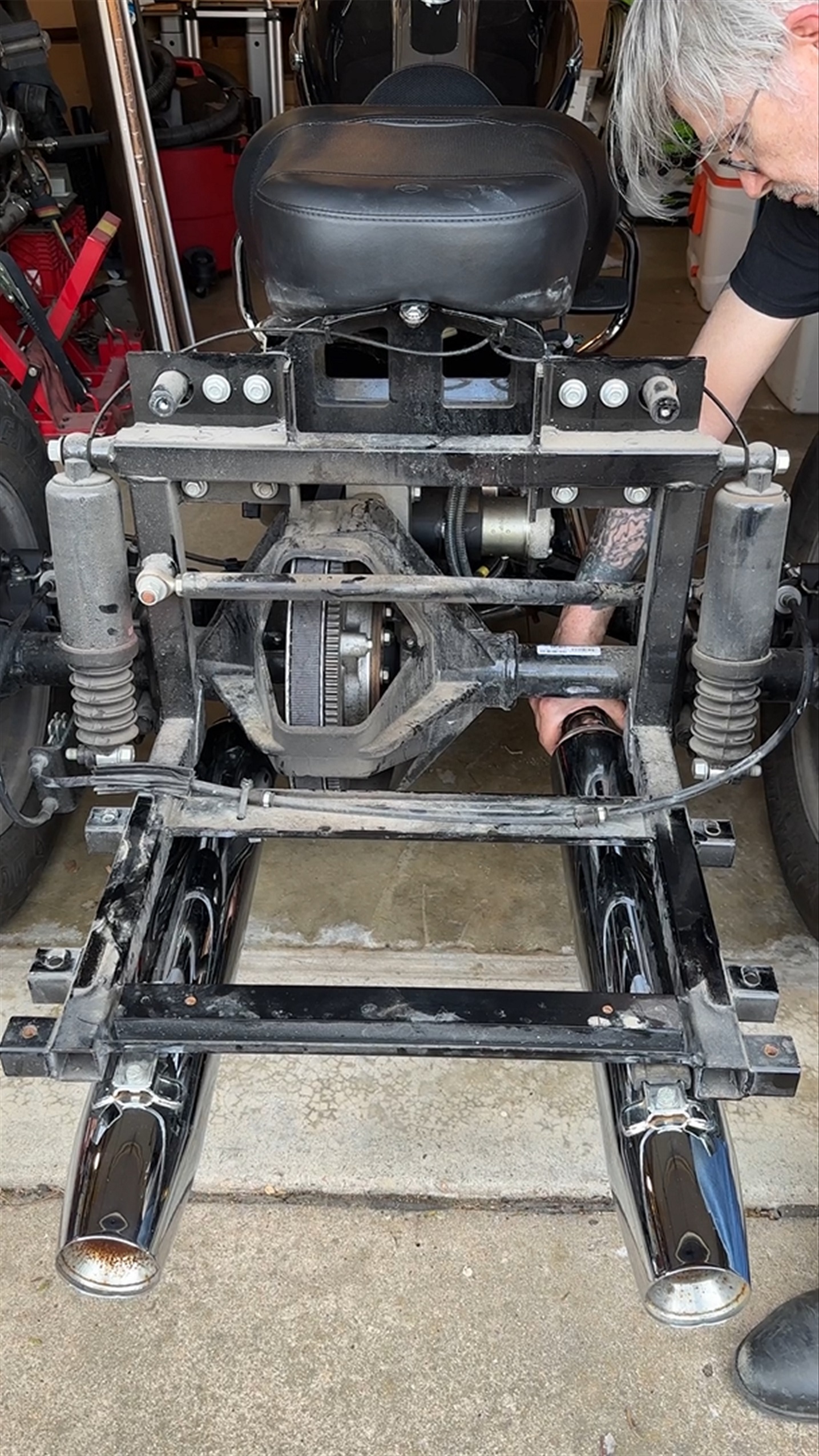
The FLRT sans bodywork, with useless OEM air shocks still in place.

Had to jack the rear wheels off the ground and stabilize the rig, because the rear wheels are coming off.
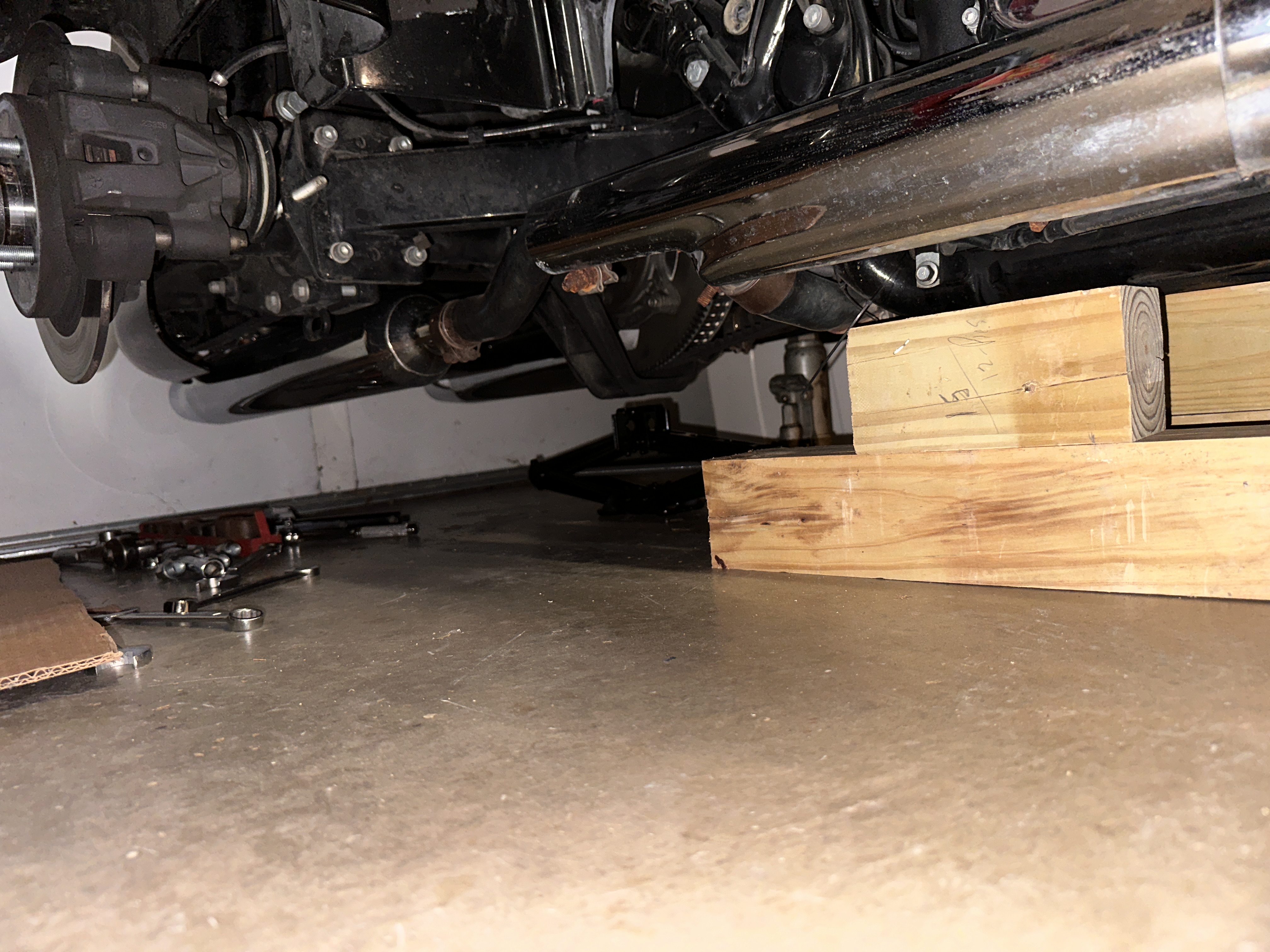
You have to be careful where you place the jack and bracing. Consult your owner’s manual. I did!

Once the rear wheels are removed, the job is almost straight-up R&R, except that I’m adding the lift kit.
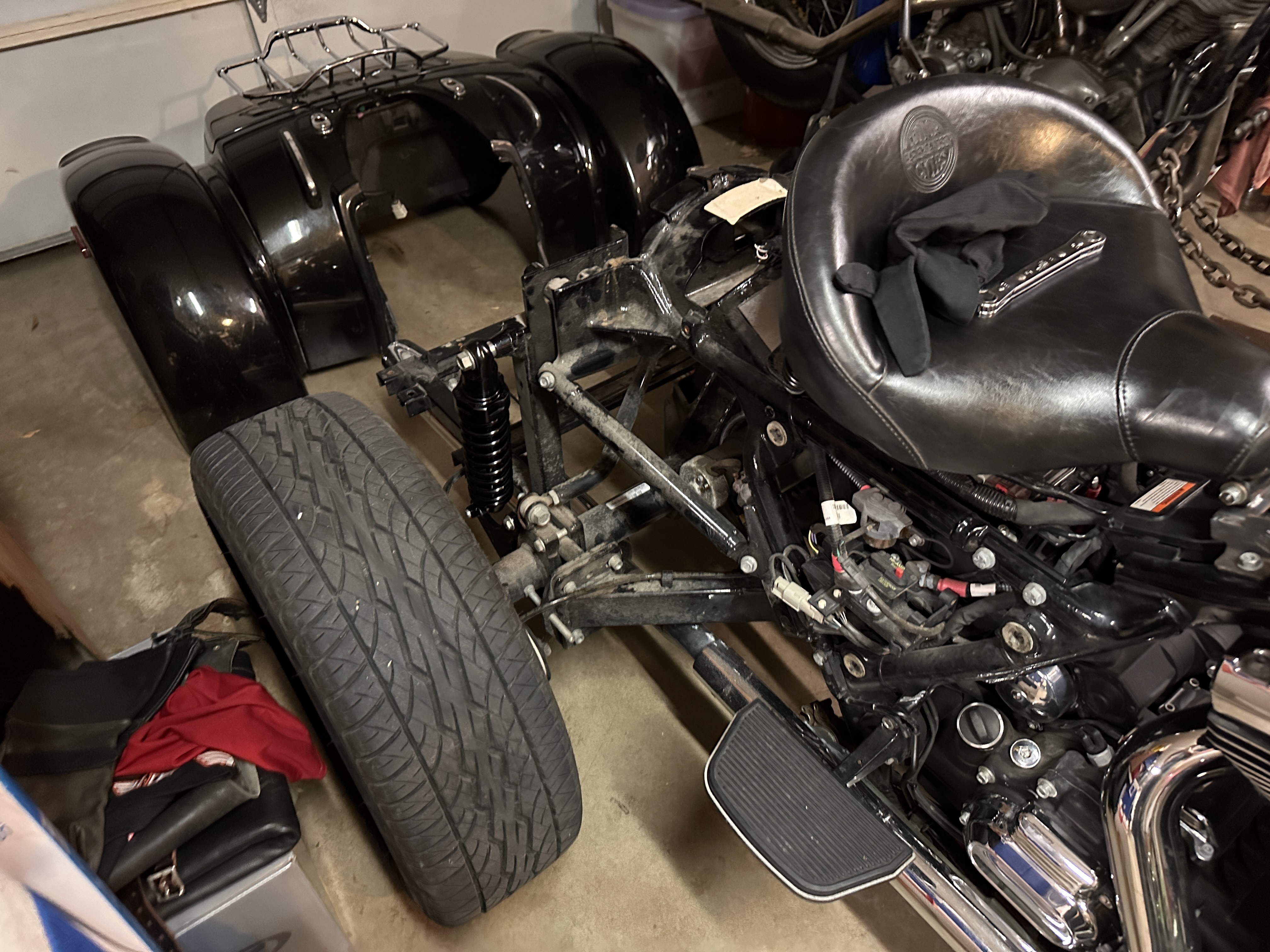
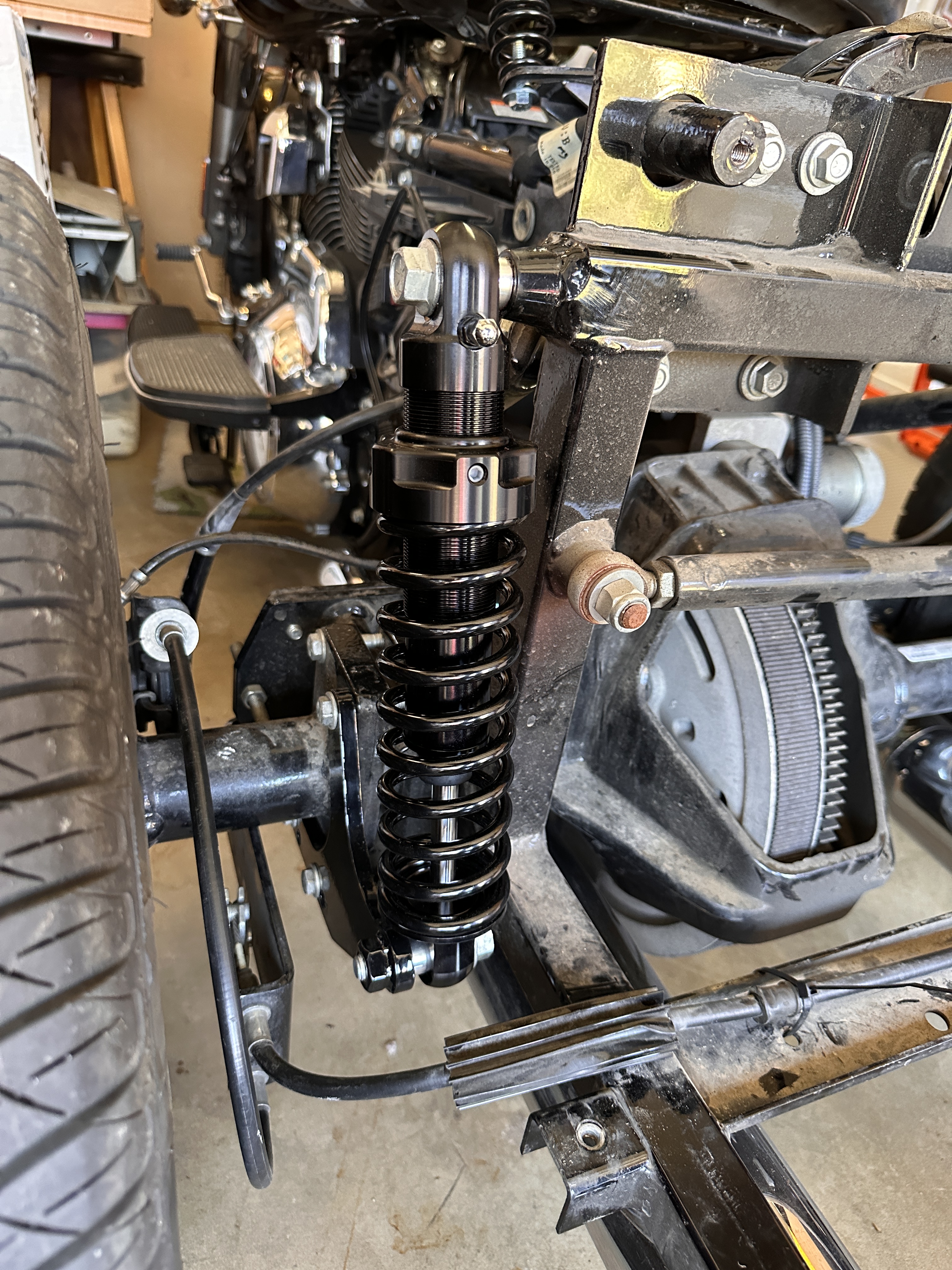
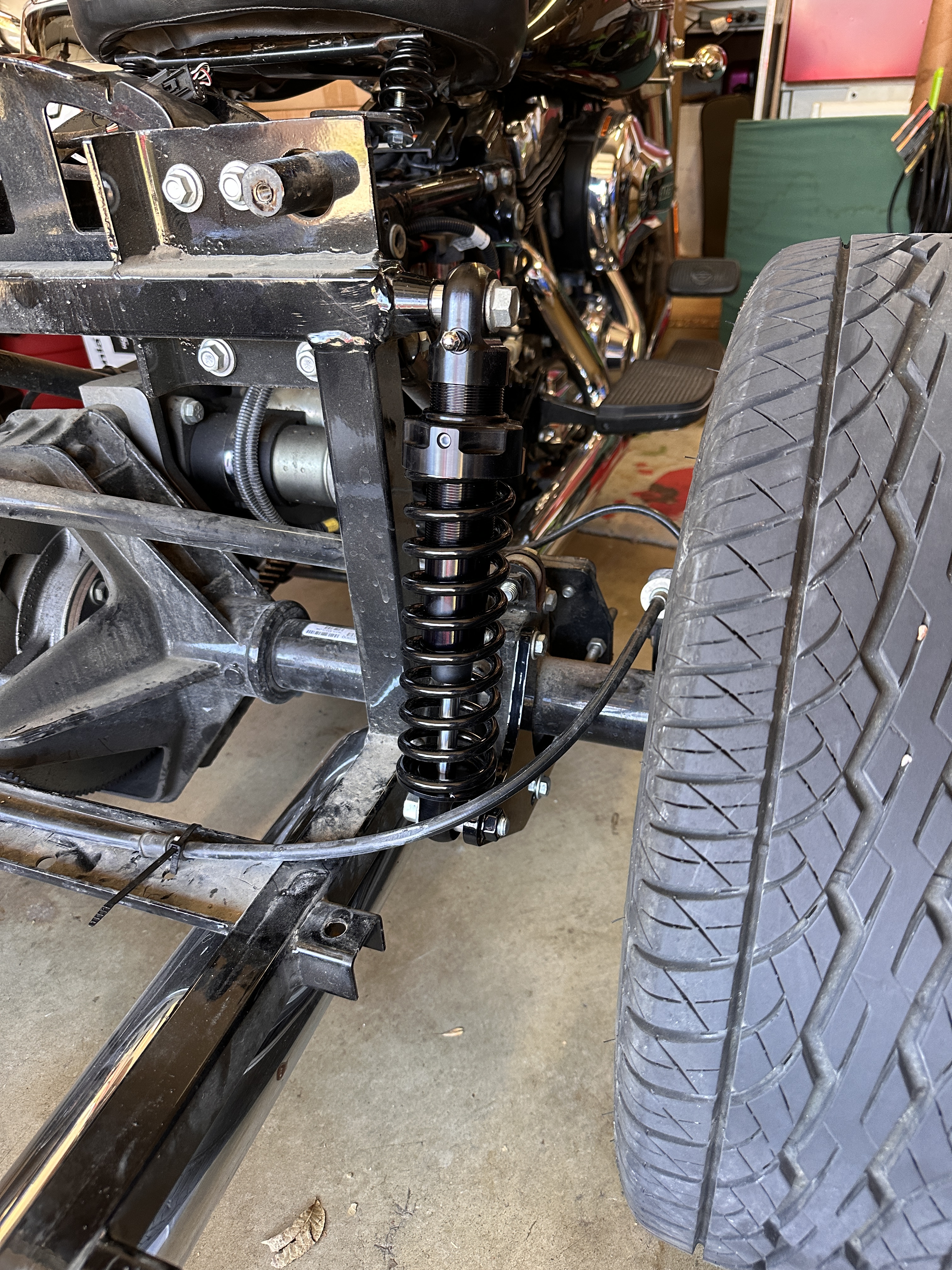
You can see the lift kit plate attached to the bottom shock mount. Note that the taco box comes off as a unit.
New shock and lift kit, left side.
New shock and lift kit, right side.

I got everything bolted up and jerry-rigged a taillight and took the trike for a ride, and…. no improvement whatsoever. 😳
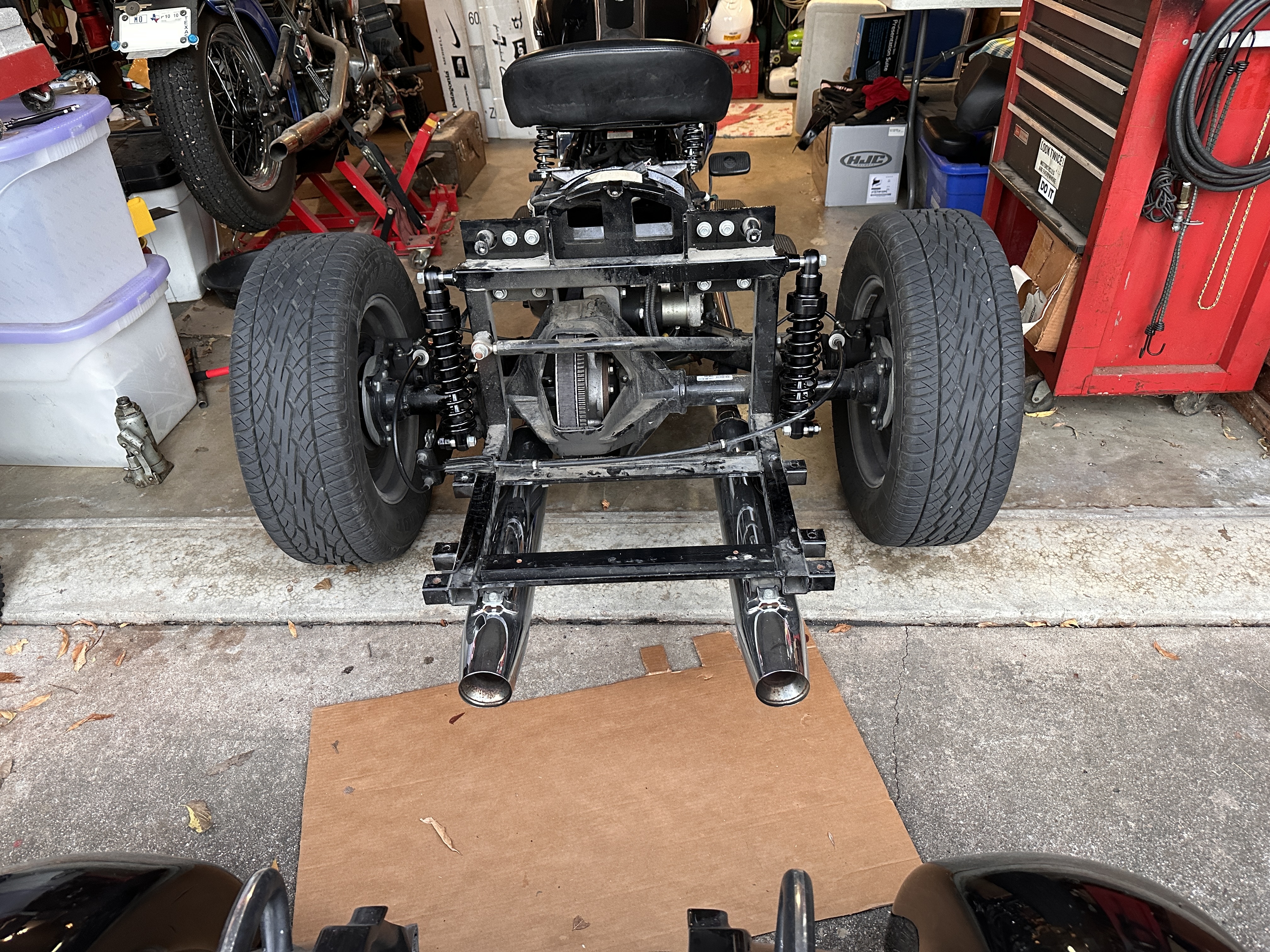
Kit installed. Taco box to follow.

I contacted DK and followed their instructions to try and troubleshoot and resolve the issue, but wasn’t getting results. Then I got kicked up the chain of command to Devin, who designed the shocks. Between us, we sorted it out, and in the end I got the ride I’d been looking for. πŸ‘πŸ½

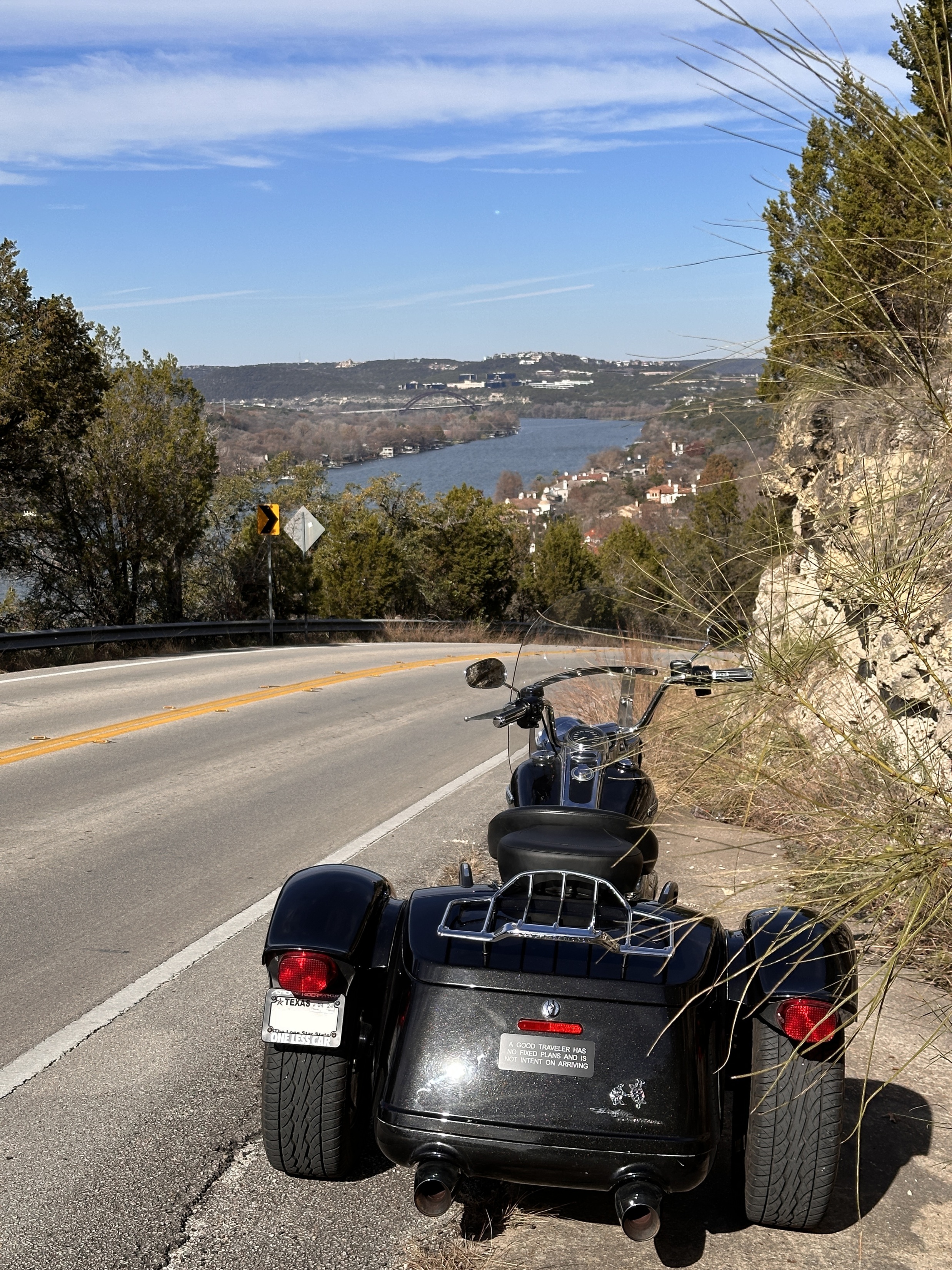
The Box Turtle on Mount Bonnell Road, overlooking scenic Lake Austin.

Note that it’s still a straight axle, and will never be a cushy ride, but it is a completely different beast from the OEM setup. Well worth the bucks, IMO, and I’d go back to DK Custom Products in a heartbeat. As stated above, they made a mistake, yes, but they also took full responsibility, which goes a long way in my book. They also gave me a little boot to make up for the added labor. I appreciate the hell out of that kind of customer service.

And I’m loving the ride! 😎
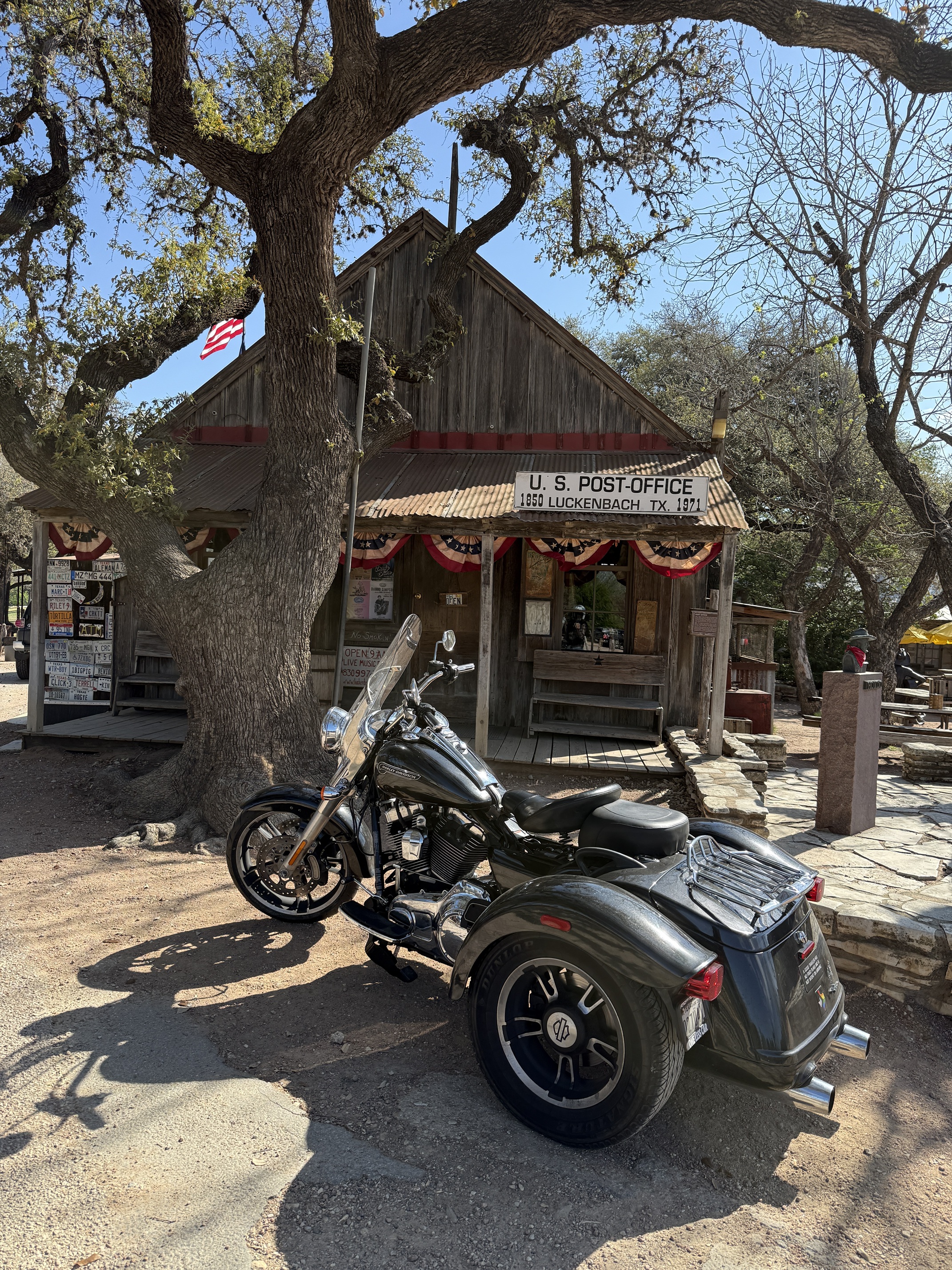
β™ͺ β™« Let’s go to Luckenbach, Texas…. β™« β™ͺ

chalβ€’lenge

(chal’enj)n. anything that calls for special effort

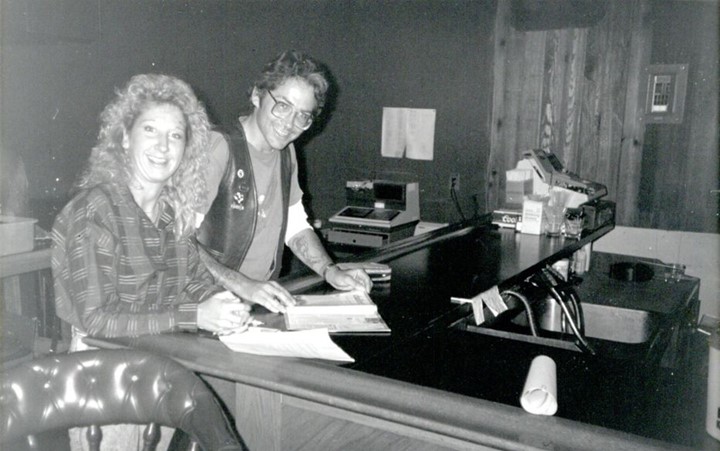
Copyright Β© 2023 by Bill James at The Shovel Shop, Austin, Texas. Photograph of Jane Strand (above) Β© 1988, 2023 by Bill James at The Shovel Shop, Austin, Texas.

What would you do if life – an accident or illness or hereditary condition – stopped you from doing the thing you most enjoy?

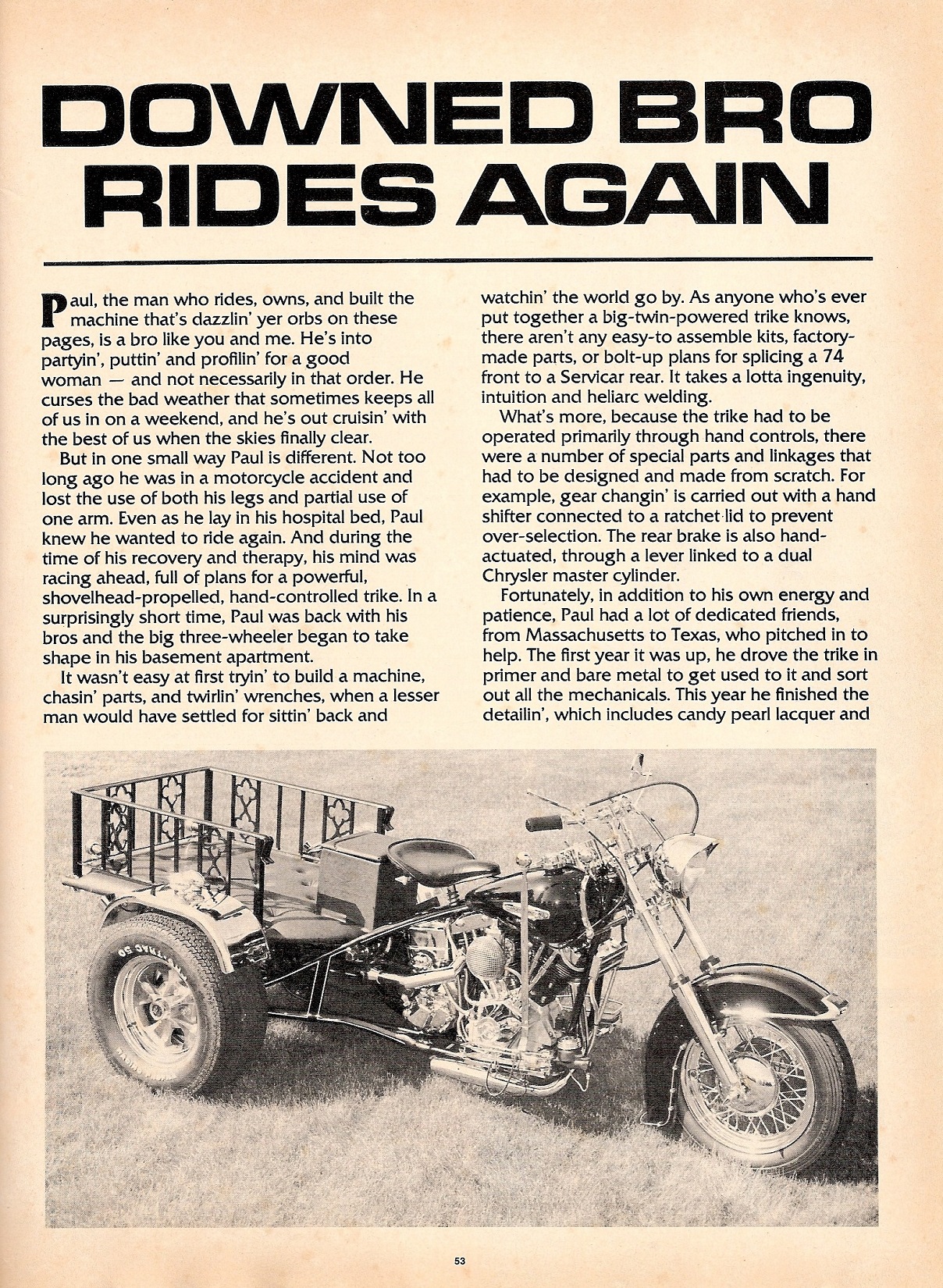
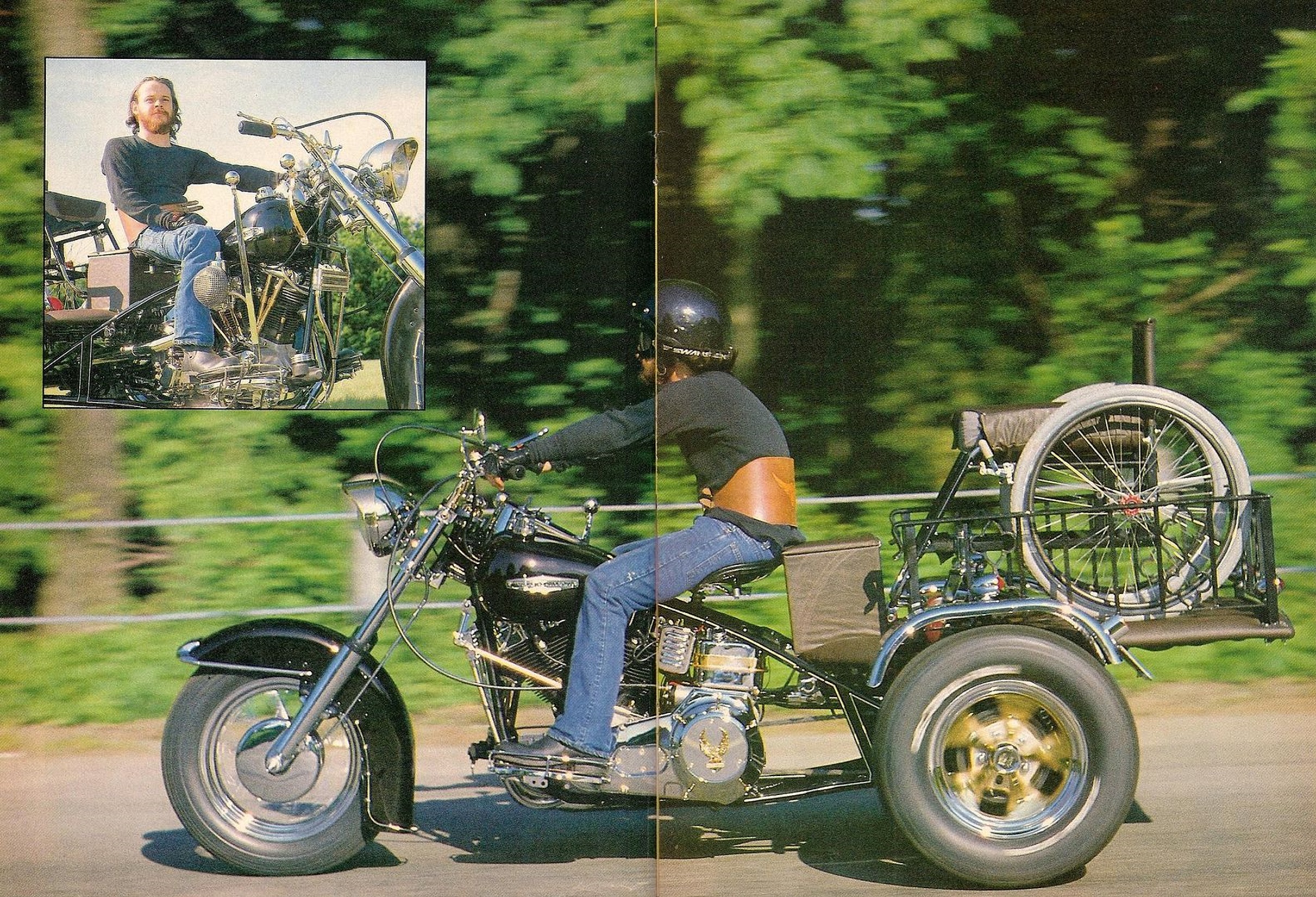
Paul aboard his custom shovelhead trike, as it appeared in Easyriders in January, 1985.

I initially got interested in adapting motorcycles for use by riders with physical disabilities in the early ’80s, when I helped design and construct a shovelhead-powered trike for a military veteran who’d been paralyzed in a motorcycle wreck.  Paul (seen in photo above) was classified as quadriplegic, which, FYI, does not necessarily mean a person is paralyzed from the neck down, as I’d always assumed.  Rather, it simply means the normal functions of all four limbs are affected by the injury or condition.  In Paul’s case, that meant he had no use of his legs, and while his right arm was almost fully functional, his left had only limited strength and range of motion.  He could make a partial fist – enough to operate a hand clutch and help steer a motorcycle – but couldn’t operate a jockey shift or brake lever.

Now, bear in mind that in the 1980s none of the well-known motorcycle manufacturers were producing three-wheeled motorcycles.  Harley-Davidson still offered sidecars, but the Motor Company’s venerable Servi-Car (popular with police and fire departments, delivery services and automotive repair shops) ended its forty-one-year run in 1973, and no one was rushing to fill that slot.

As an aside: circa 1982, Honda reportedly produced a prototype three-wheeler based on their CX500 – an estimated 250 units overall – for U.S. Police Departments.  I have a distinct (and very pleasant memory) of seeing a female Austin Police Department officer in full moto-cop regalia, including knee boots and leather jacket, blasting through downtown traffic on one such prototype with her long blonde hair streaming behind her.  πŸ˜  Unfortunately, the bikes didn’t make the cut and never went into full production, and I never saw my jackbooted goddess again. πŸ₯ΊπŸ˜’😭

Anyhoo, as I was saying….

No one was cranking out three-wheeled motorcycles back then, and aside from some knucklehead-powered prototypes constructed at the onset of World War II, the Motor Company had never produced a Big Twin trike.  That meant virtually everything we needed to make Paul’s bike function as required had to be designed and created in-house.

The chassis consisted of an OEM early shovelhead swingarm frame grafted to a rigid Servi-Car rear section.  It had originally been built for a local biker who was shot in the leg by an off-duty APD officer during a traffic confrontation on Guadalupe Street, near the entrance to the Austin State Hospital.  The cop claimed he was in fear for his life, naturally, and walked away without consequence.  Meanwhile, the unarmed and now disabled biker was left to fend for himself, and put together the three-wheeler. 

After a while, Rod assumed he was healed up enough to get back on two wheels, so my boss at the motorcycle shop got the trike frame.  Unfortunately, Rod wasn’t as healed as he thought he was, because shortly after getting back on his panhead he tipped his bike over while trying to park it in a grassy area pocked with hillocks and treacherous low spots.  When he tried to catch himself his right (injured) leg gave way, putting him right back on the disabled list.  

However, by then we were already well into the construction of Paul’s trike.

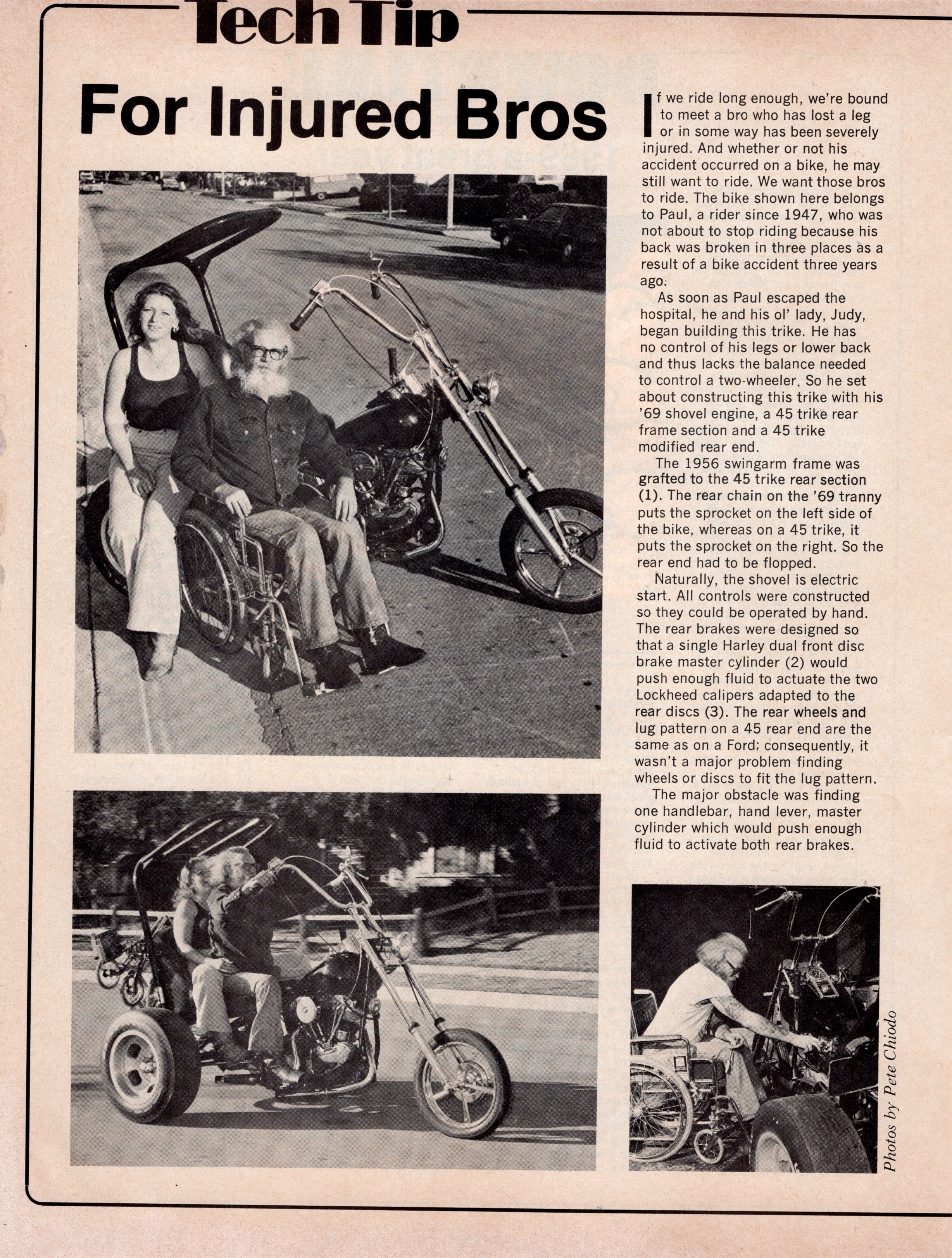
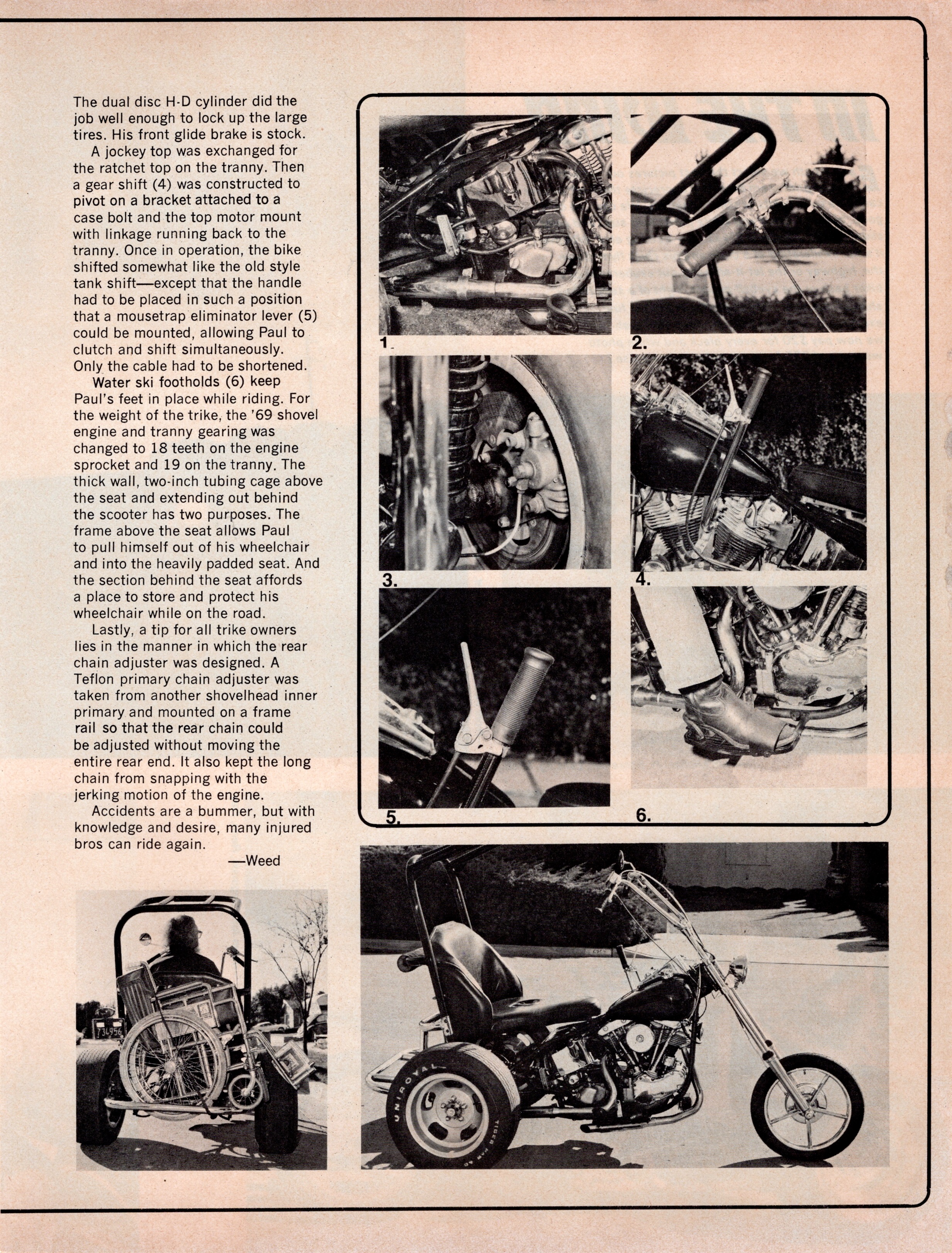
The Easyriders spread from January, 1985, seen below, shows the details of Paul’s unique trike:  crossover shifter mechanism, linked front and rear brakes, custom floorboards, et cetera.  What the magazine doesn’t show is that, while we got the trike running and dialed in, and fine-tuned the hand-controls and other adaptations, Paul was bartering with the shop’s owner, trading custom paint and bodywork to cover the costs of the build.  Paul was a gifted body man, and I was very proud to run the tins he’d shaped and painted for me during that time.

The Bitch in Blue

1980: My 1974 shovelhead, recently transplanted into this OEM 1954 wishbone frame, sports tanks and fenders shaped (where needed) and painted by Paul.  This was the first frame-off rebuild I’d ever done, and I remain very proud of the finished project!  A lot of people who looked askance at my choice of colors when the painted tins were hanging on the wall in my shop area admitted I’d chosen well, and created a striking custom build.

Once we got the trike dialed in, while it was still all bare metal and grey primer, we turned it over to Paul, who soon returned to his home in Massachusetts.  There, he took the bike apart and detailed the thing, putting his expertise and artistry as a body man to work, and doing much of the physical labor himself.  Paul built an extended platform behind the pogo-stick saddle to hold his wheelchair, and the custom-built ultralight wheelchair itself.  He also cleaned up the rough metal we’d used to fashion some of his controls, added a lot of gold and chrome plating, and painted the machine a rich ebony black with striped accents on the frame.  Aside from the unique aspects of its construction, the machine was a beautiful custom motorcycle, deserving of its place in the pages of the world’s most widely-read biker magazine.

By the time we completed Paul’s trike, I had become fascinated with the process of modifying motorcycles for use by handicapped riders, and enamored of the spirit and ingenuity that went into each adaptation.  I began clipping articles from newspapers and magazines – anything referencing handicapped riders or drivers – and adverts and announcements about new parts that looked as if they might prove useful in adaptations.  I photographed adapted bikes wherever I found them, and spoke to the riders if possible.  

Over time, I accumulated a hefty file of information in those pre-internet days, and acted as a clearinghouse for that info.  Primarily through Letters to the Editors columns of motorcycle magazines I made that information available free of charge to any and all takers.

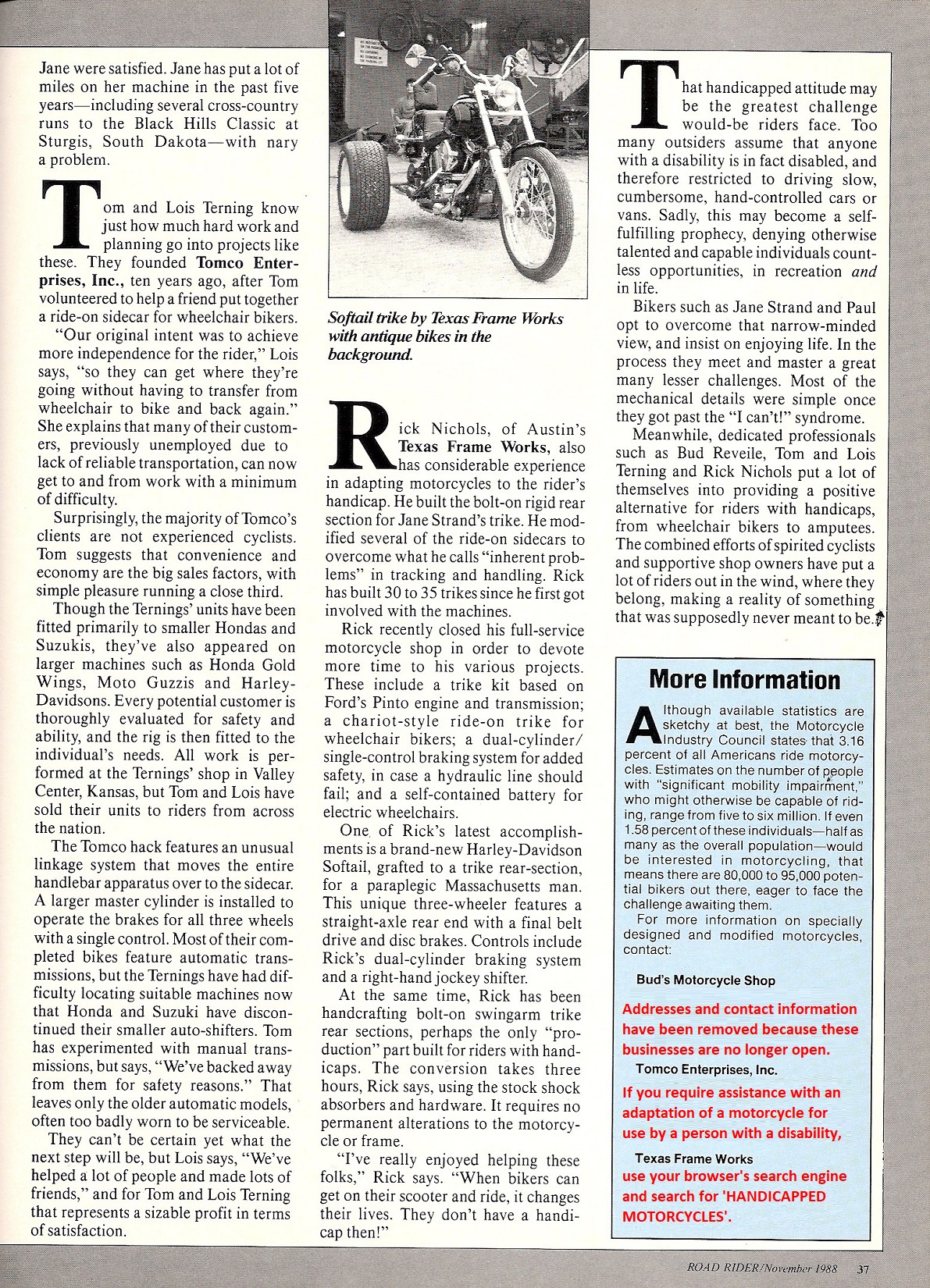
Early 1988: Jane Strand on the shovelhead trike she and her husband, Rick Strand, designed and constructed. Jane was paralyzed when a teenaged red-light-runner struck the couple as they rode Rick’s flathead through downtown Austin. I featured their bike in the article I wrote for Road Rider. Rick and Jane went on to found a custom motorcycle shop in South Dakota, specializing in adaptations for handicapped riders. However, just now, when I went looking for the shop’s contact info, I learned that Rick passed away several years ago. Sorry to say, I don’t know what happened to Jane.

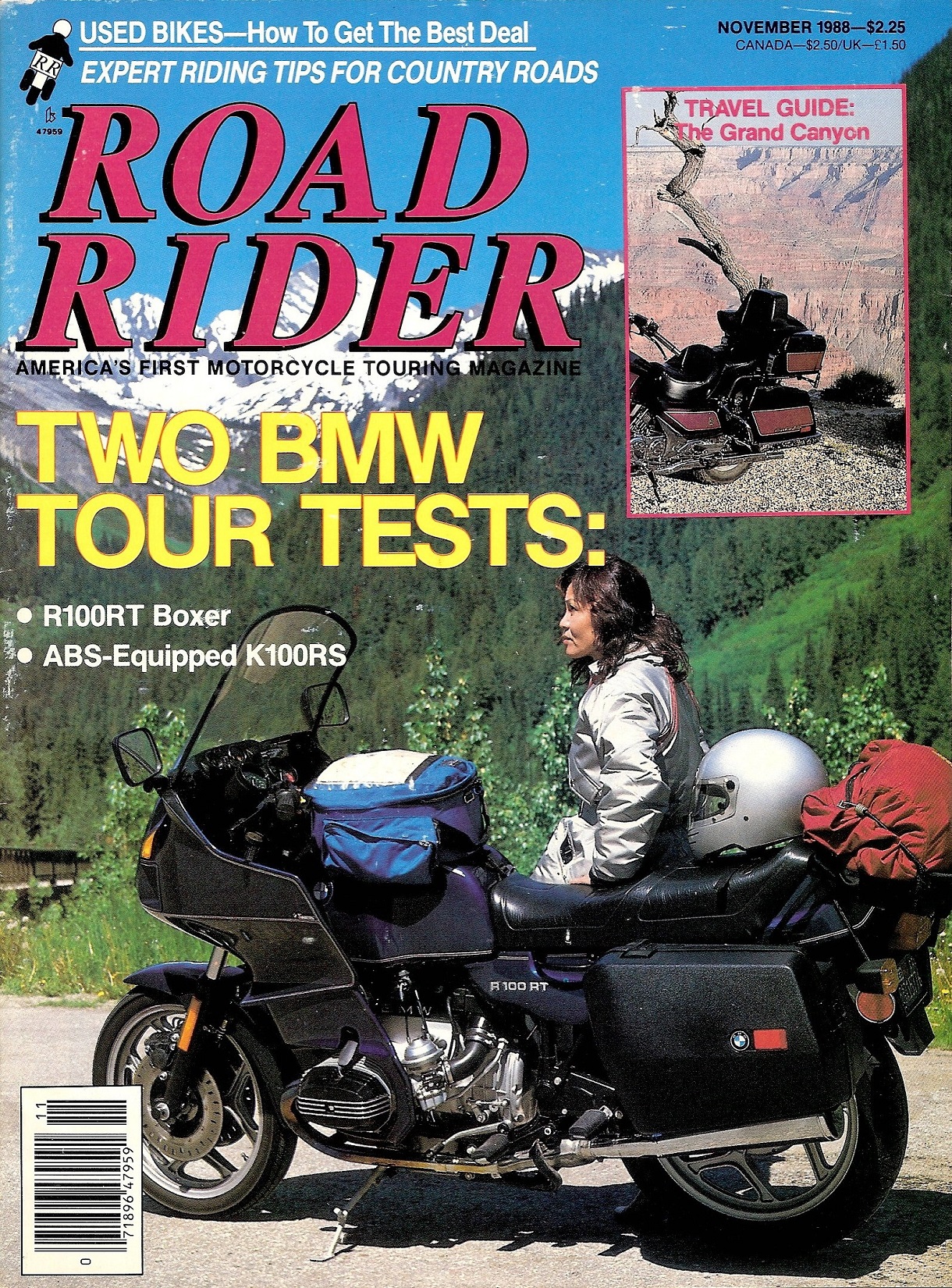
I’d written for newspapers and magazines for several years, so it was a natural progression to take what I’d learned and create a feature-length magazine article.  I shopped the idea around, and Road Rider (later reconfigured as Motorcycle Consumer News) gave me the commission.  I did the research, conducted my interviews, took the photographs, and my piece appeared in Road Rider‘s November 1988 issue.  I didn’t even know it had come out until someone at a motorcycle rights organization meeting asked for my autograph! πŸ™„

Tina and I at Frank’s Lakeview Inn, Lake Belton, Texas, October 1988.

October, 1988:  My friend Tina and I, as I sign my first (and last, so far) autograph on my just-released article about adapting motorcycles for use by handicapped riders.  We were at Frank’s Lakeview Inn on Lake Belton, Texas, to attend a Texas Motorcycle Roadriders Association meeting.

Times have changed drastically since that article appeared.  By the late β€˜90s aftermarket manufacturers had begun releasing bolt-on trike kits, and now offer assemblies for almost every motorcycle marque on the road.  In 2009, Harley-Davidson began marketing its own line of Big Twin trikes with a wide range of options.  Aftermarket trike frames are also available, as are helpful add-ons like electronic shifter mechanisms, and reverse drive units for those who can’t back their bikes out of parking spaces.  Meanwhile, the Can-Am Spyder and Polaris Slingshot offer something other than the traditional trike configuration, if you’re into that sort of thing.

Just in time, too, as the perennially playful Baby Boom ages into the need for three-wheelers!  πŸ˜†

Okay, so, on to the articles:

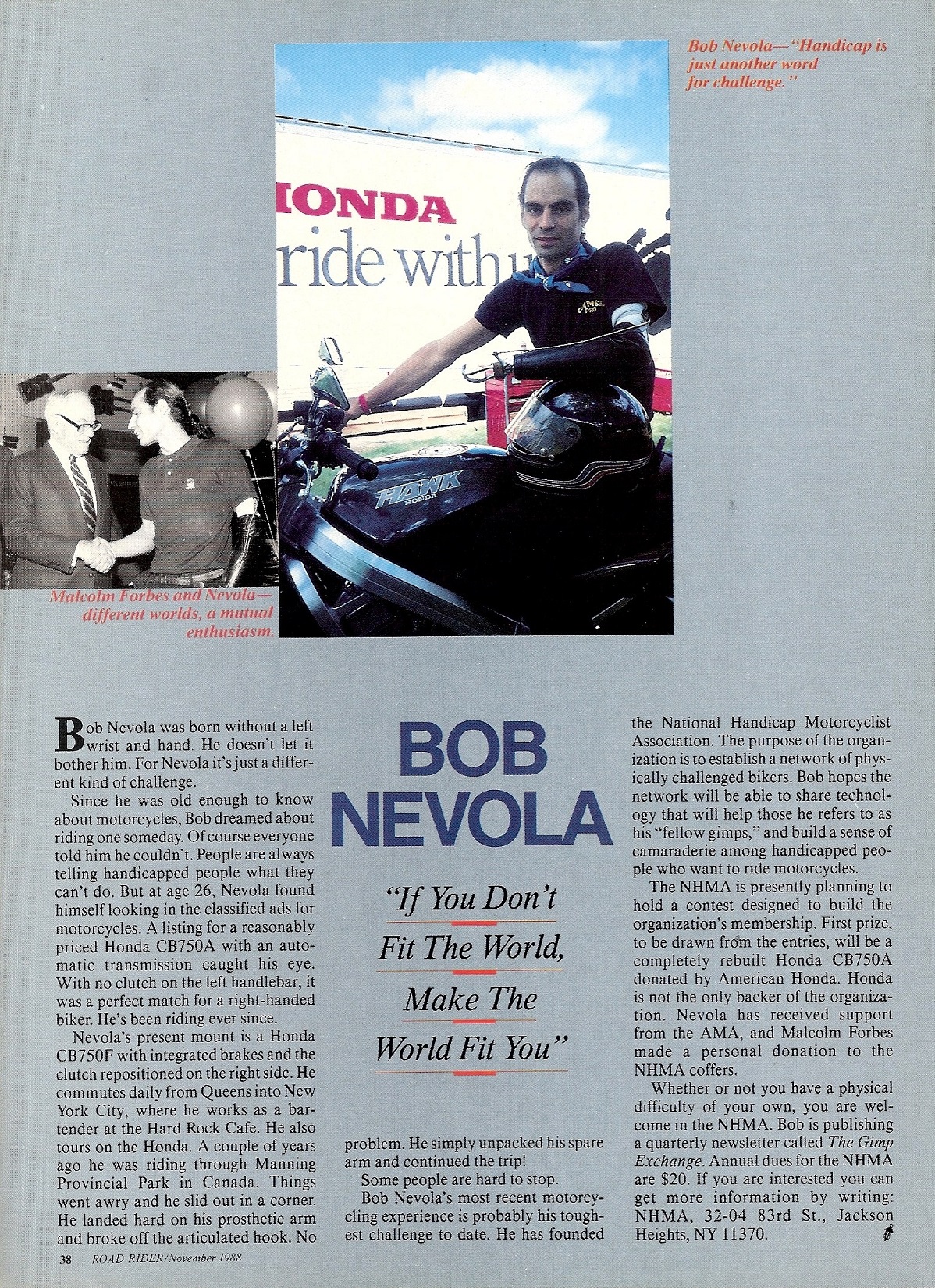
This is my piece, written for Road Rider Magazine:

As an aside: the late Roger Hull, who co-founded and edited Road Rider, and has been inducted the Hall of Fame at the American Motorcyclist Association, was a personal hero of mine for his principled, unwavering stance on riders’ rights and freedom of the road. Even though he’d retired from the magazine by the time I sold them my piece, it gave me great pleasure to publish an article in those hallowed pages!

Here is the Easyriders article (January, 1985) about Paul and his trike:

And another piece, from Easyriders’ March 1979 issue:

So, what’s this got to do with me? More at the link below. ‘Til then, slΓ‘inte! 😎

HAPPY ANNIVERSARY, SWEETHEART!

When I was maybe seven or eight the boy next door came home from college on a toaster-tank BMW, and was giving the neighbor kids rides around the block. I begged and pleaded with my Mom – ‘PleaseI’llbecarefulI’llhangontightPleasecanIgoCanIgoPleaseI’llbecarefulPlease….’ – until she finally gave in. Yay! πŸ˜πŸ‘

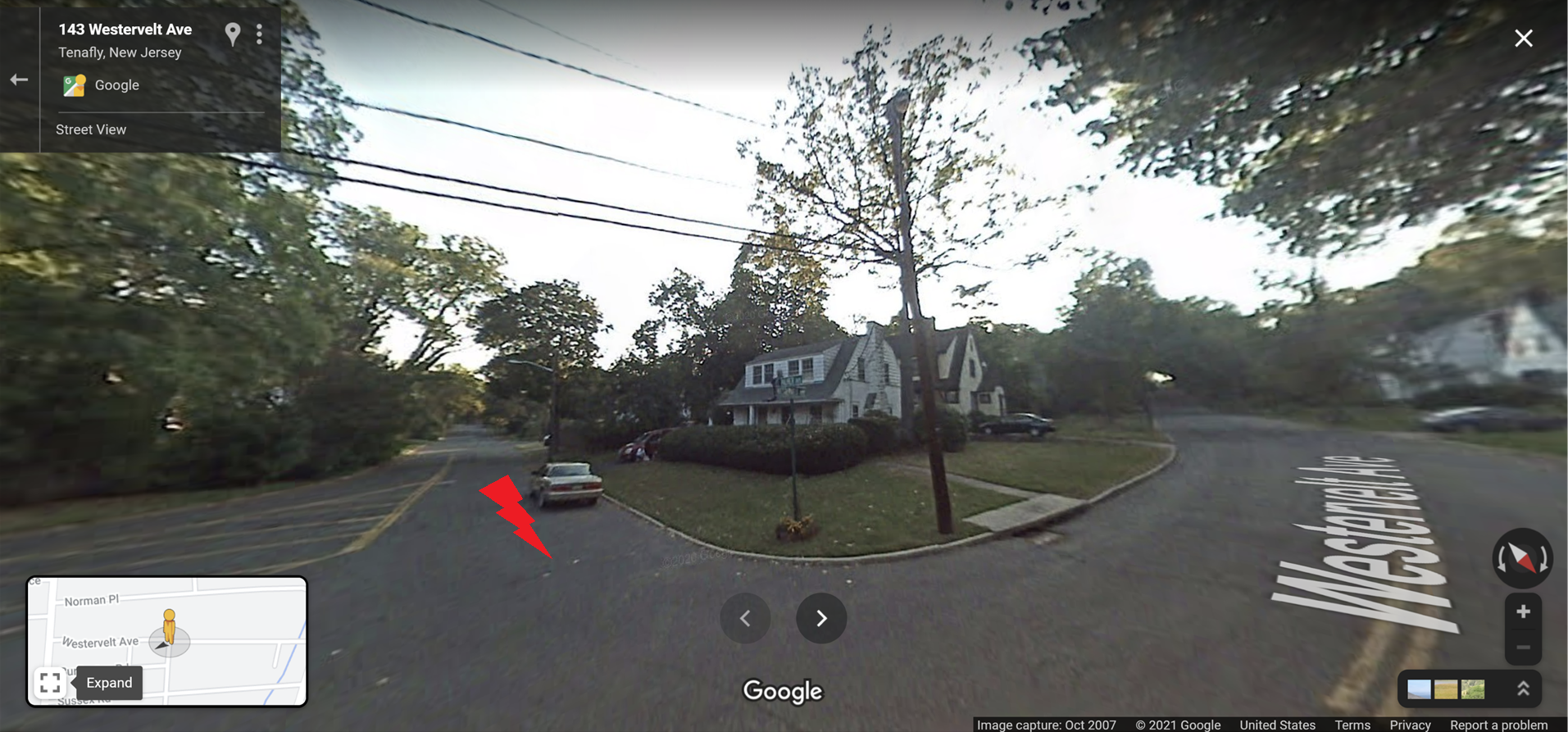
Gene and I were halfway around the block when I got this thought, like a crystal-clear voice in my head, that said ‘I’m going to HAVE one of these someday!’ The moment was so profound that, forty years later, I was able to take my wife to that exact spot and say ‘There! That’s where it all began!’ πŸ€·β€β™€οΈ

Right about there is where that lightning bolt inspiration struck me!

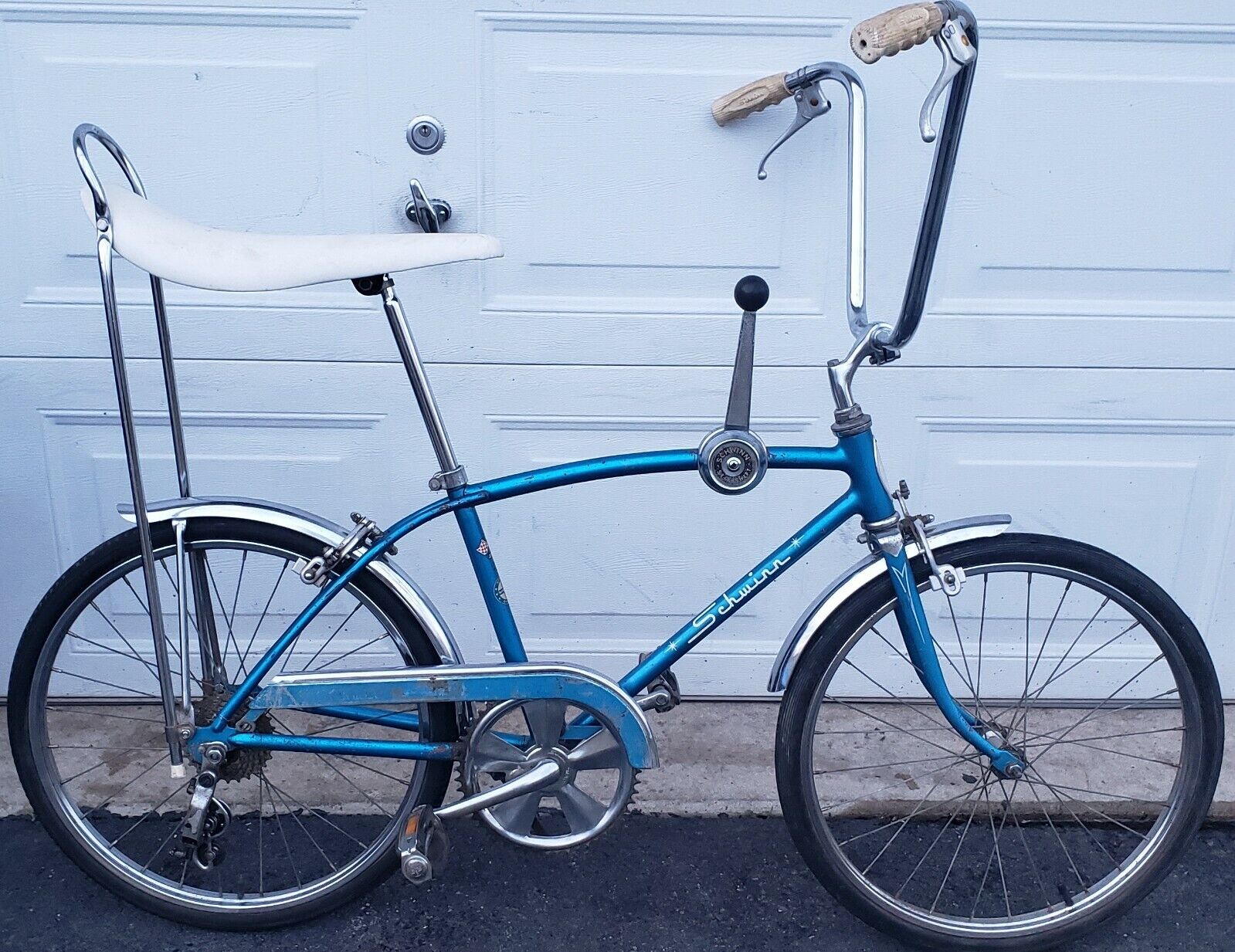
We were not allowed to have motorcycles when we were kids; not even minibikes, which were all the rage at the time. The closest I got to the chopper of my dreams was some plastic modelling kits and a Sting-Ray bicycle.

Not my Sting-Ray – this one is listed on eBay for $1200 😳 – but this is the color and year I had.

Of course, on the sly I rode anything with a motor – minibike, moped, dirtbike, whatever – whenever anyone was dumb enough to let me, but that wasn’t often. We lived in a ‘nice’ suburban town, and actual bikers were hard to find. The boy next door and Steve down the street, who had a BSA, were the only people I knew with real motorcycles, and they were never dumb enough to let me near the controls! πŸ˜†

As noted in previous posts, I spent my teen years drinking and drugging – a lot and very badly – and it wasn’t until I put all that aside, at the age of 21, that I could get serious about putting together the money for my first motorcycle. It took a year of sobriety to clean up my rather messy financial history, and working two jobs while going to school full-time on the GI Bill, but I finally got together the down-payment. With that in hand I got the nod from the credit union to begin shopping. Yay again! πŸ˜πŸ‘

I toddled off to the Harley-Davidson dealership – I already knew I wanted a Harley – but the guy there was such a jackass that I turned around and walked out. Smart move, because half a block up the street I saw a Harley for sale in a used car lot. It was black, low, lean and mean, one of the prettiest things I’d ever seen, and looked like it might be everything I ever wanted.

I could not have been more right.

I called this biker I’d met in sobriety – a lawyer, of all things, who built choppers! – and asked him to come look at the bike with me. He came down and we went over the bike together. It was a 1974 Harley-Davidson Superglide FX with a 74 cubic inch shovelhead motor, a kickstarter (no electric start then or now) and disc brakes fore and aft. After he took it for a test ride (I did not yet have my motorcycle license) Wayne gave it the thumbs-up, and the deal was done. I completed the paperwork at the credit union, conveniently located just around the corner from the used-car lot, and spent a near-sleepless night as keyed up as a kid at Christmas.

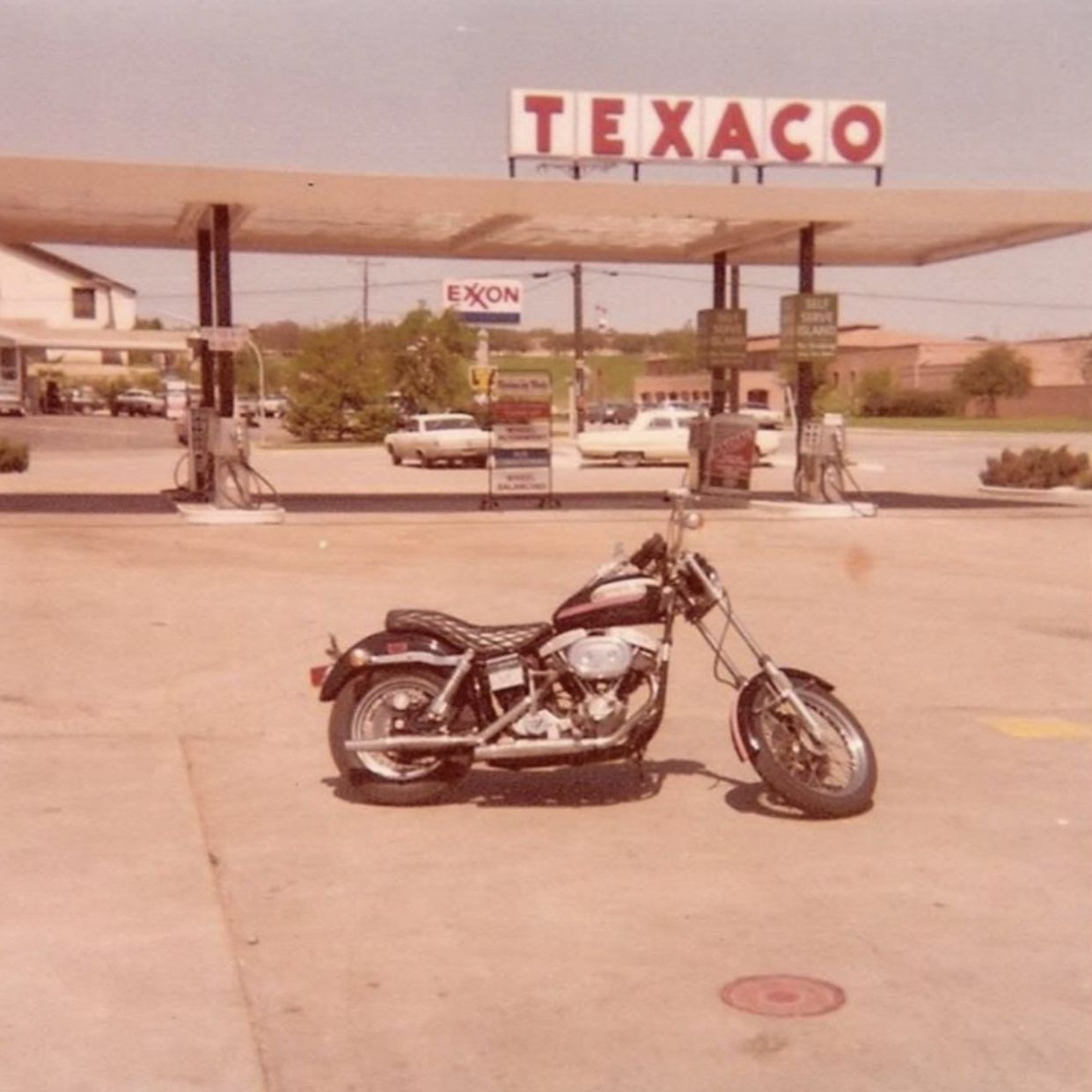
The next day – April 11th, 1979 – I threw my leg over my very first Harley for the very first time. That’s right: Forty-four years ago today I answered the call I heard that long-ago afternoon, on the back of Gene Graf’s BMW. After years of wishing and wanting and dreaming about it, I finally had me one of those things! 😎

April 11, 1979, at Northwest Hills Texaco, where I worked at the time.

And forty-four years later, I still have that same motorcycle. I’ve had a few others along the way, but that one is my ride-or-die keeper. She (for she is a girl, make no mistake) is no longer black, and not as low or quite as lean as she was (neither am I, for that matter 😏 ) but she is still the prettiest thing I have ever seen. She’s still gorgeous, and righteous, and I still love her dearly.

Sad to say, a series of unfortunate events (primarily a disabling on-the-job accident) have kept me off my one true love (machine division) for several years, but I still harbor a hope that we may still find a way to be together again.

However, in the meanwhile, and with the support of my one true love (human division) I have secured a different bike, better suited to my disabilities. She’s big and fat and shiny and loud, and so new-fangled and complicated I dare not touch most of her more intimate components, but I’ve already had my hands on her, a little bit, doing little fix-its and adjustments, and once that happens love is sure to follow. She’ll never displace my shovelhead – seriously, what could? – but I have a good feeling about her. πŸ₯°

My new-to-me 2016 Harley-Davidson Freewheeler. Now all I have to do is unlearn forty-four years of training, practice and instinct I’ve accumulated riding a two-wheeler, and learn the proper handling of a three-wheeler. For those who don’t know: it’s a very different style of riding!

So, Happy Anniversary to my 1974 Harley-Davidson FX – my beloved shovelhead – and thank you, thank you, thank you for all the years of joy and adventure you brought me. Let’s go for forty-four more, eh? 😁

Yes, sir, that’s my baby. No, sir, I don’t mean ‘maybe.’ Yes, sir, that’s my baby now!

And don’t you go getting jealous of the new kid. She’s just here to help. 😏