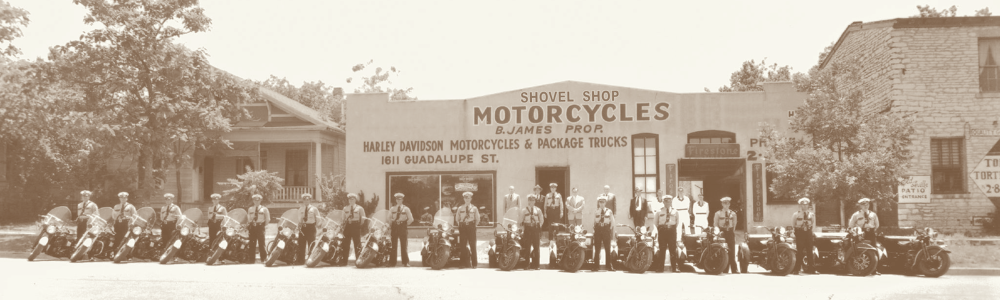
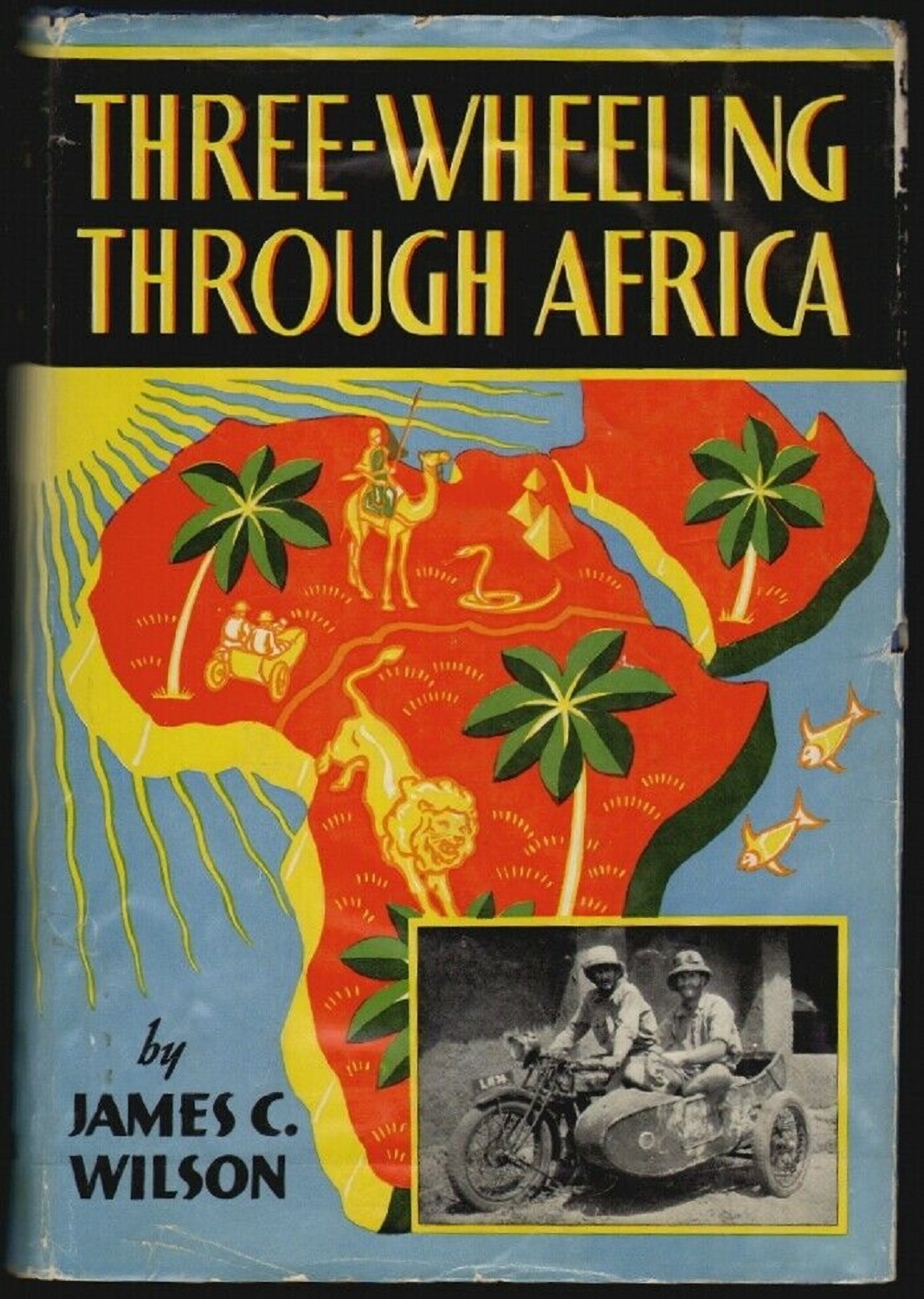
In 1927, disillusioned by their post-graduate career options, two adventurous Americans hopped a tramp freighter to Africa. After an exciting, occasionally death-defying journey, they landed in Nigeria, where they encountered an American missionary with a rattletrap sidecar rig.
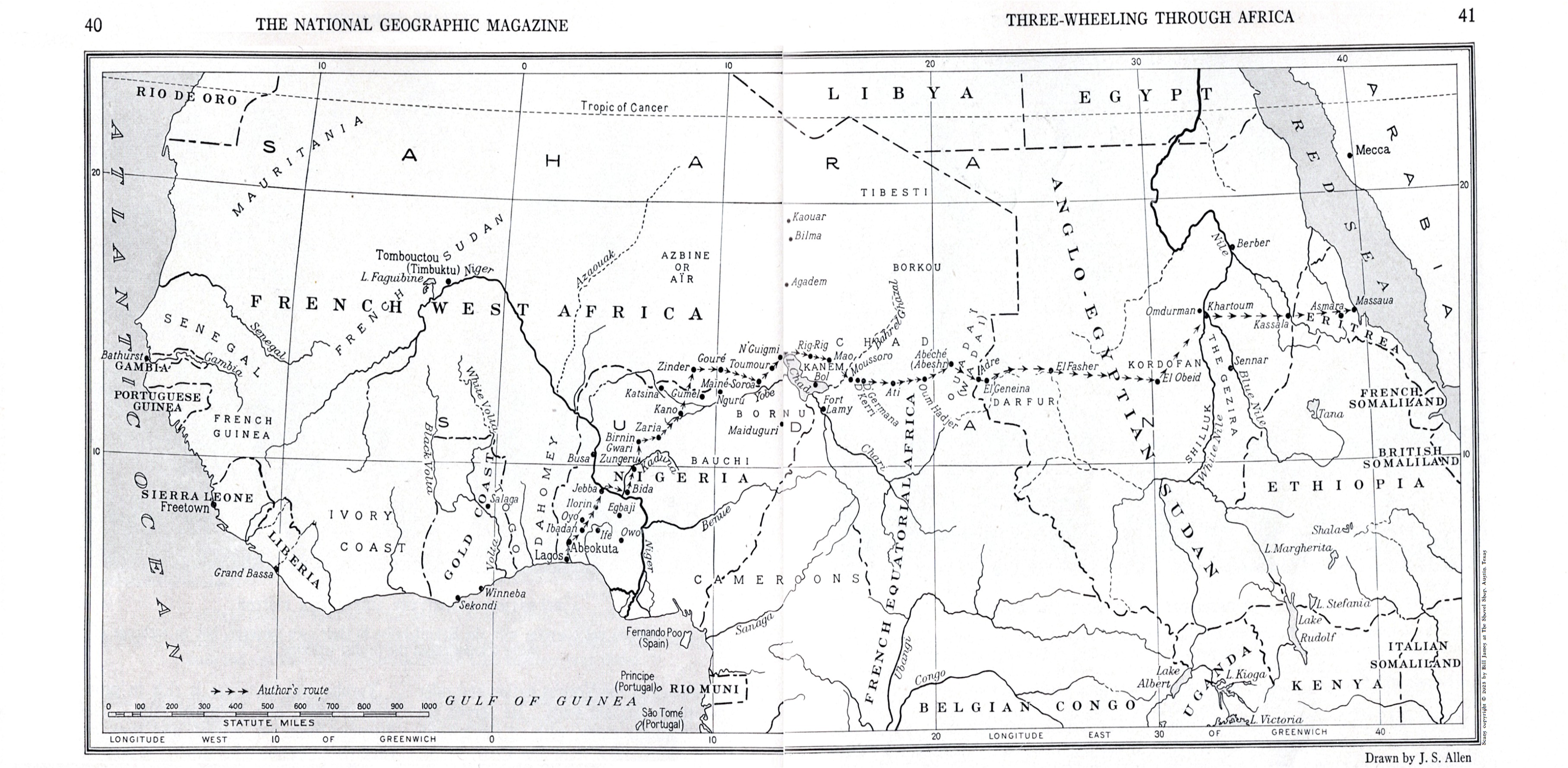
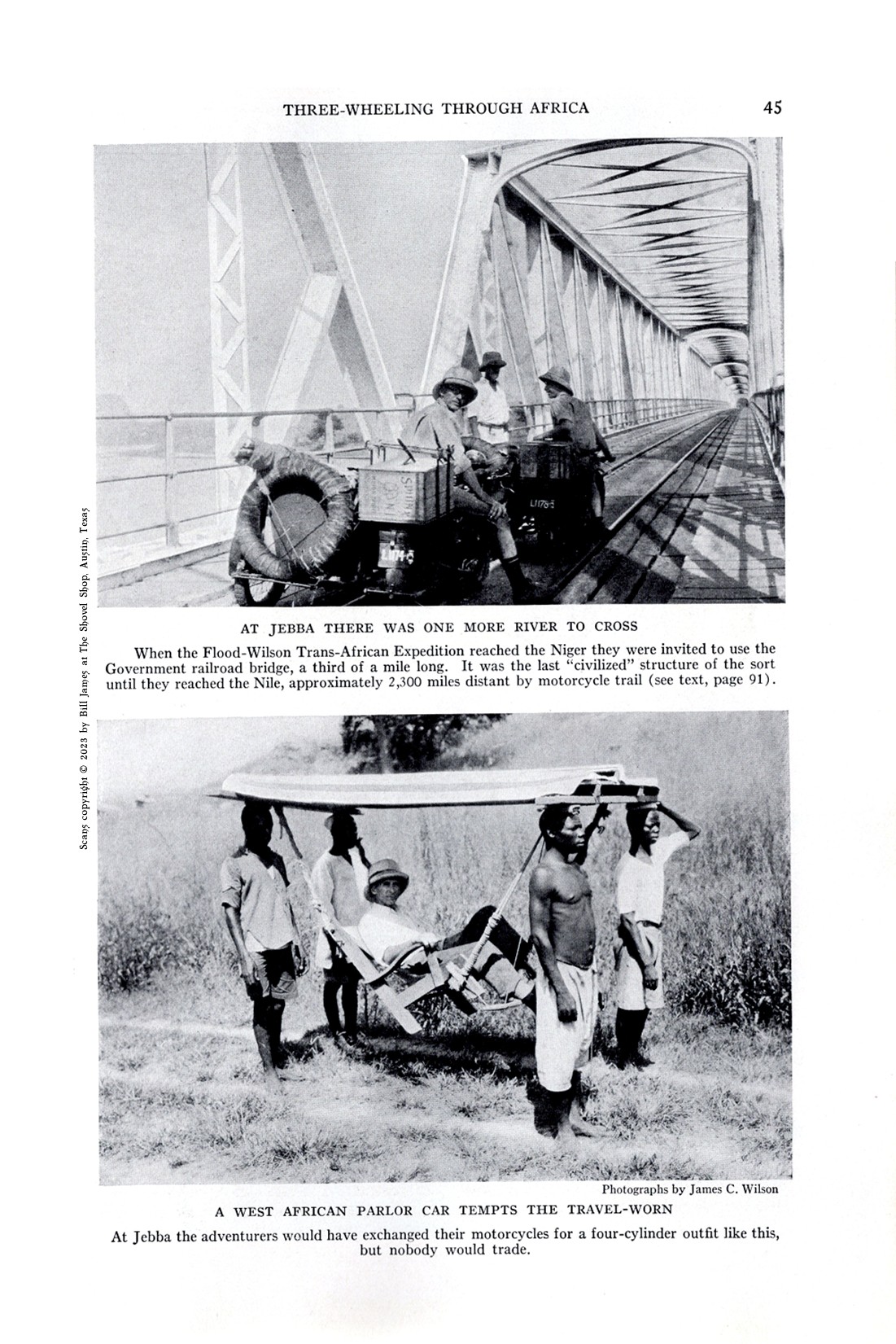
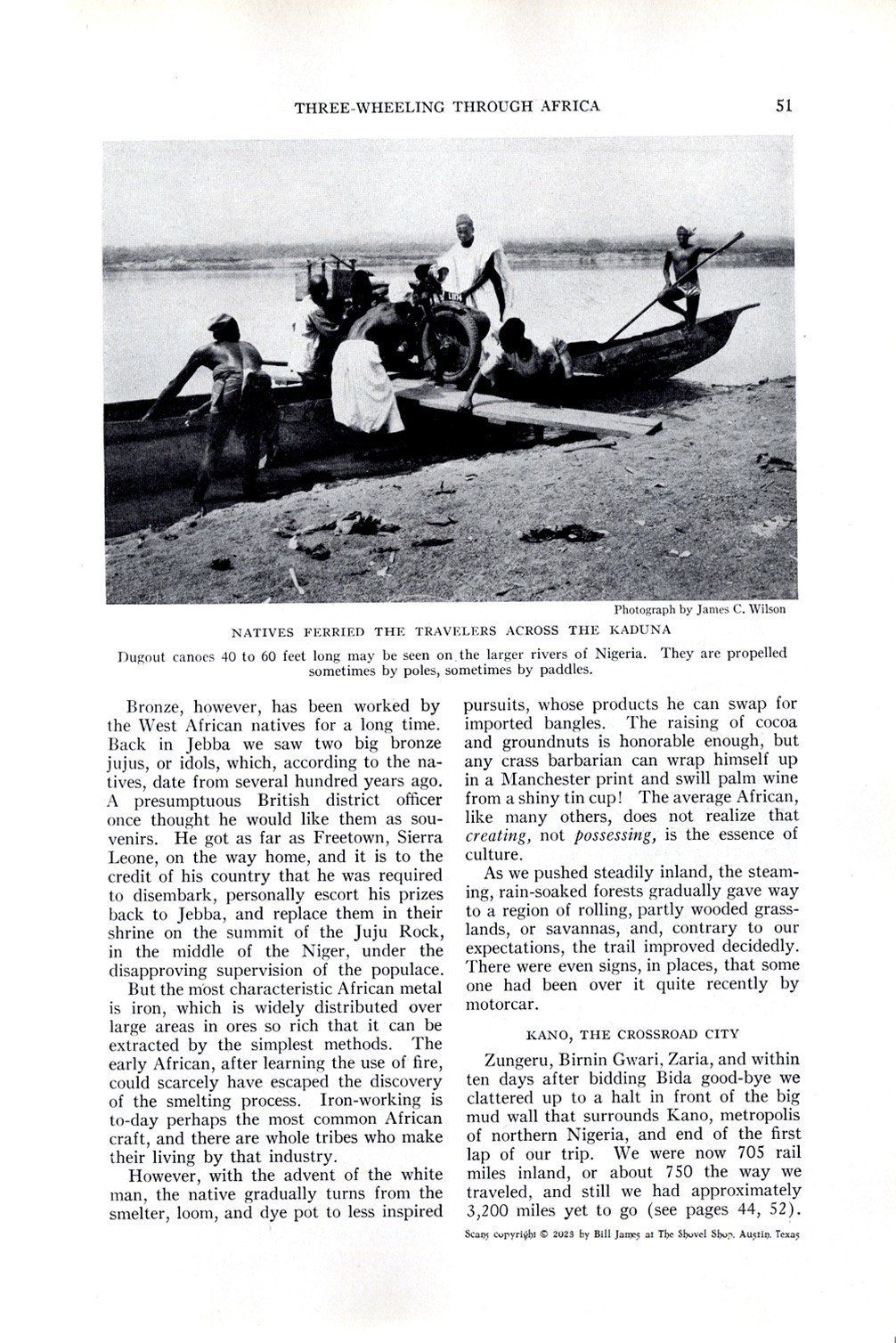
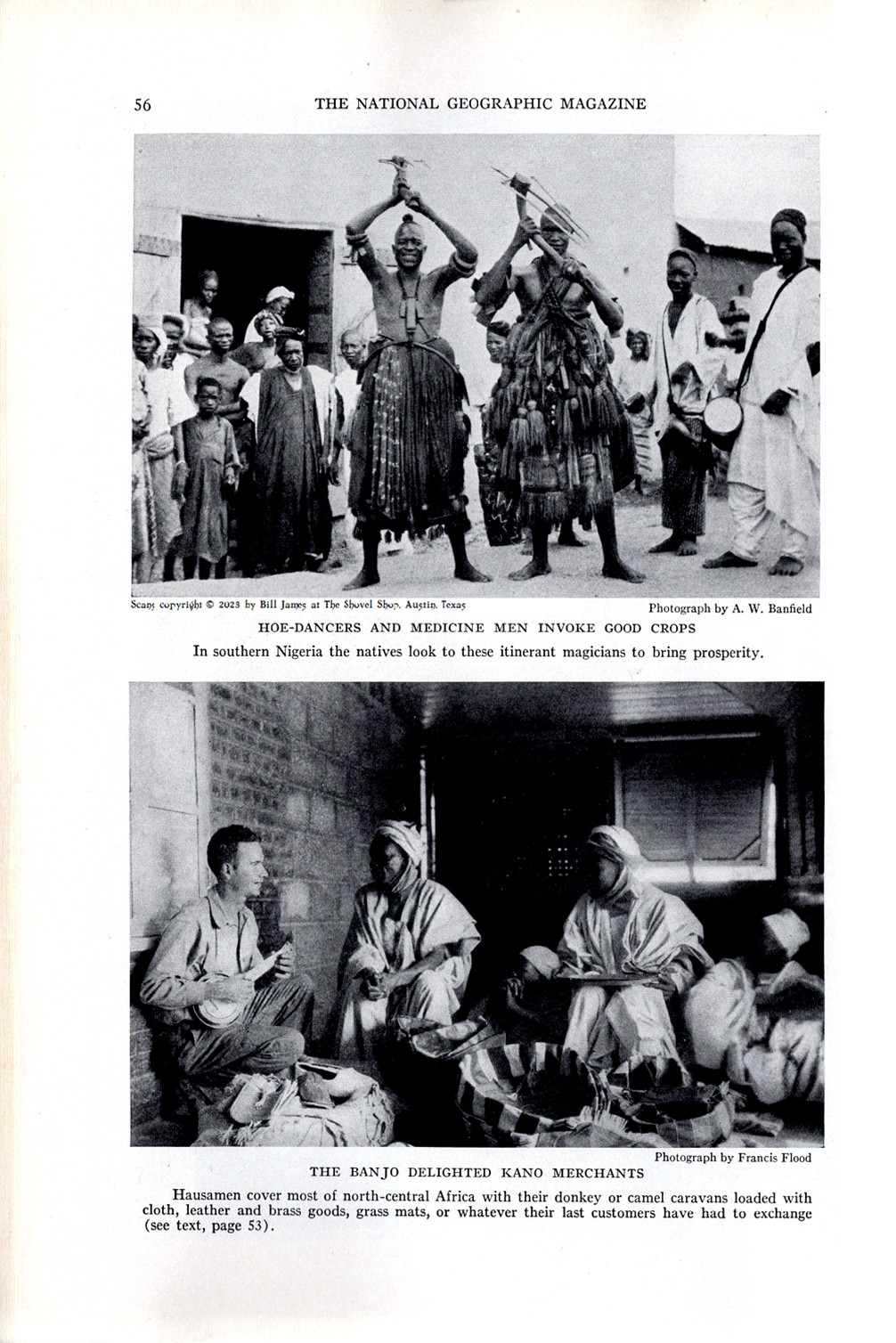
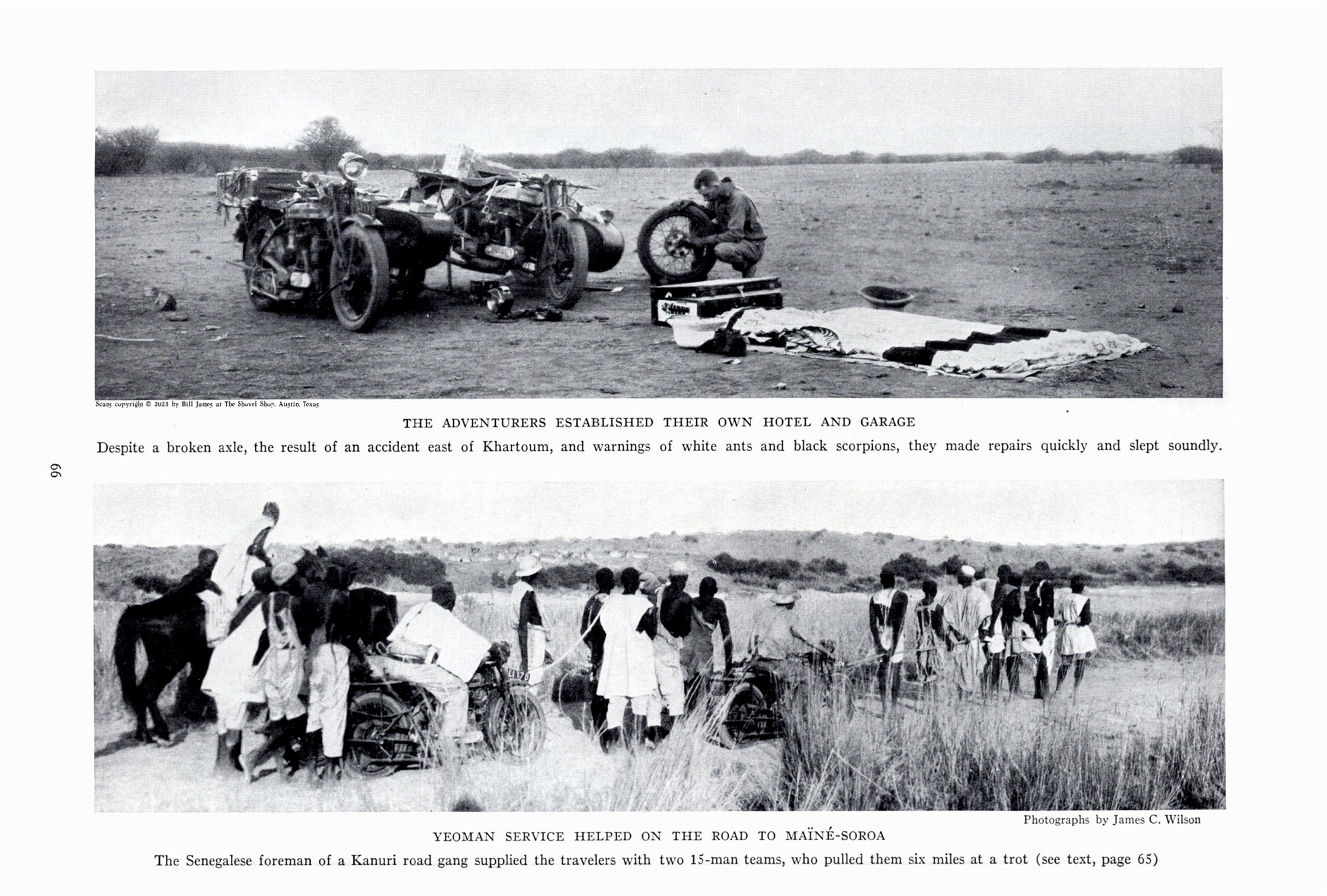
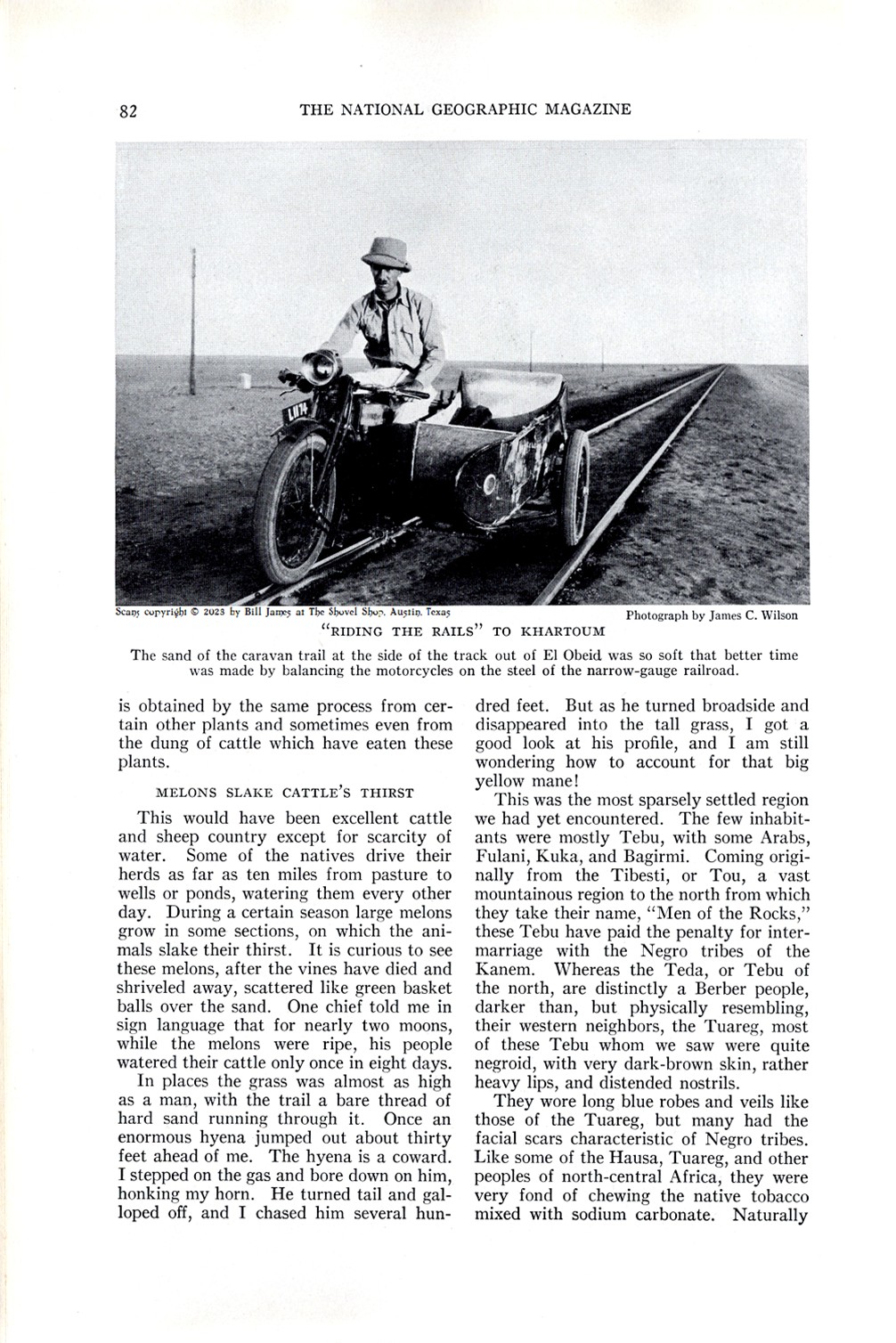
Inspired by the notion of motorcycle travel, James C. Wilson and his companion, Francis Flood, talked the Triumph Motorcycle Company representative in Lagos into fronting them matching sidehack rigs so they might motor across the Dark Continent: an as-yet-unmet challenge. The duo cadged parts and supplies from other vendors, made arrangements for the required paperwork, and set off into the unknown.
Upside for the dealer and the Triumph factory would be bragging rights if the foolhardy duo survived. Downside? The price of two motors and sidecars if the idiots perished somewhere along the way.
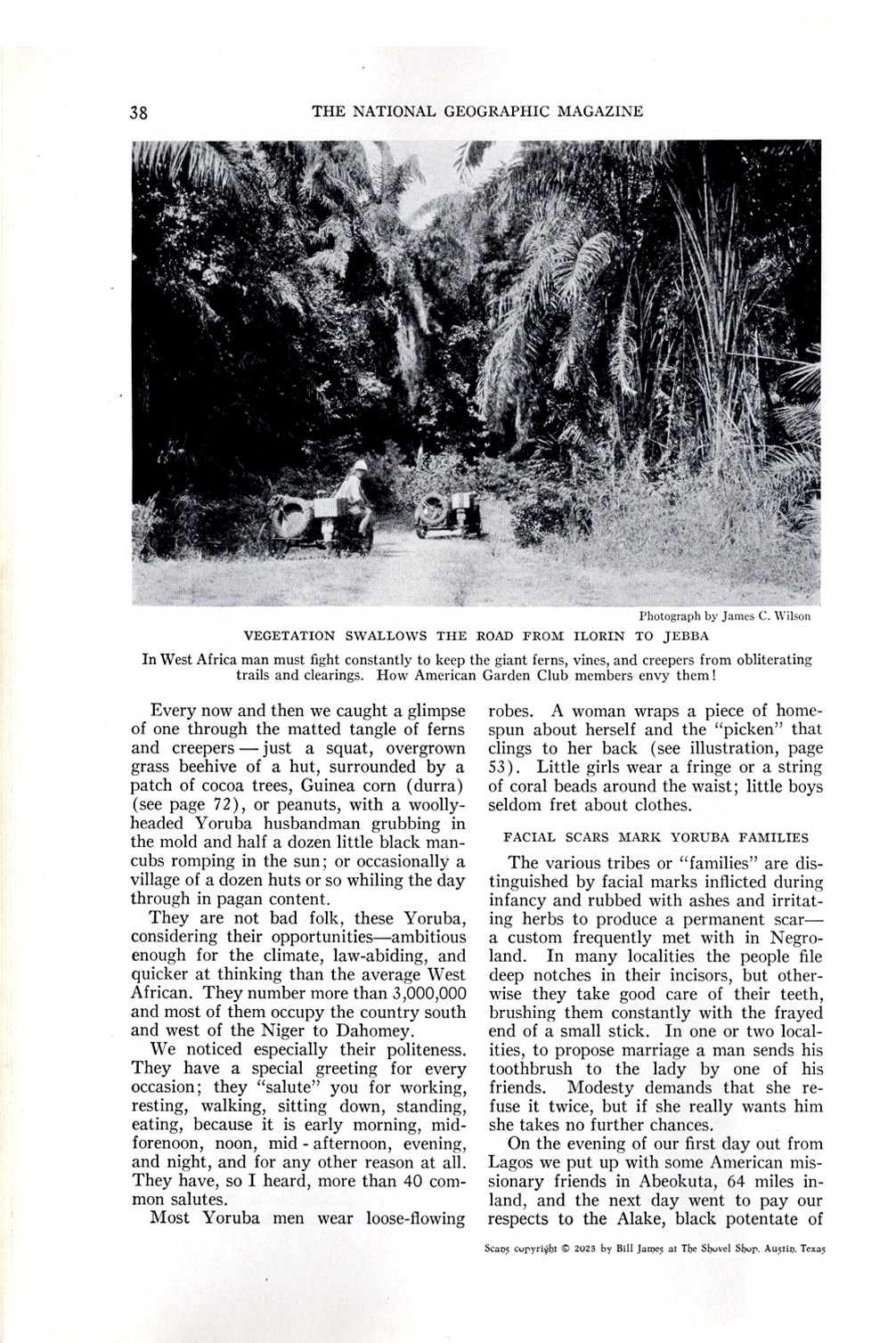
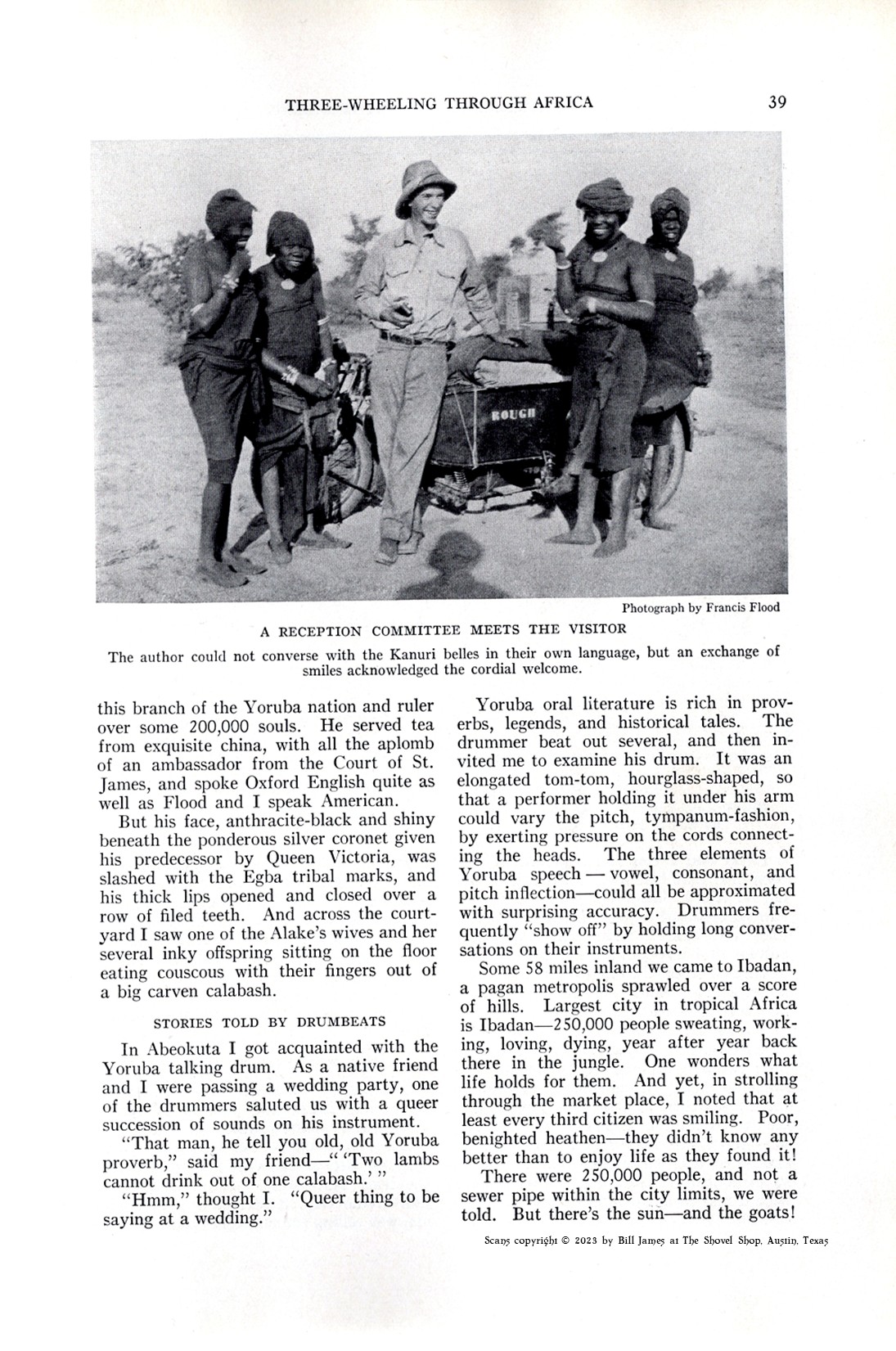
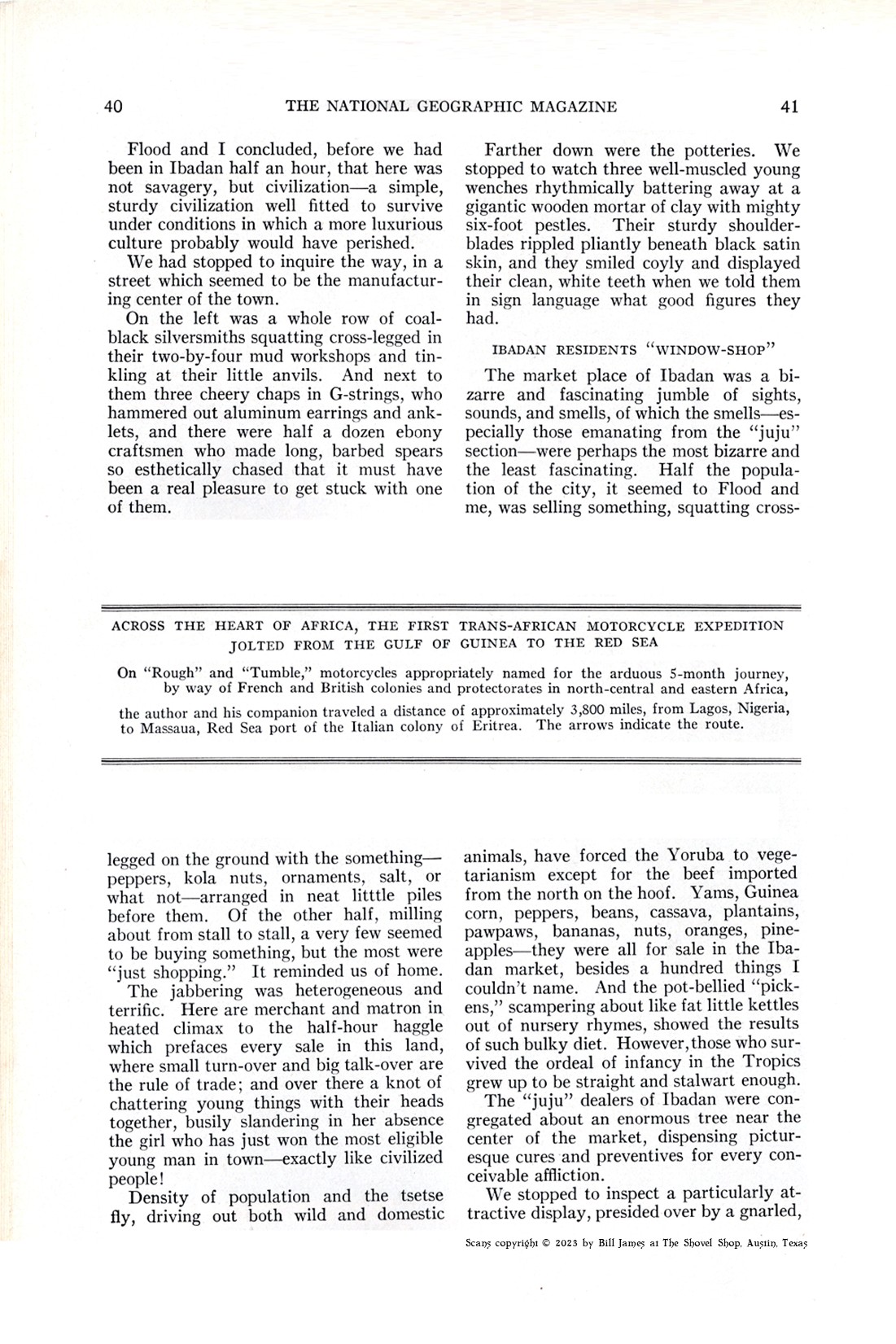
What ensued was a wild adventure, and a testament to the human spirit. Not just Wilson’s and Flood’s (although their mettle and make-do skills were certainly tested) but the many good people – native and expat alike – who lent much-needed assistance as the men manhandled their unwieldly rigs through jungle and swamp.
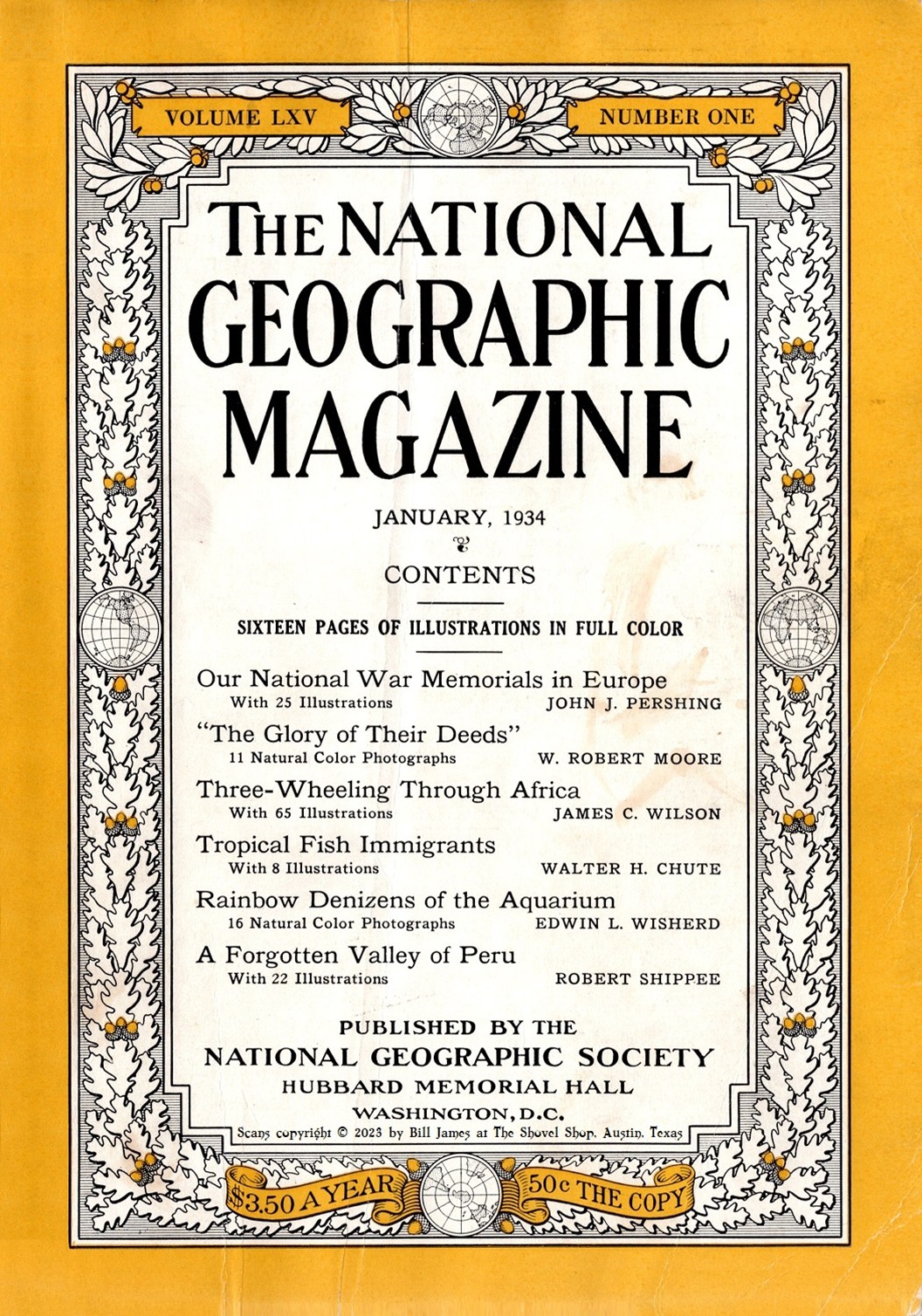
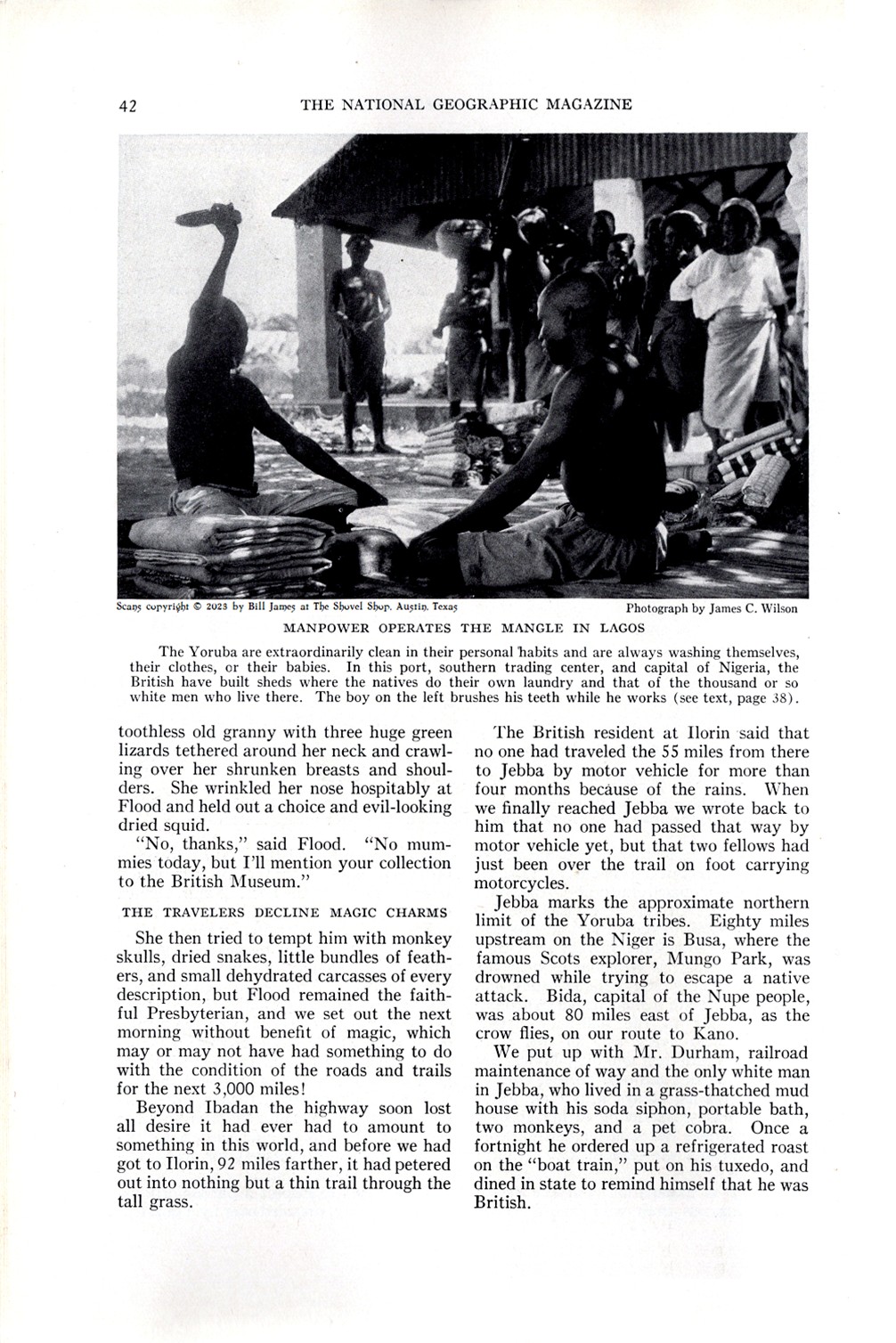
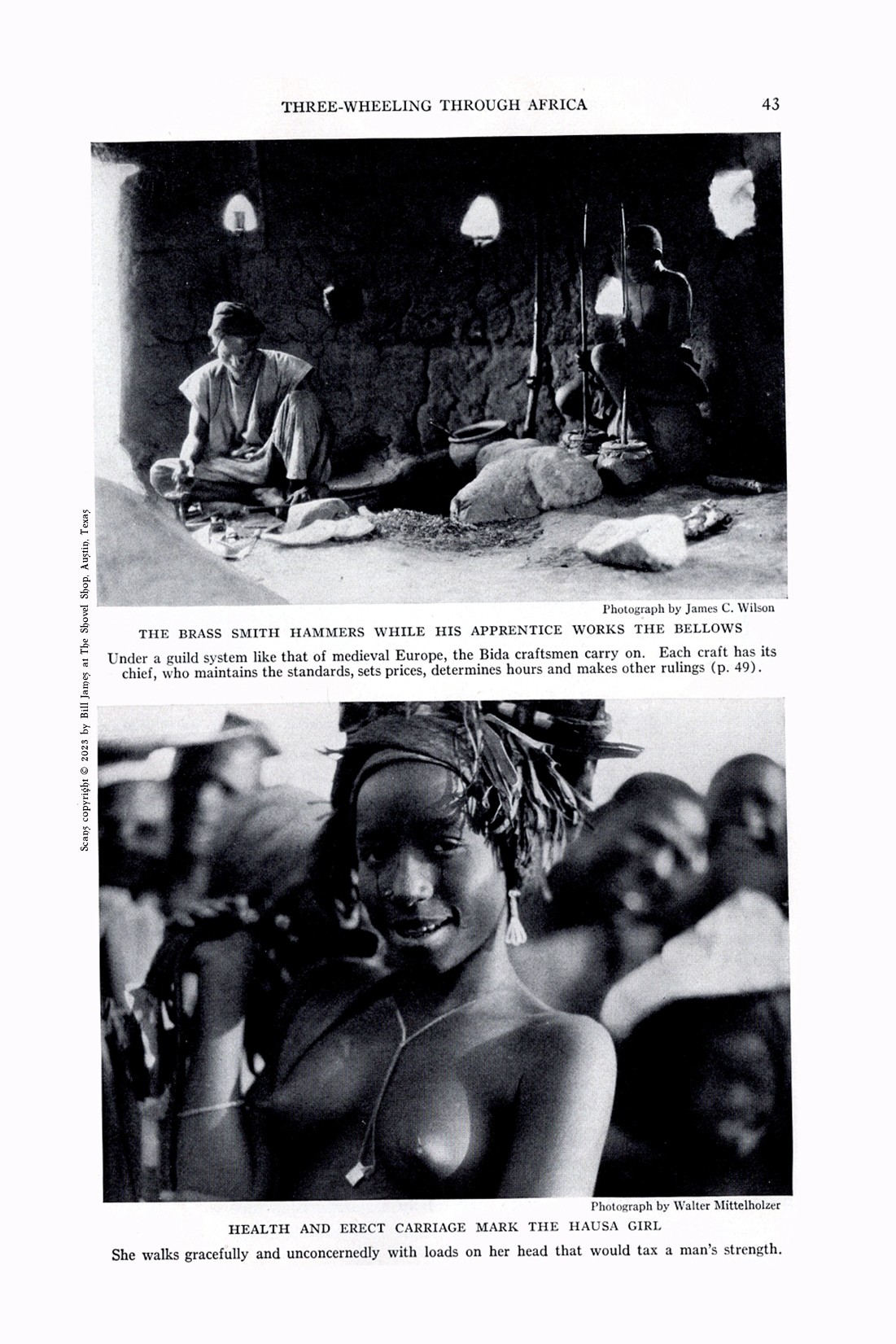
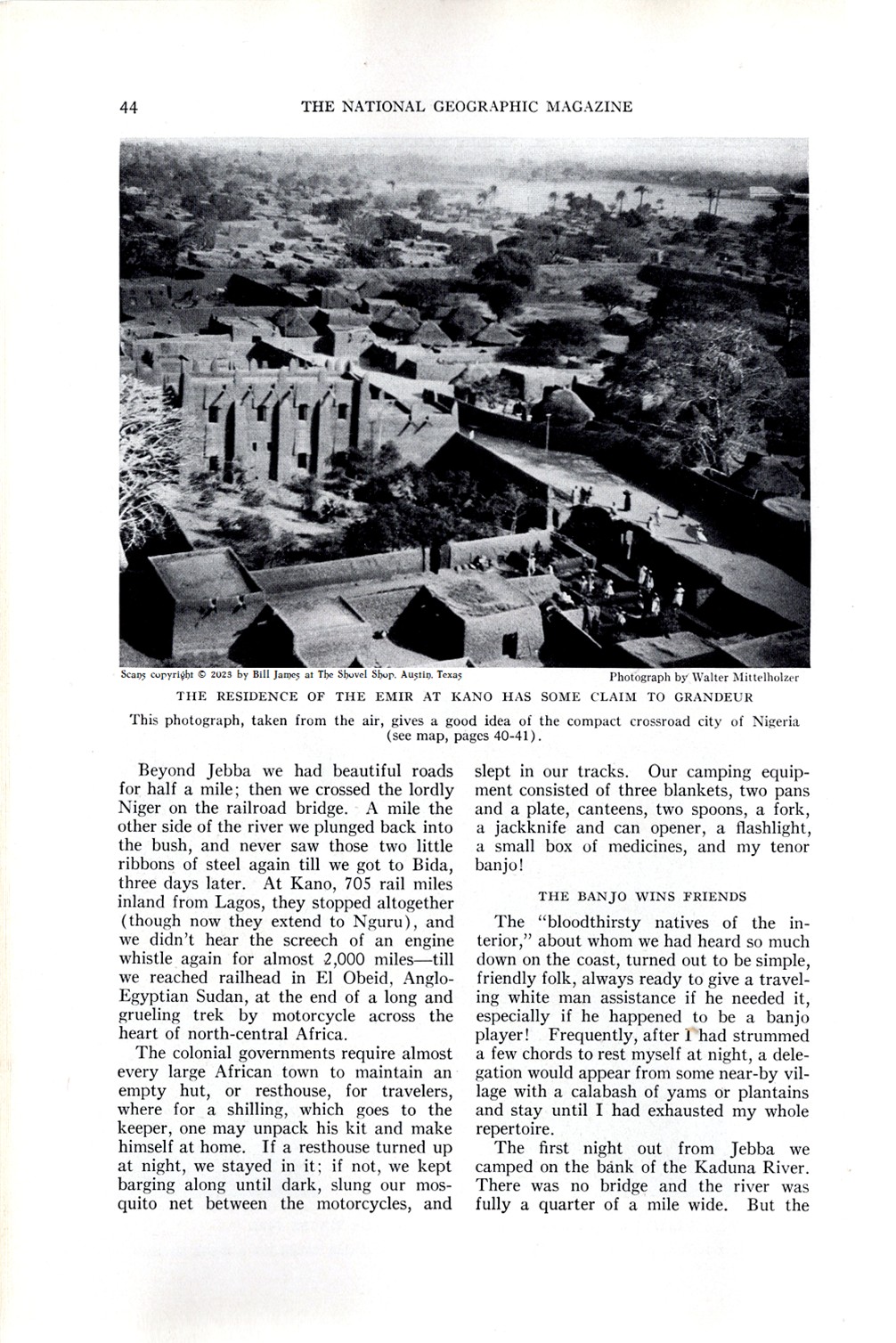
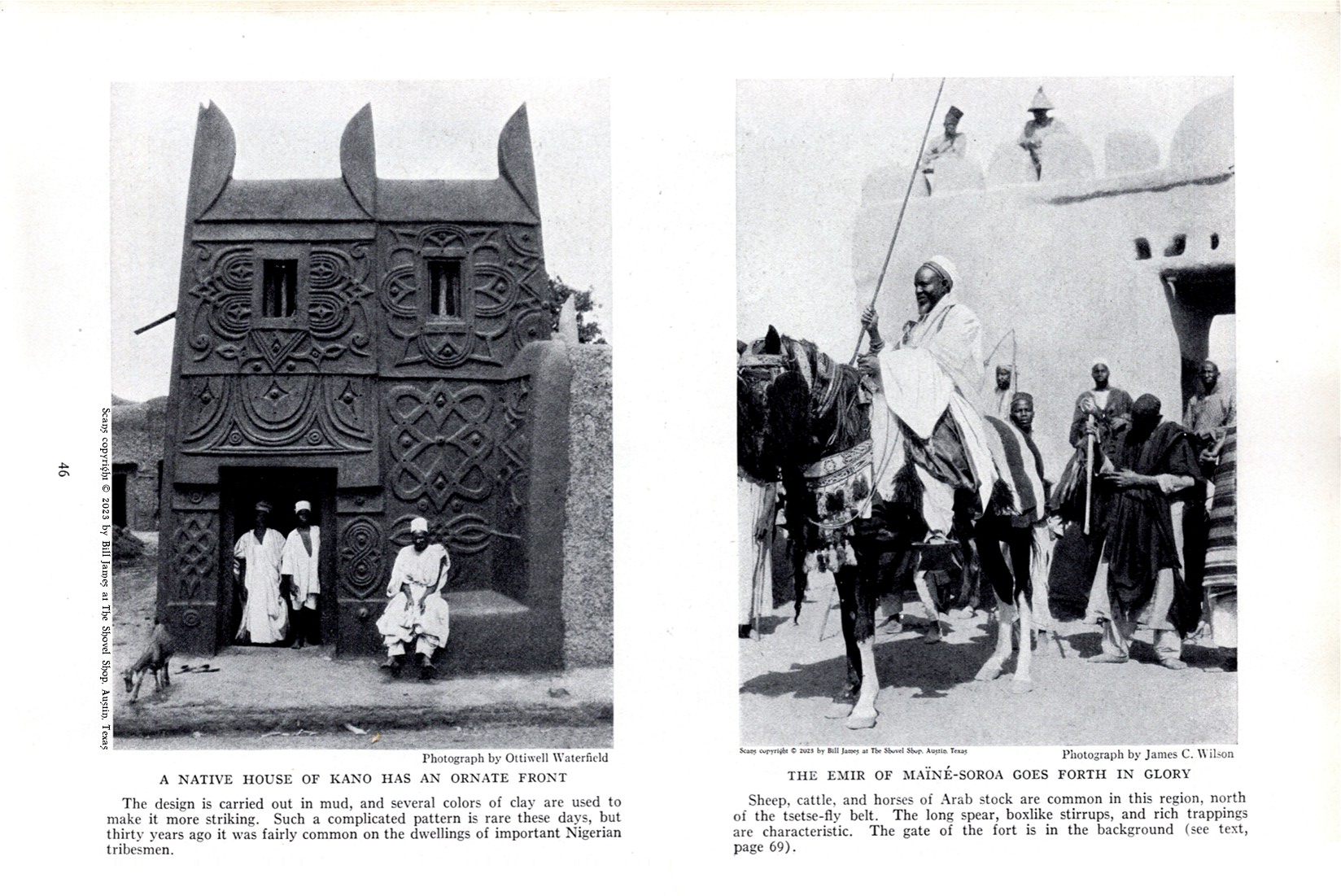
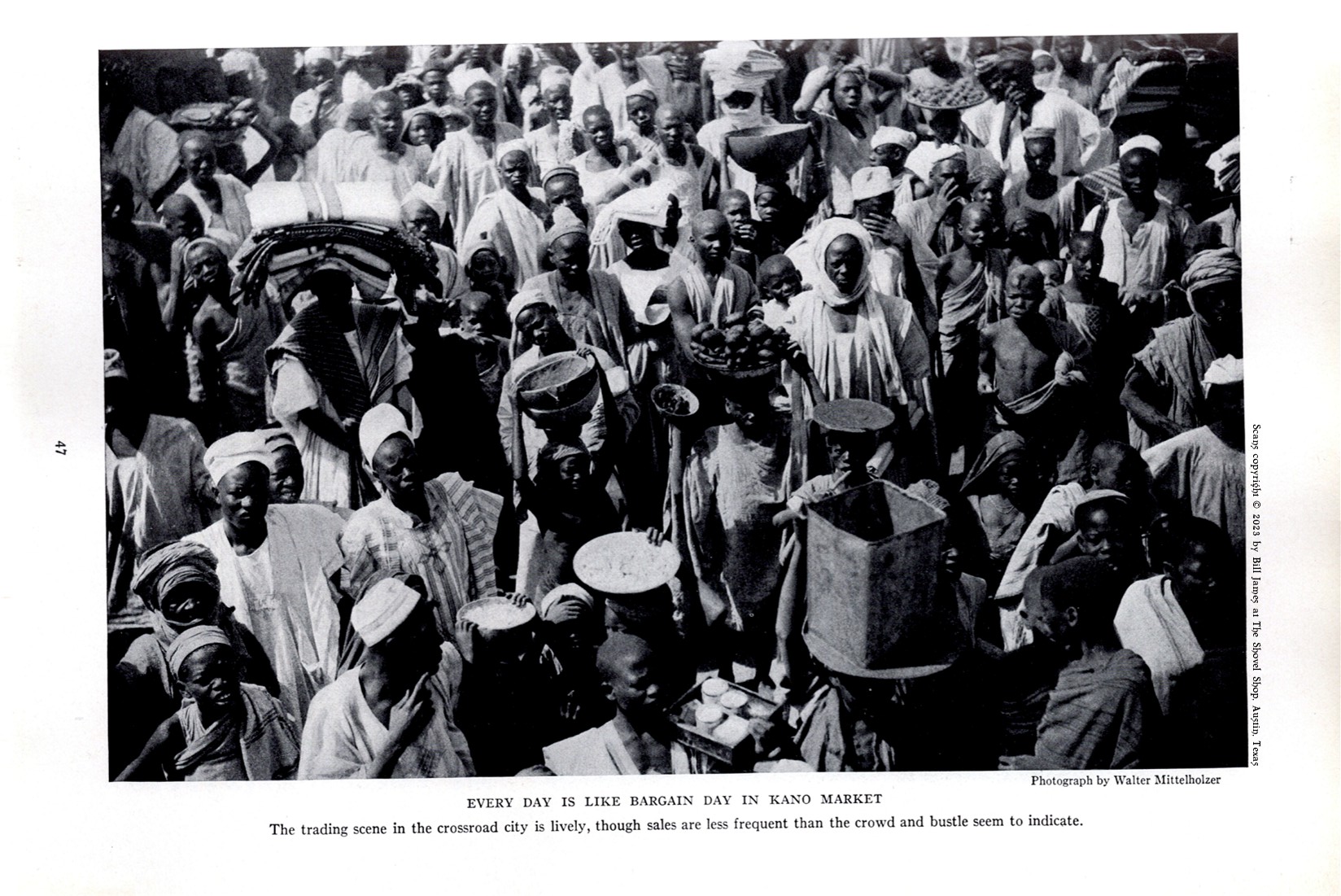
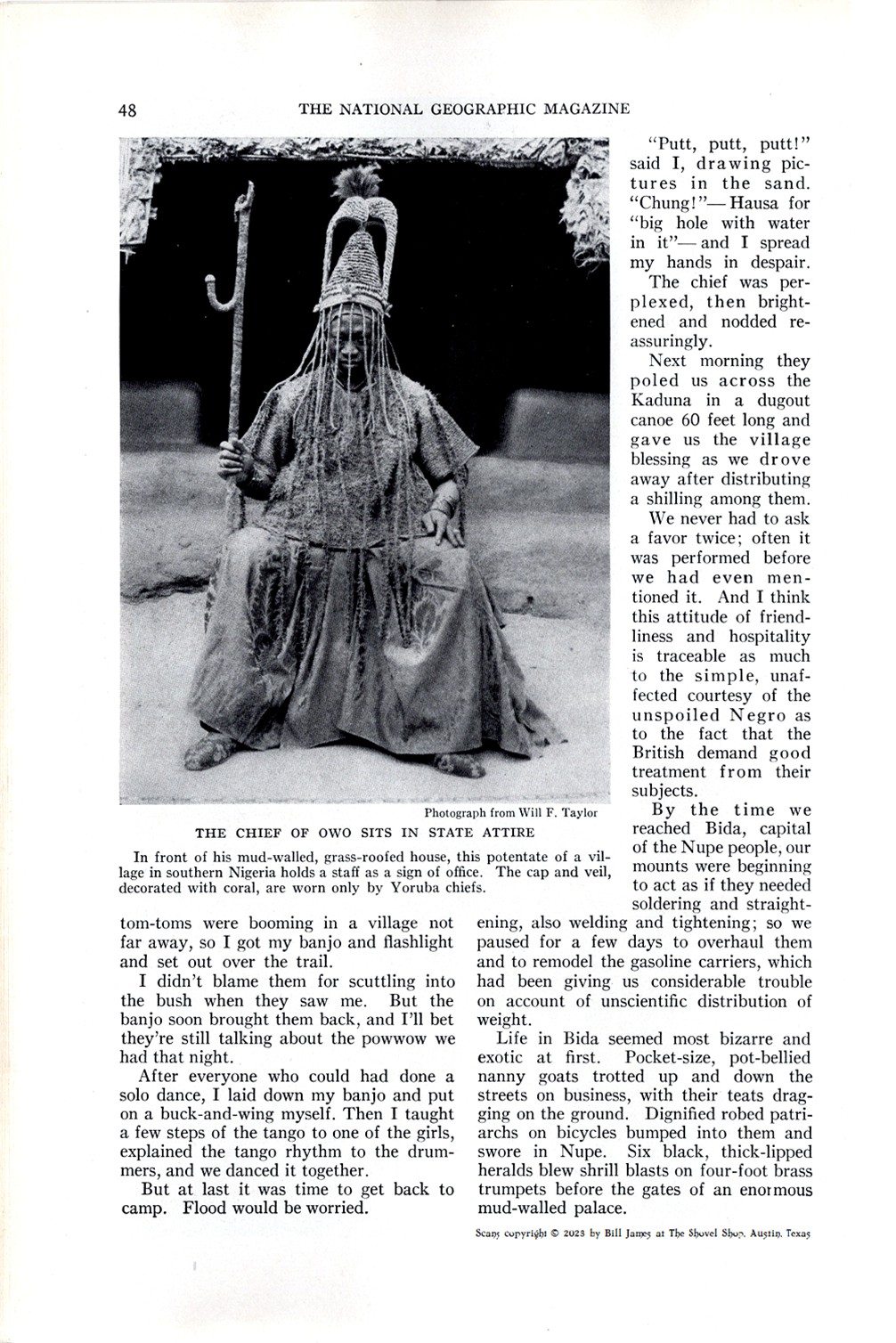
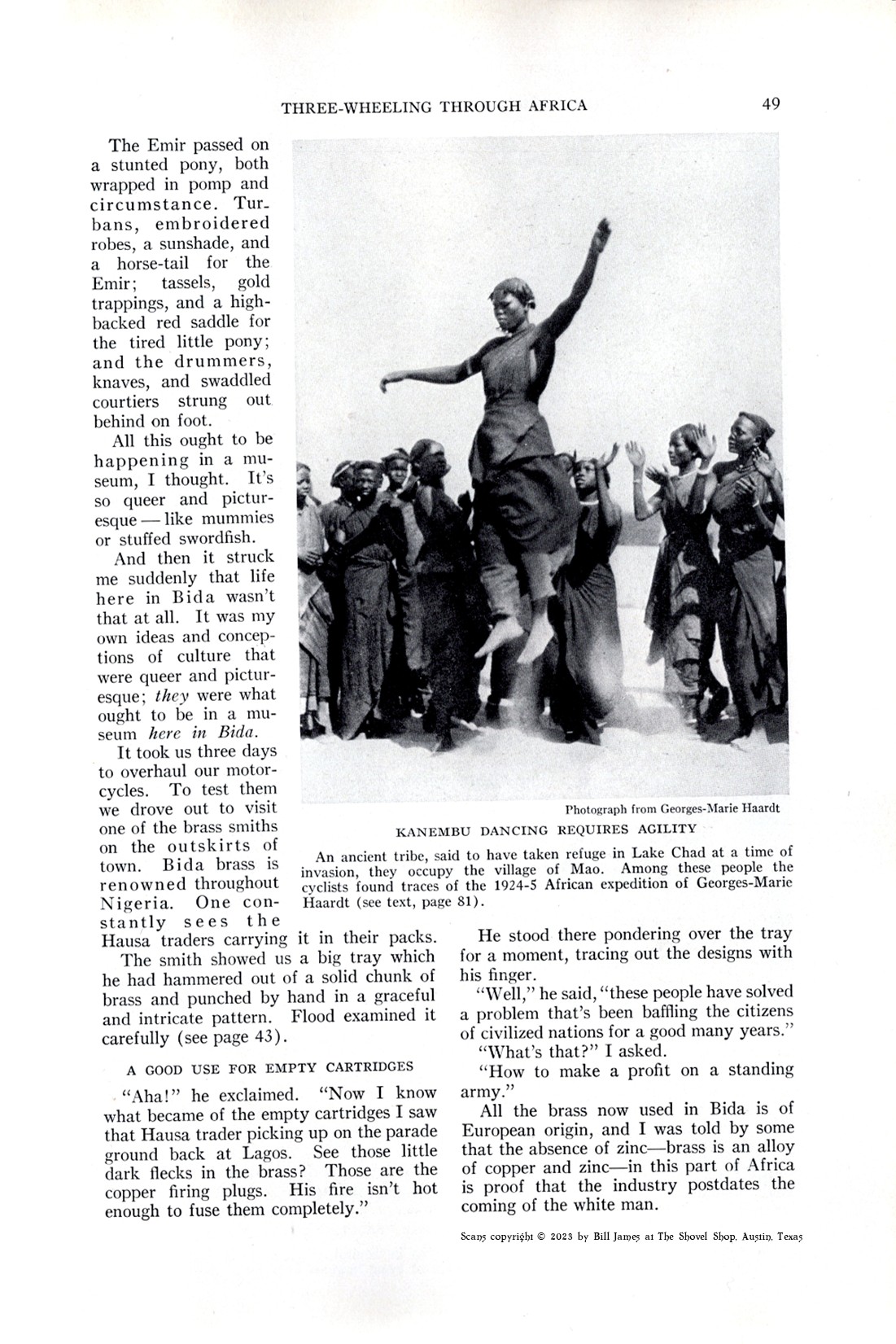
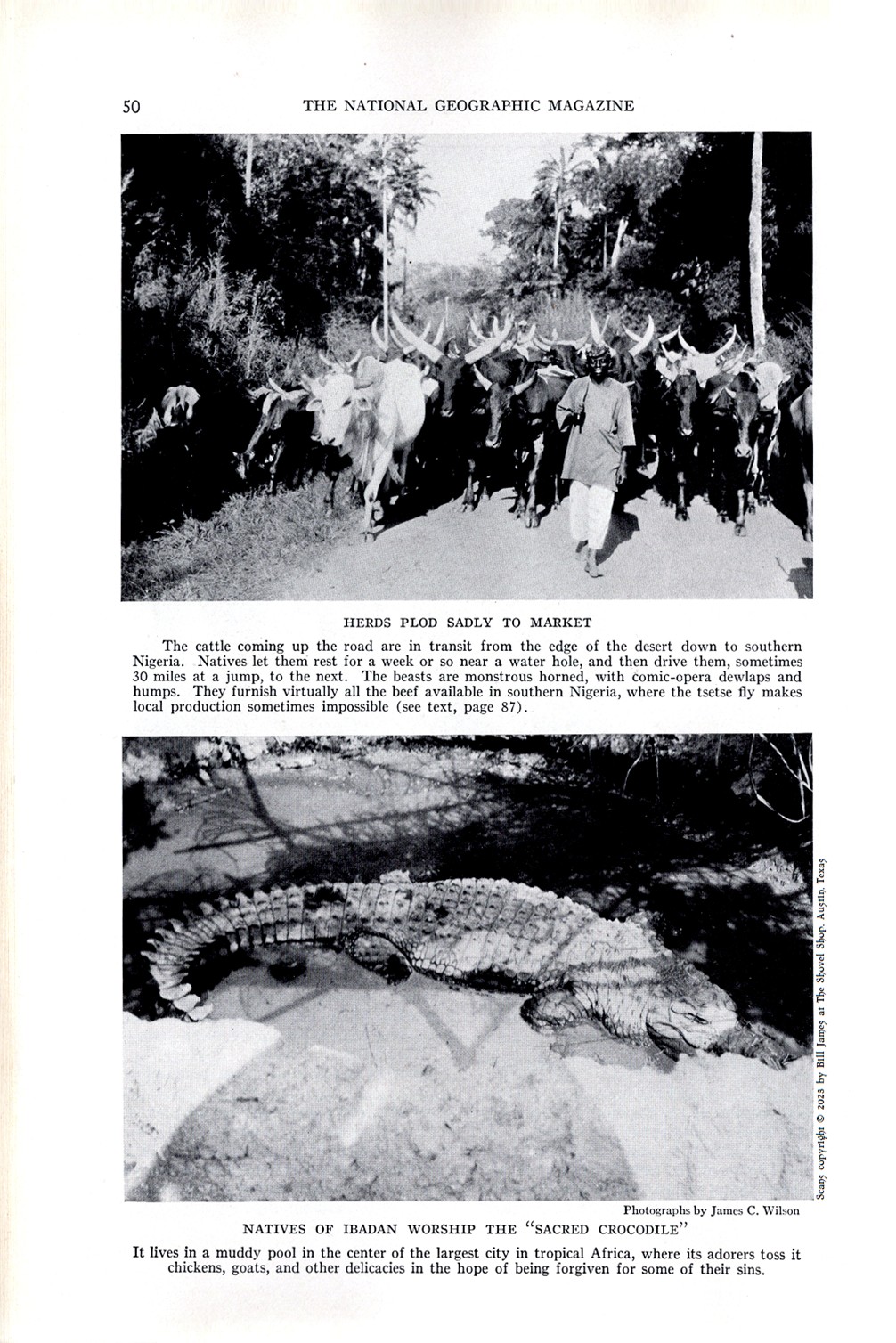
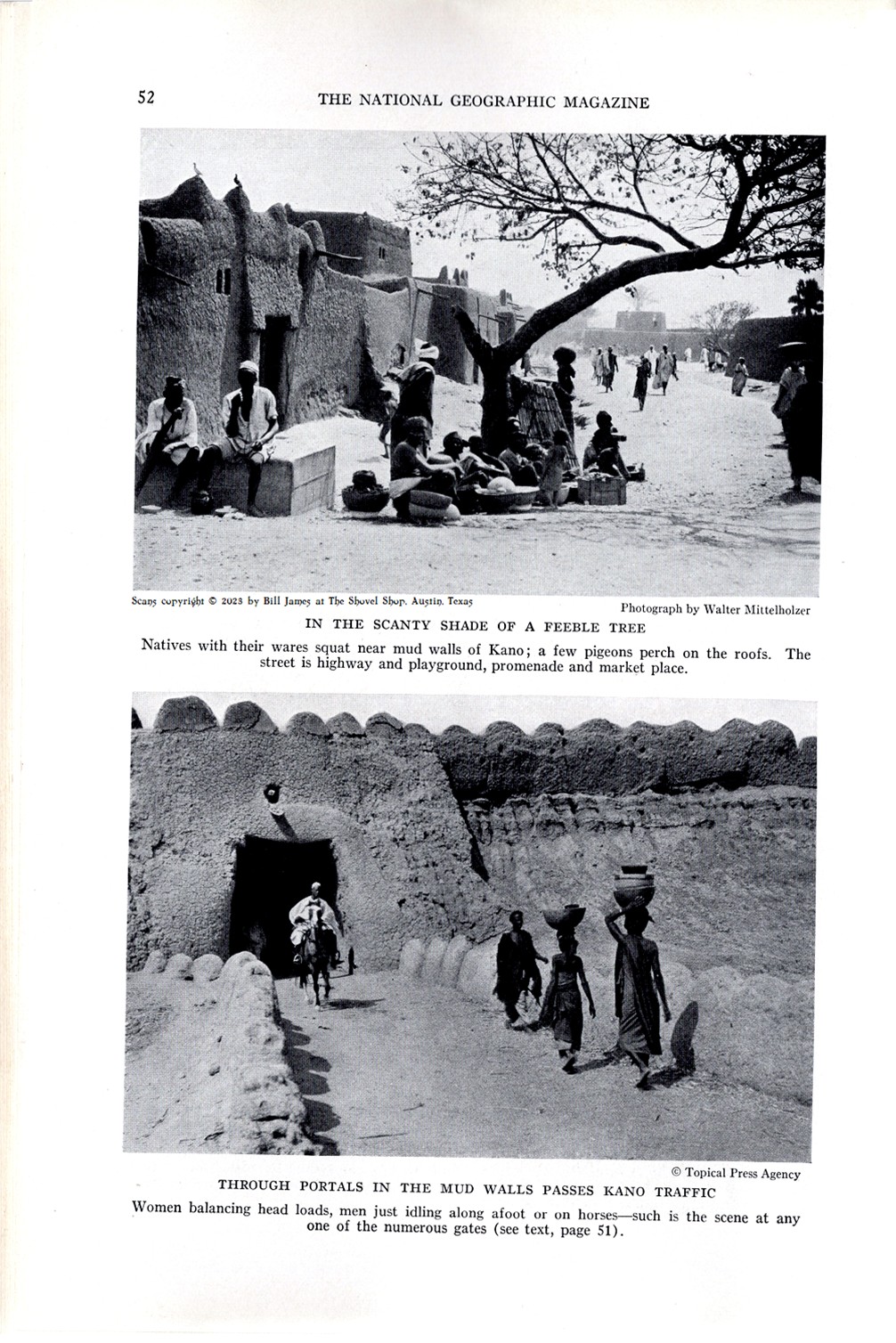
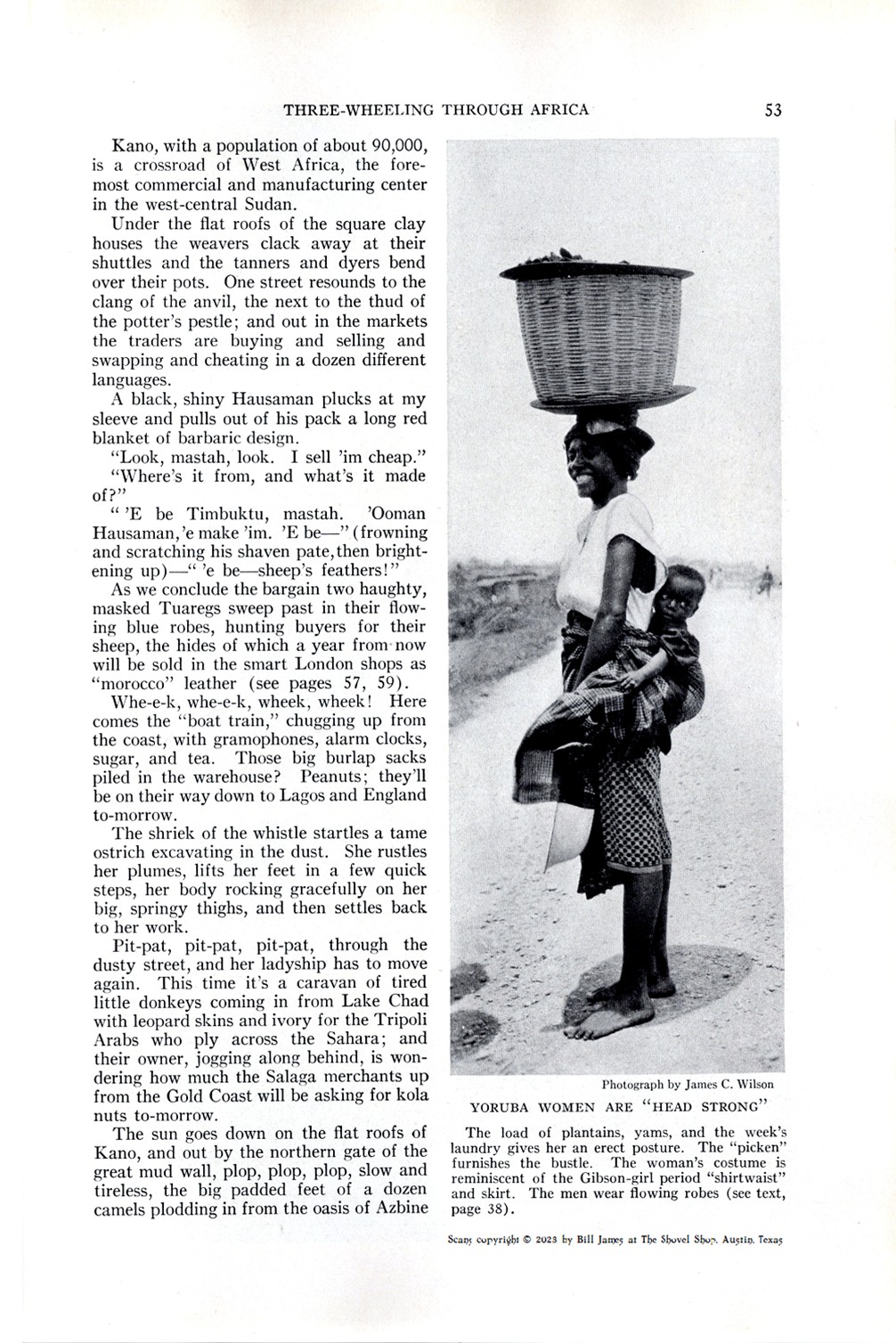
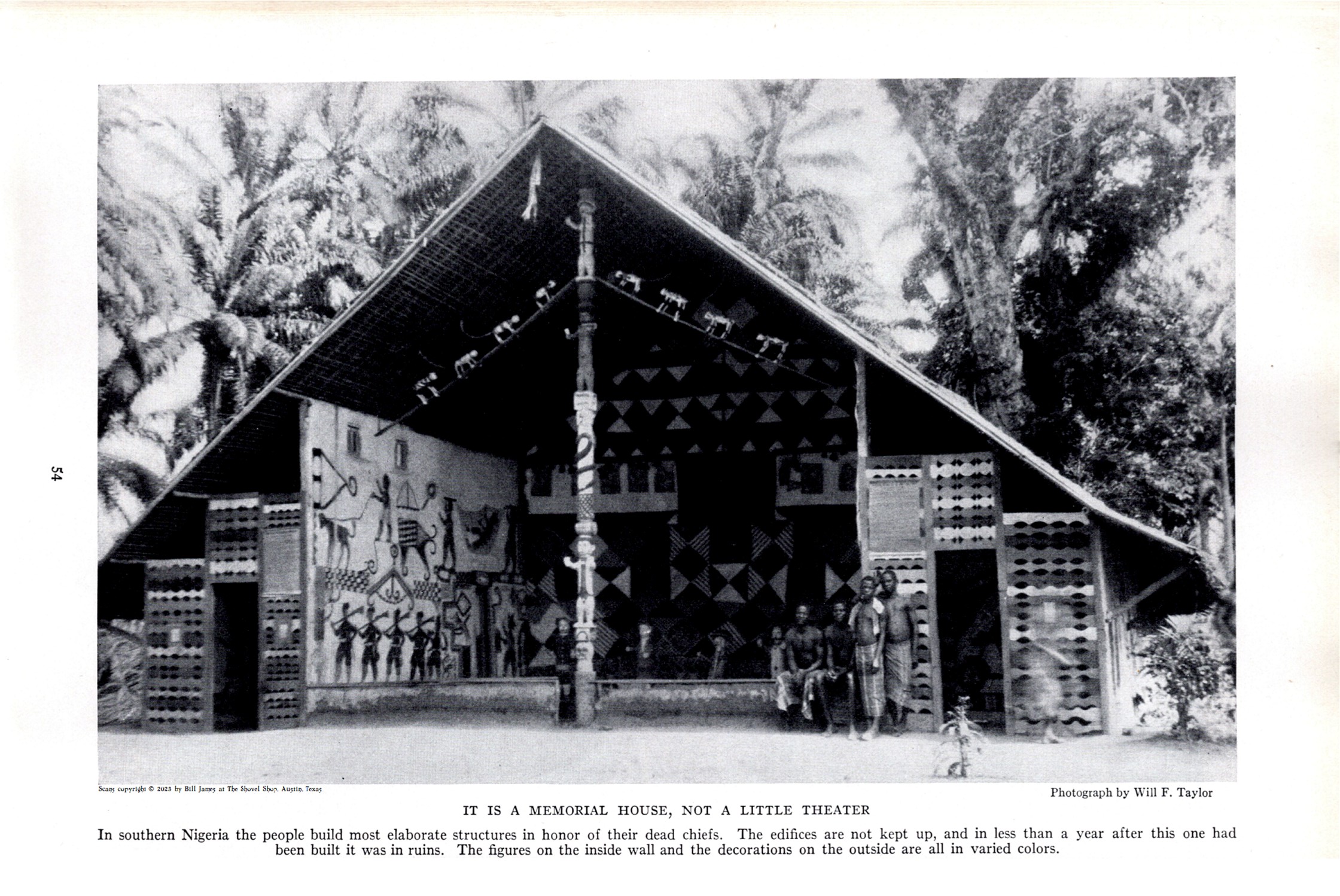
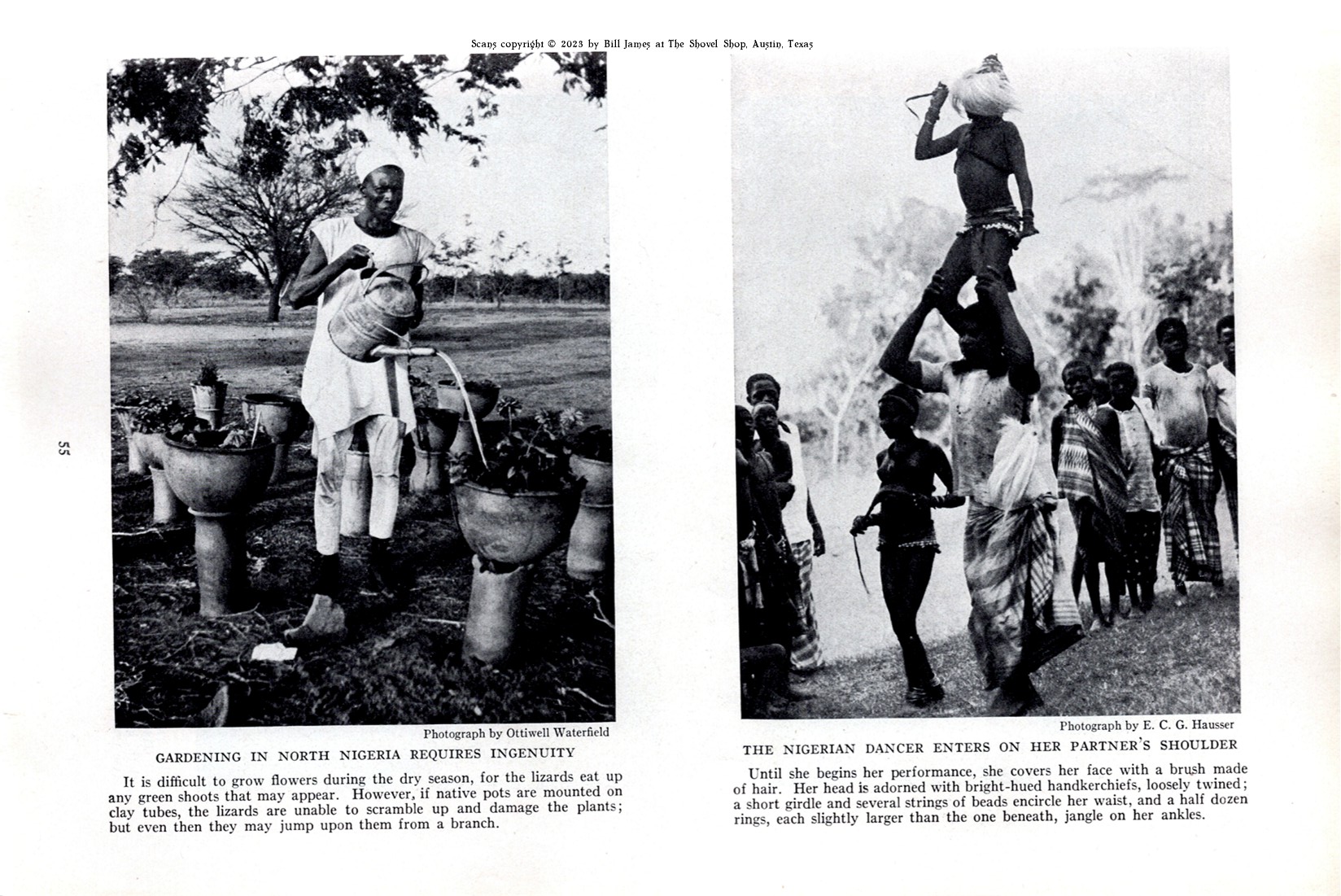
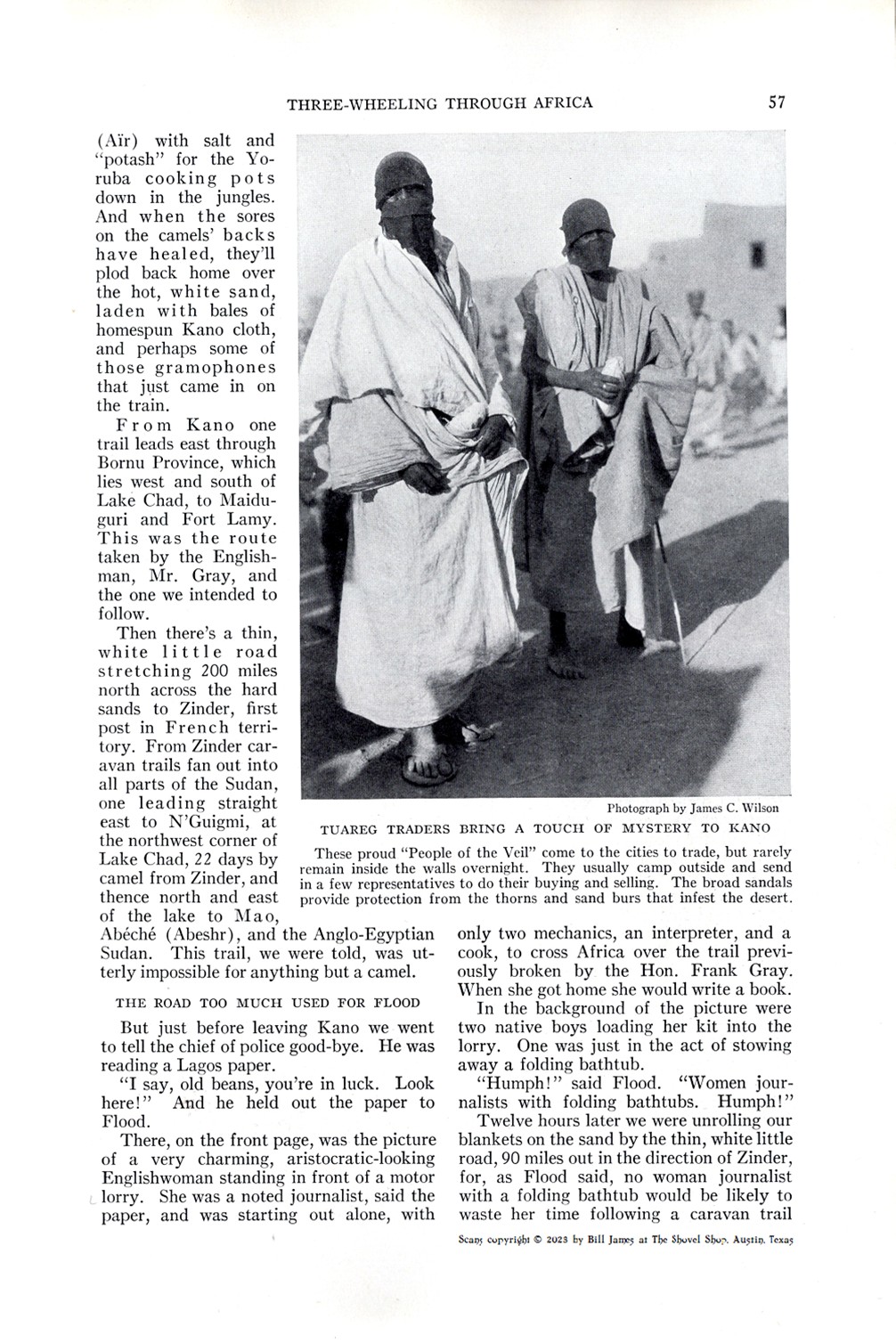
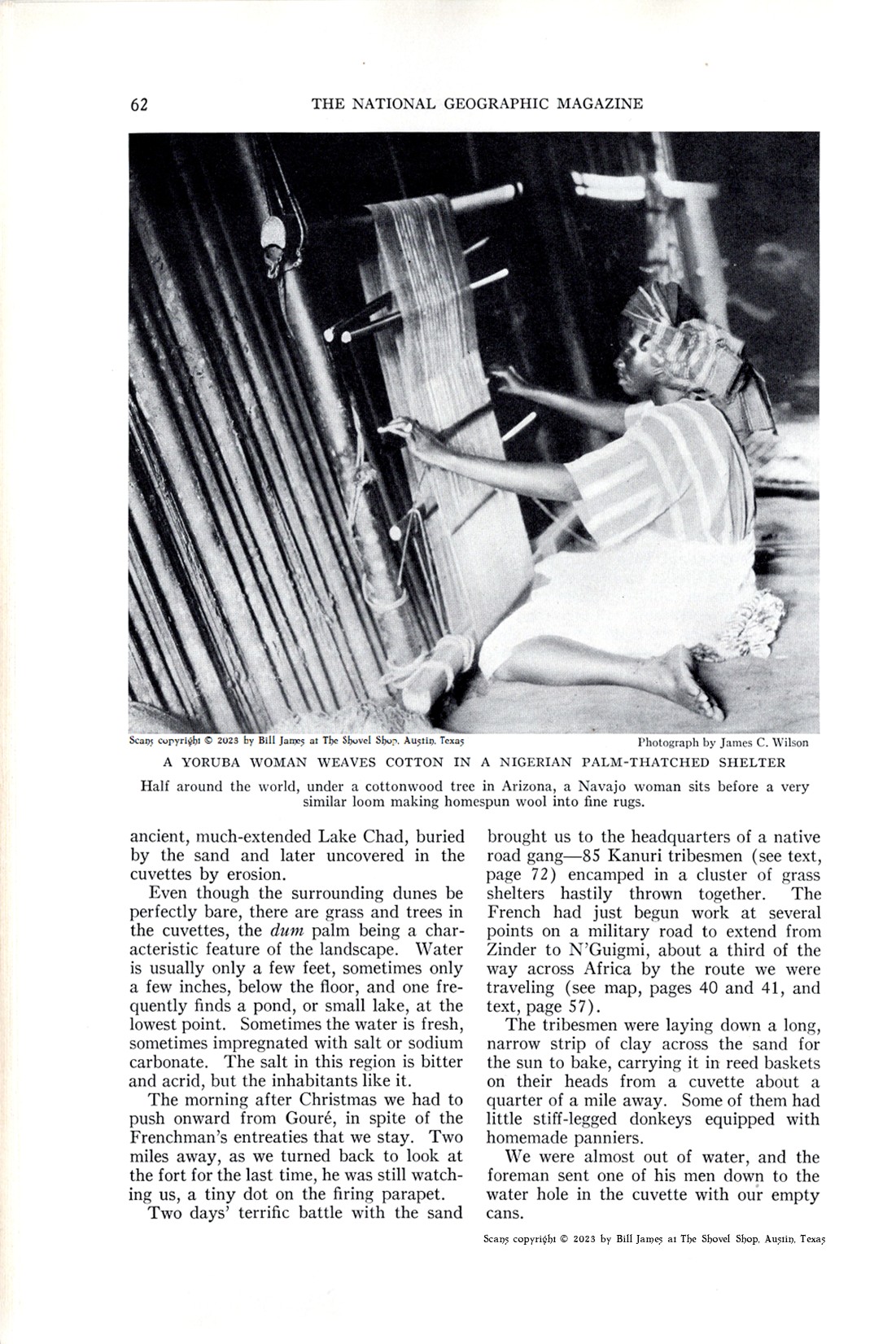
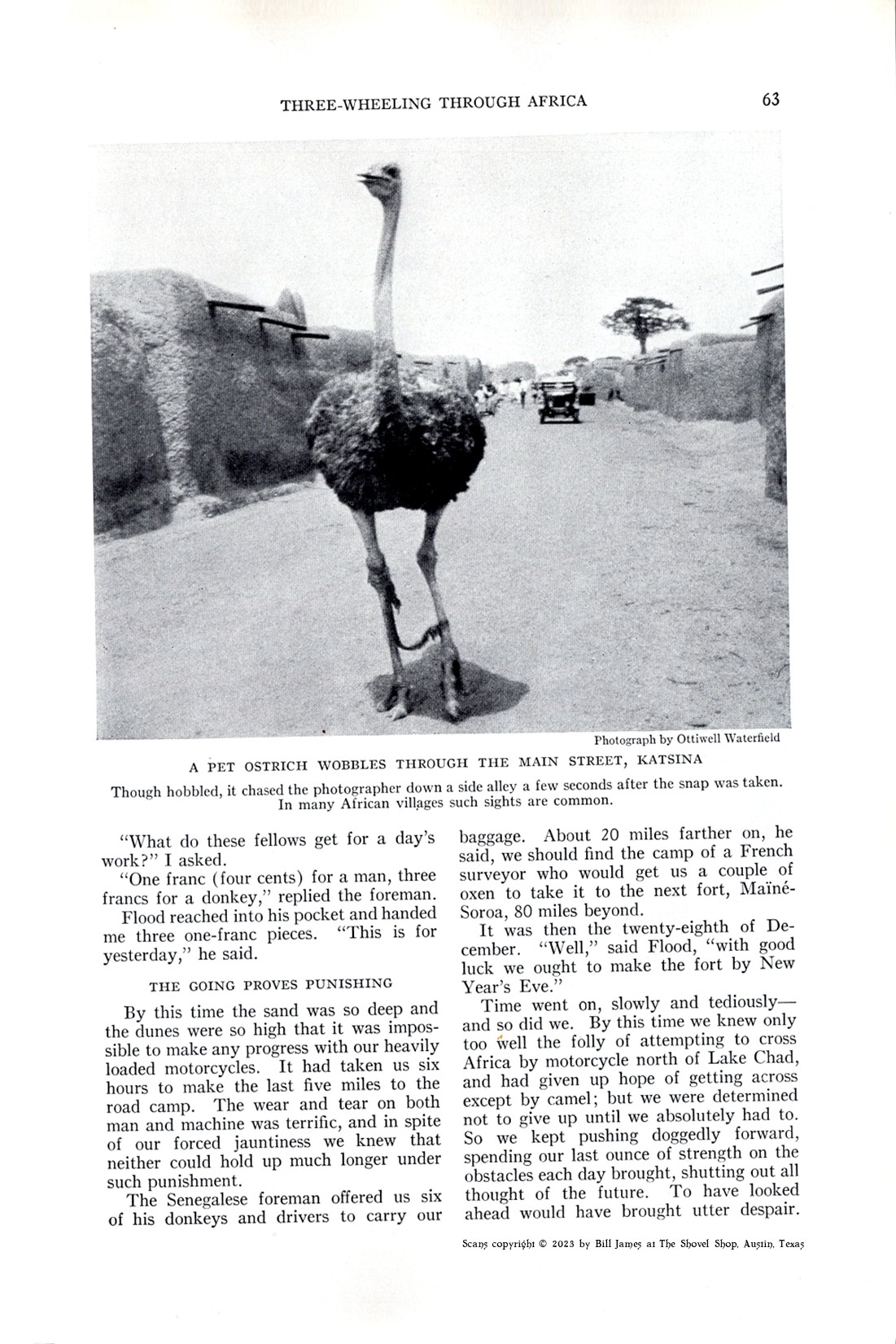
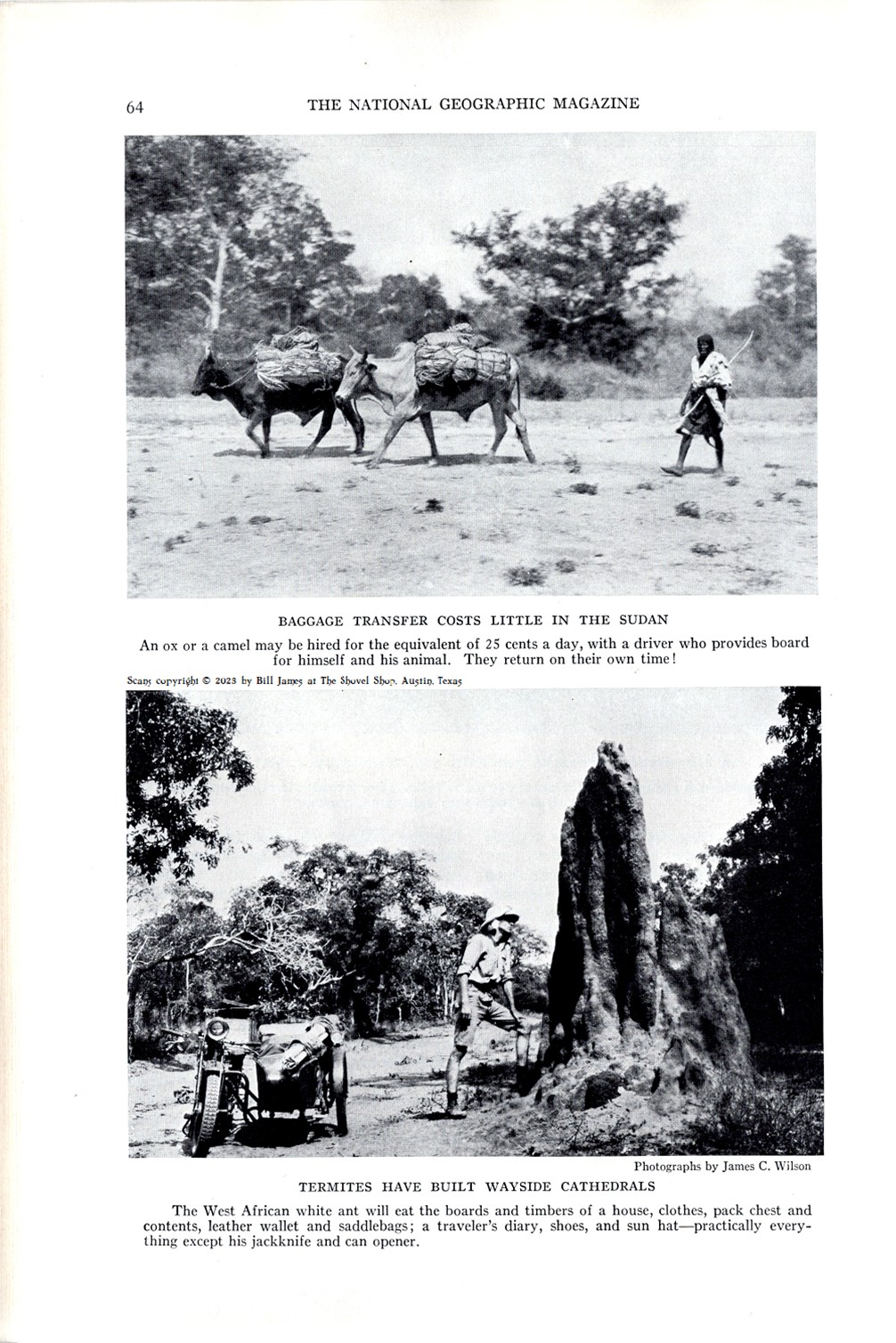
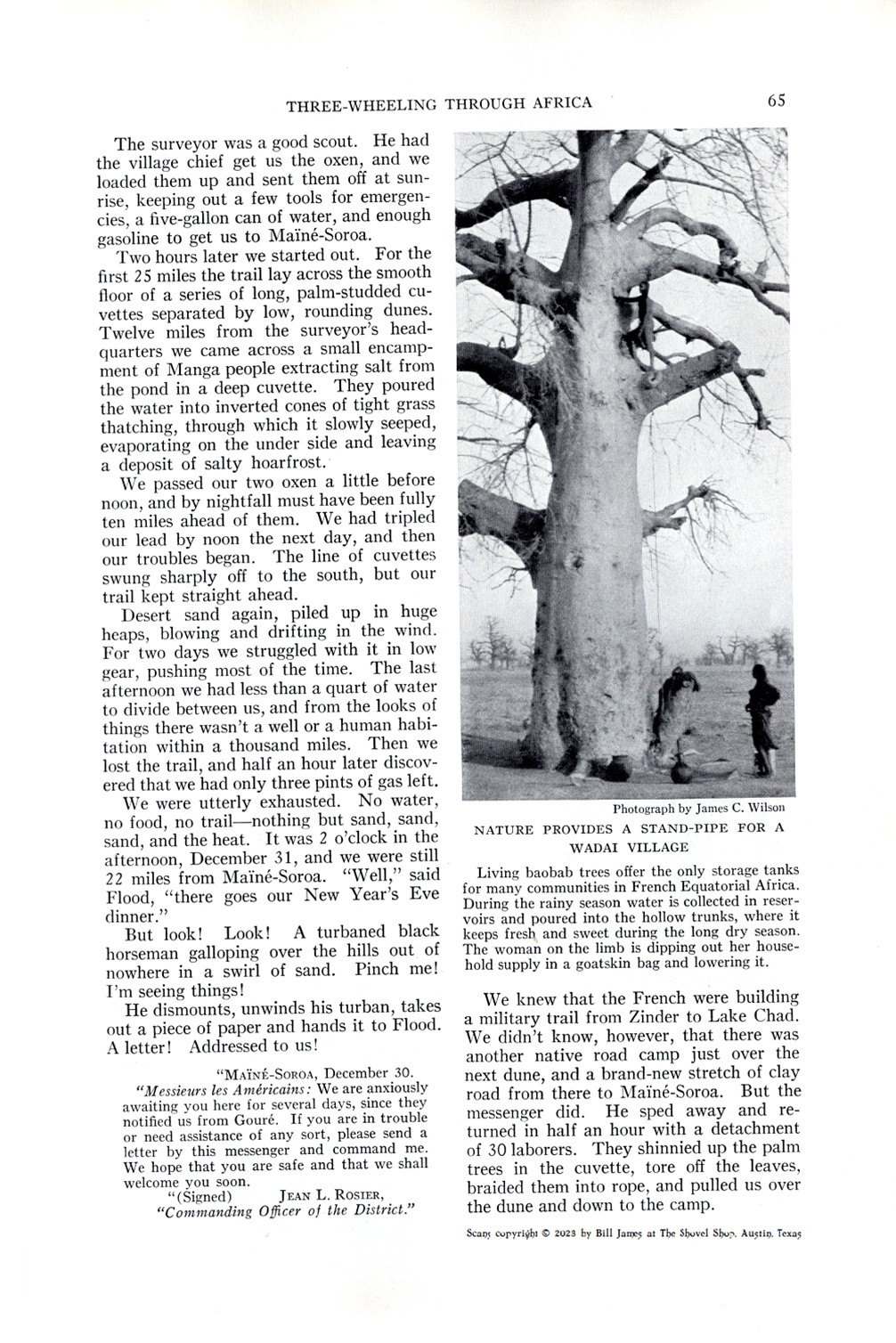
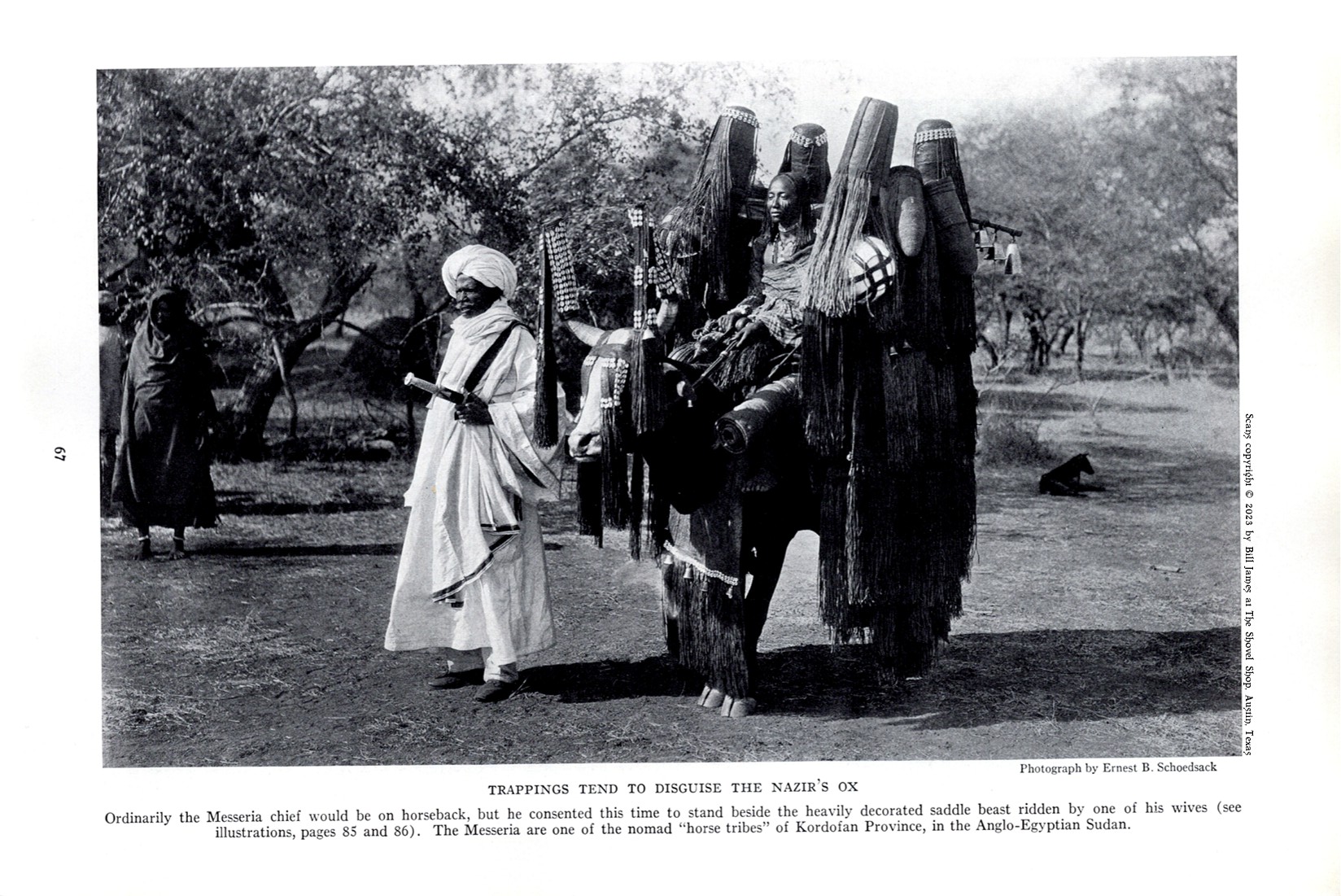
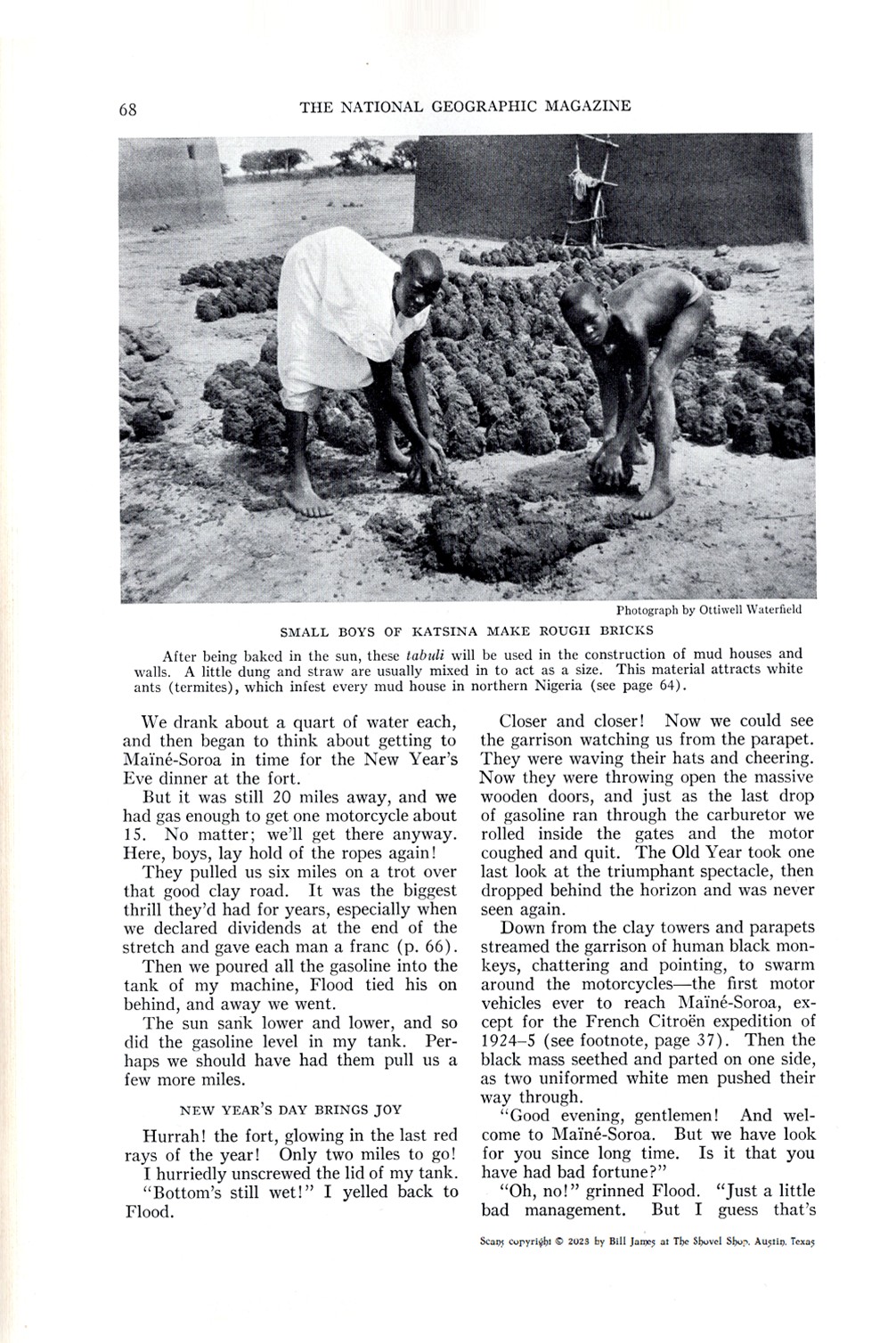
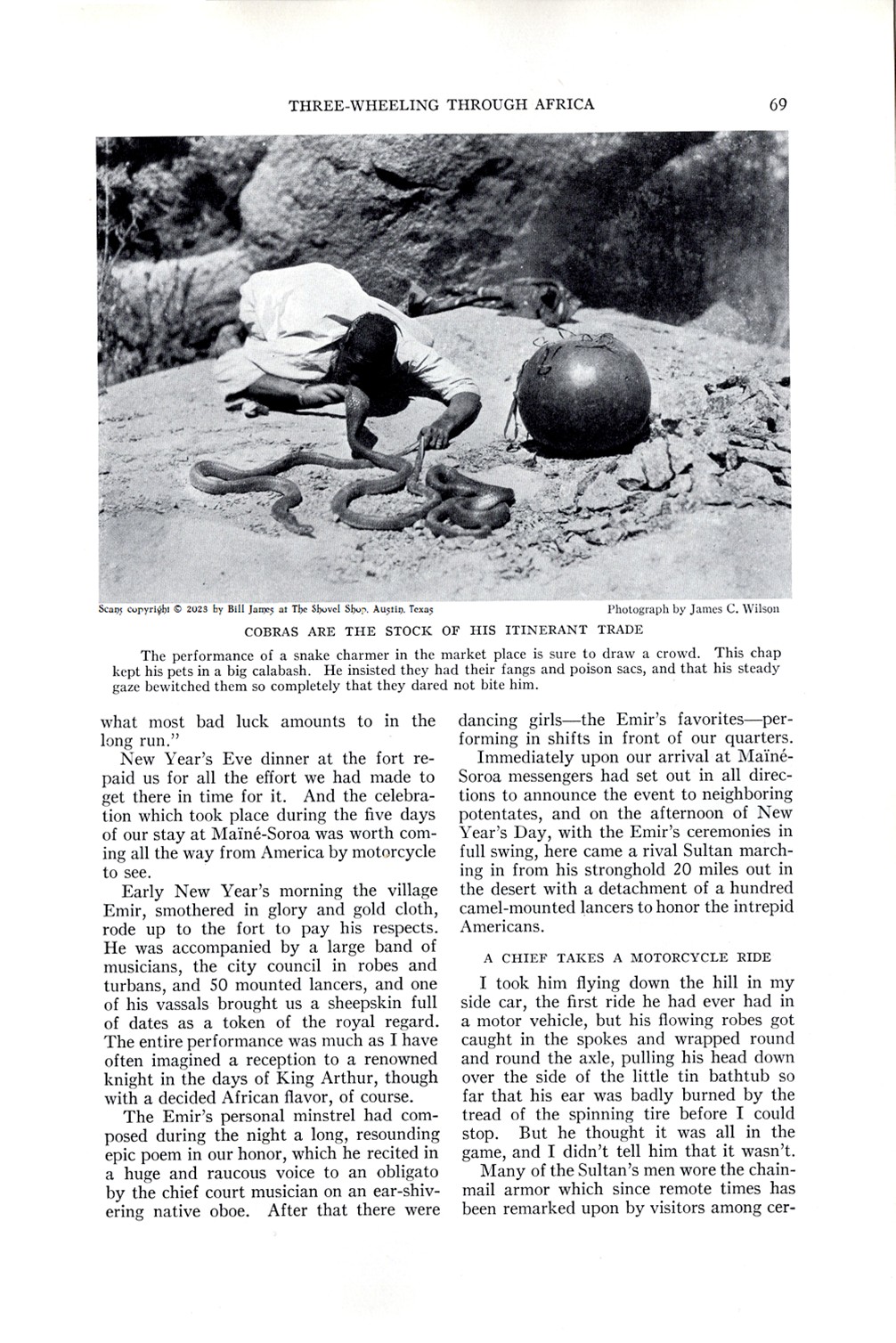
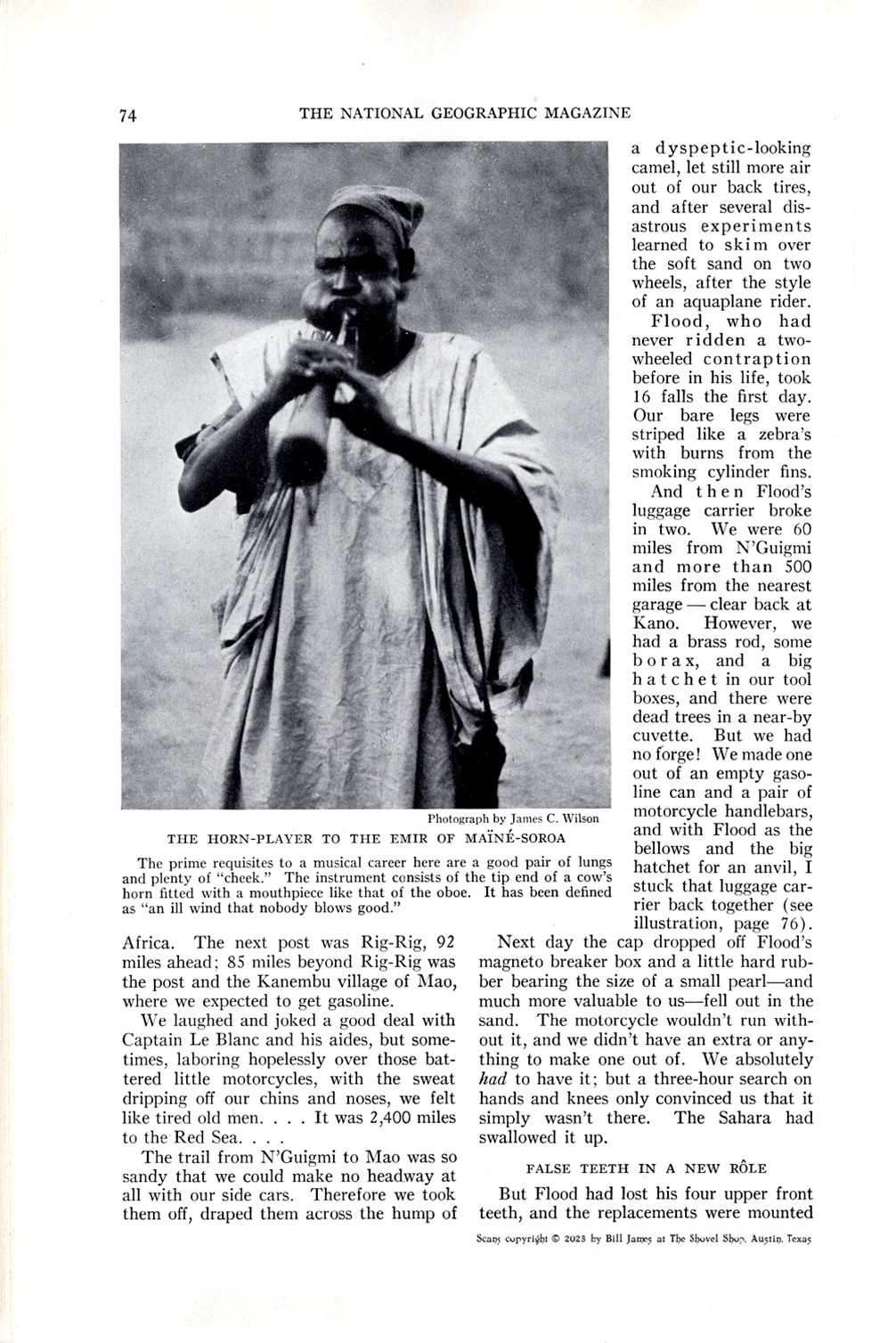
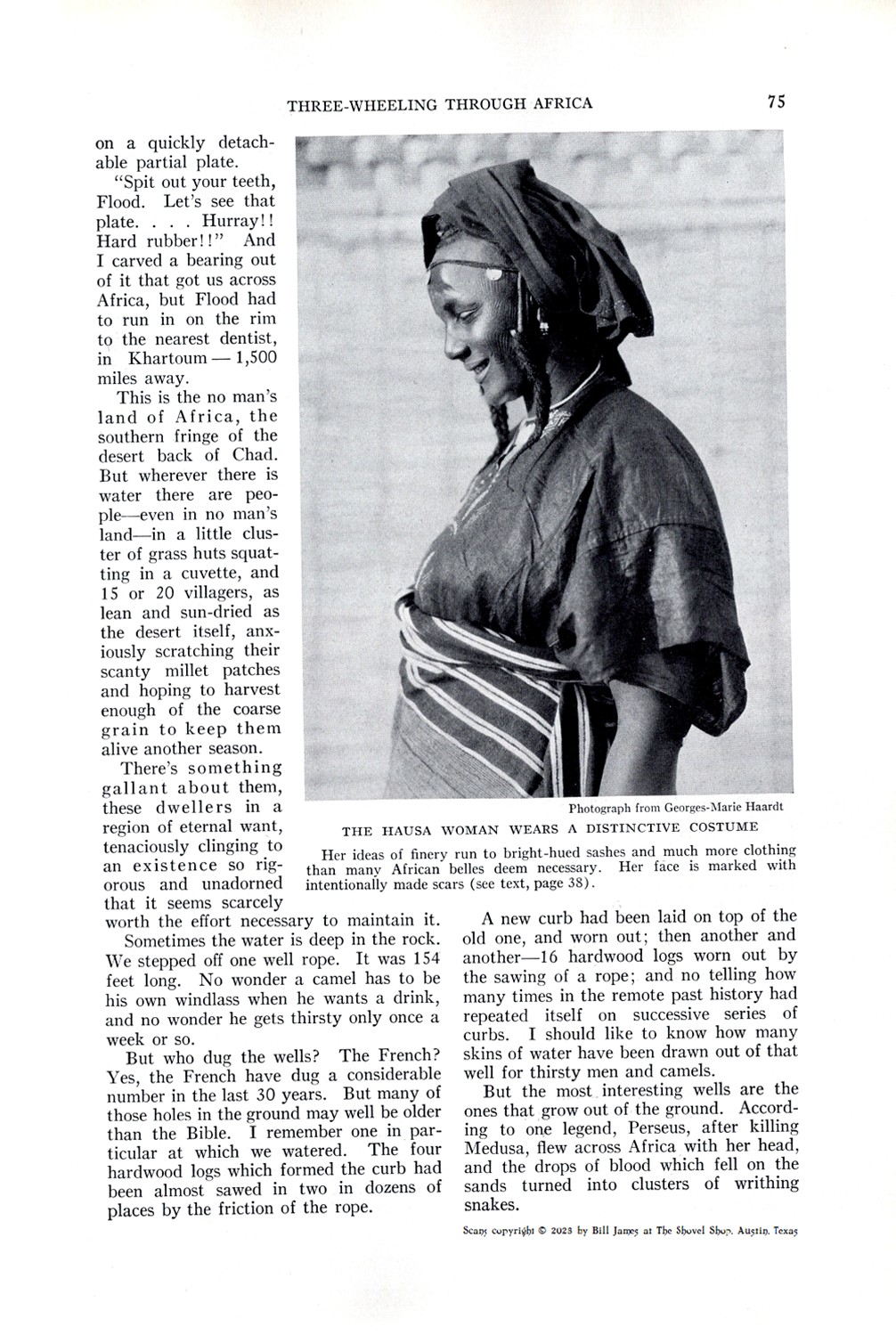
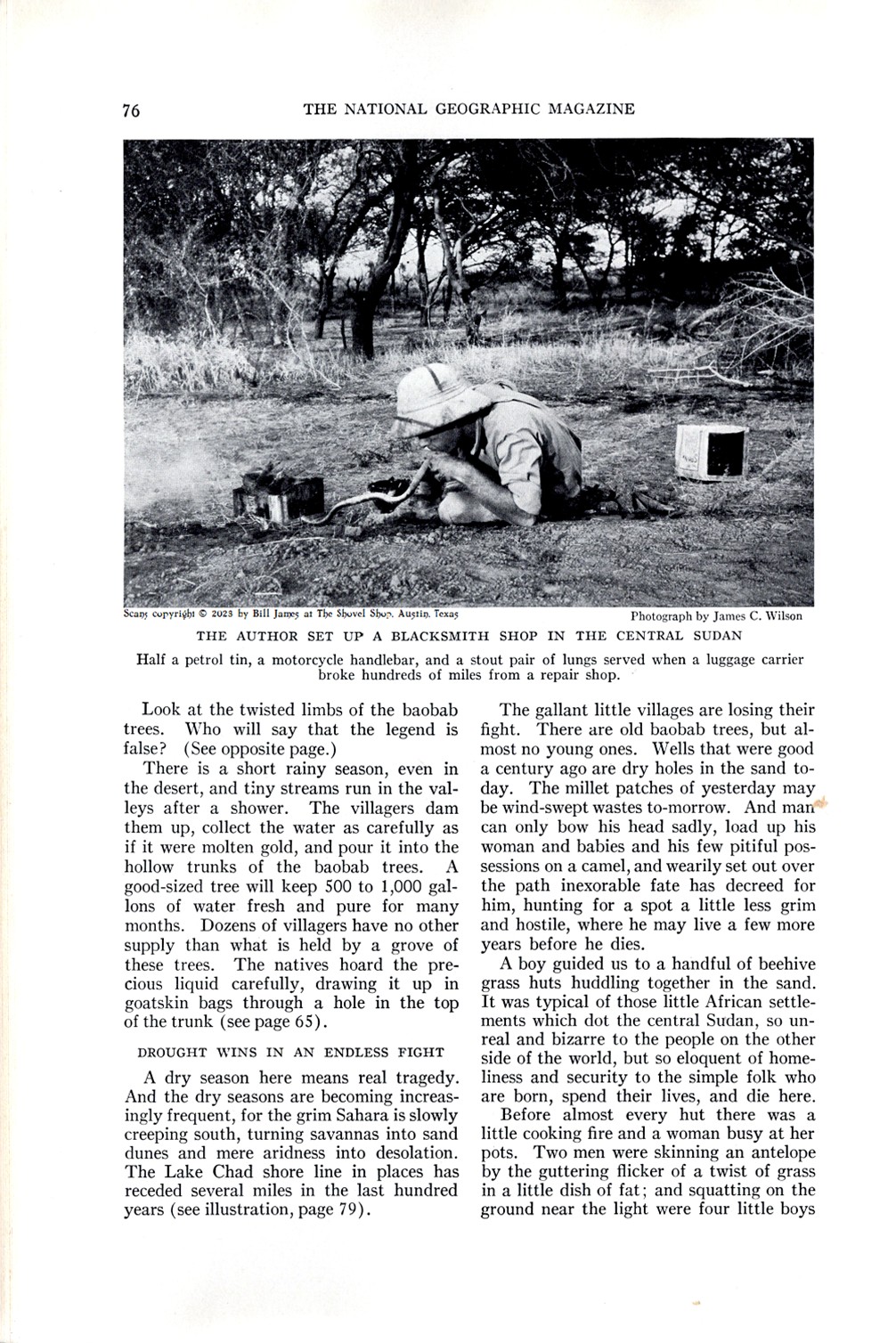
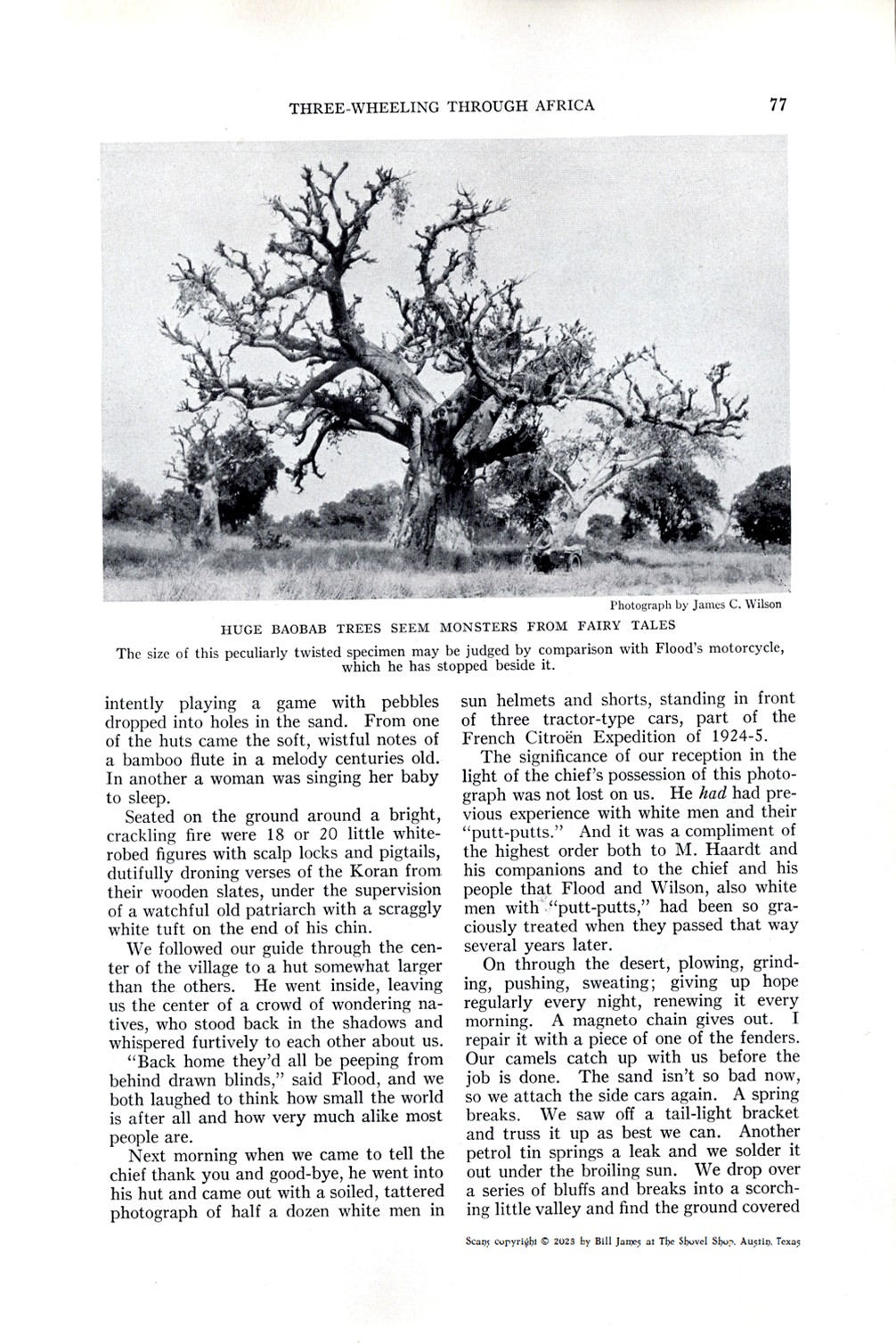
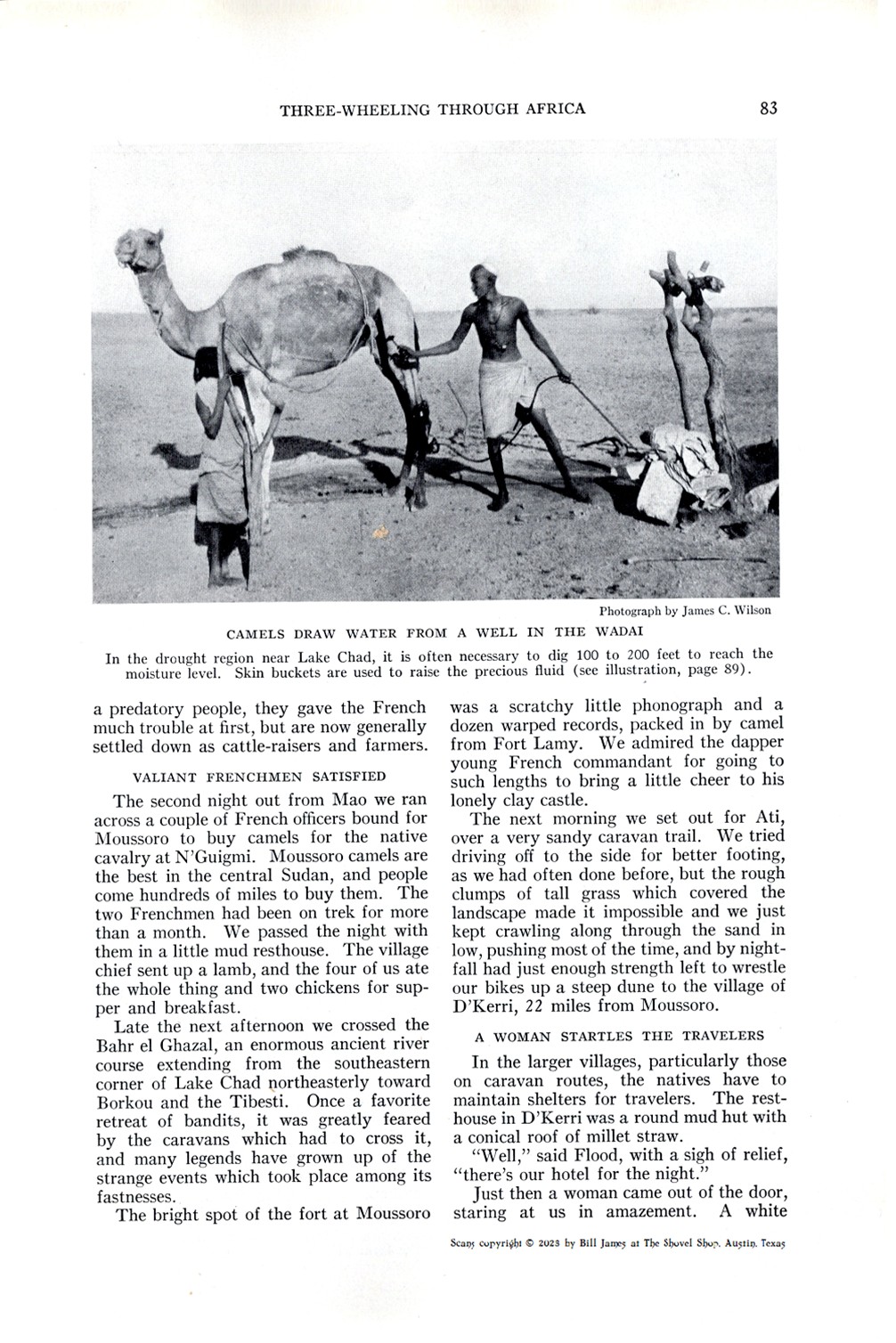
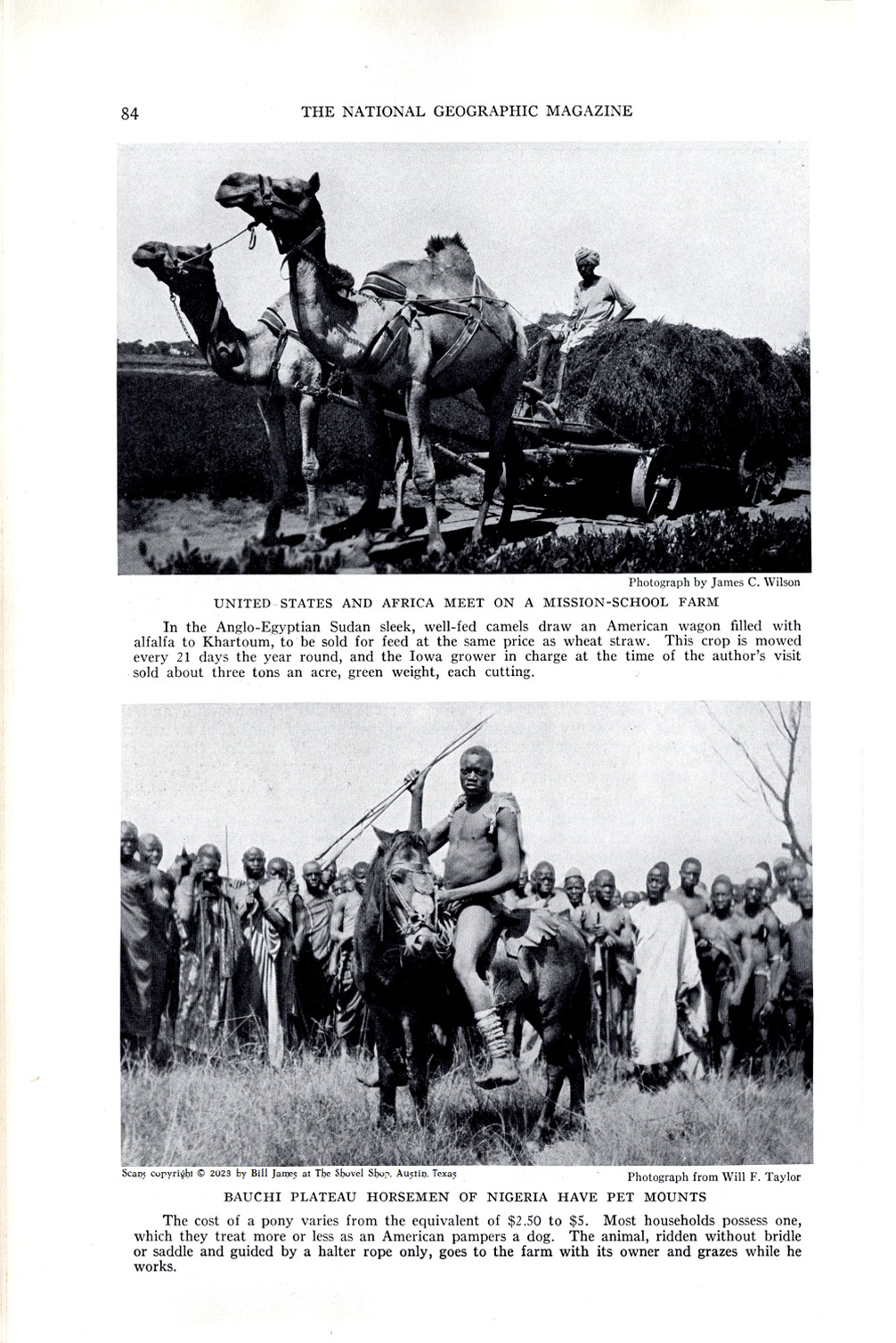
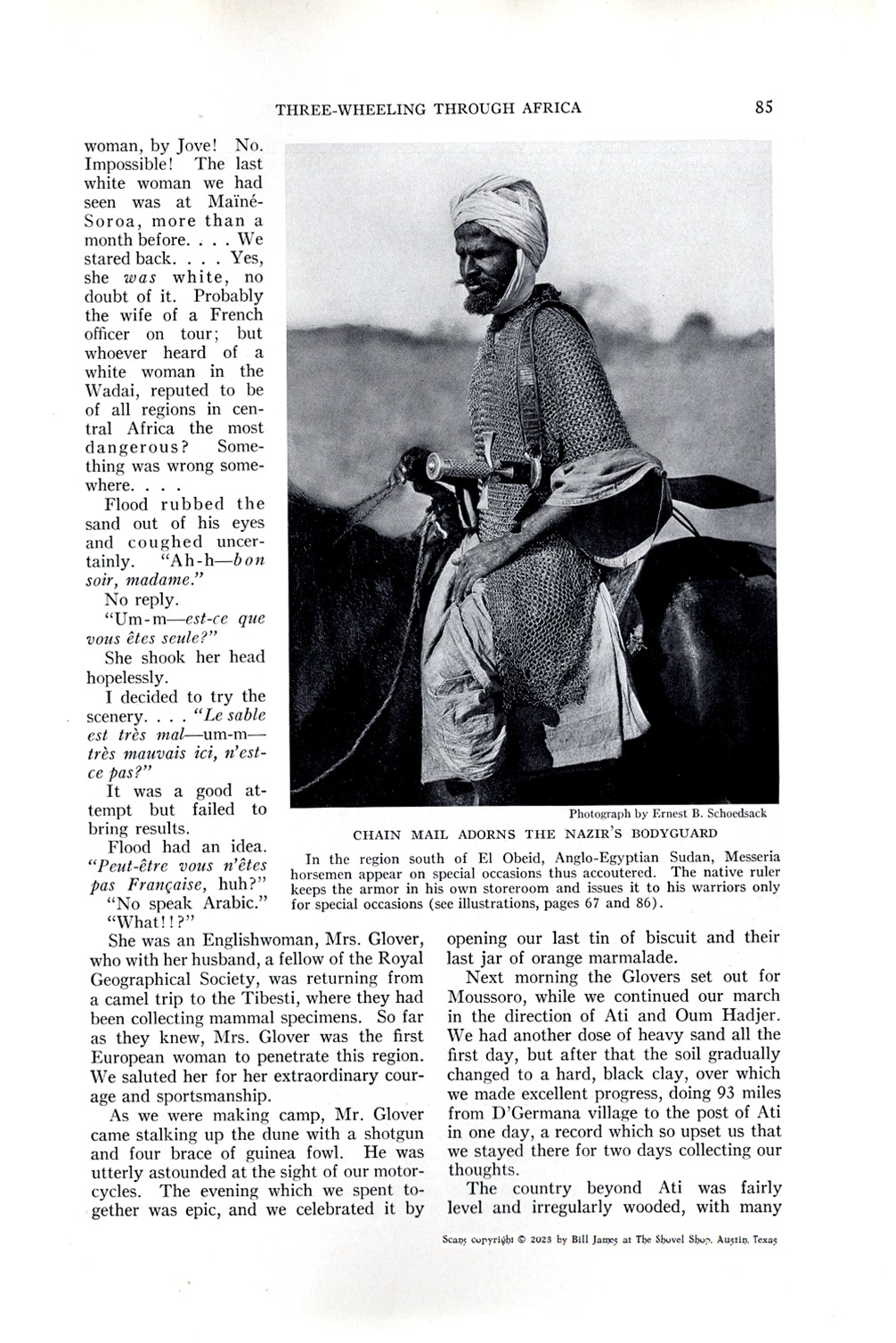
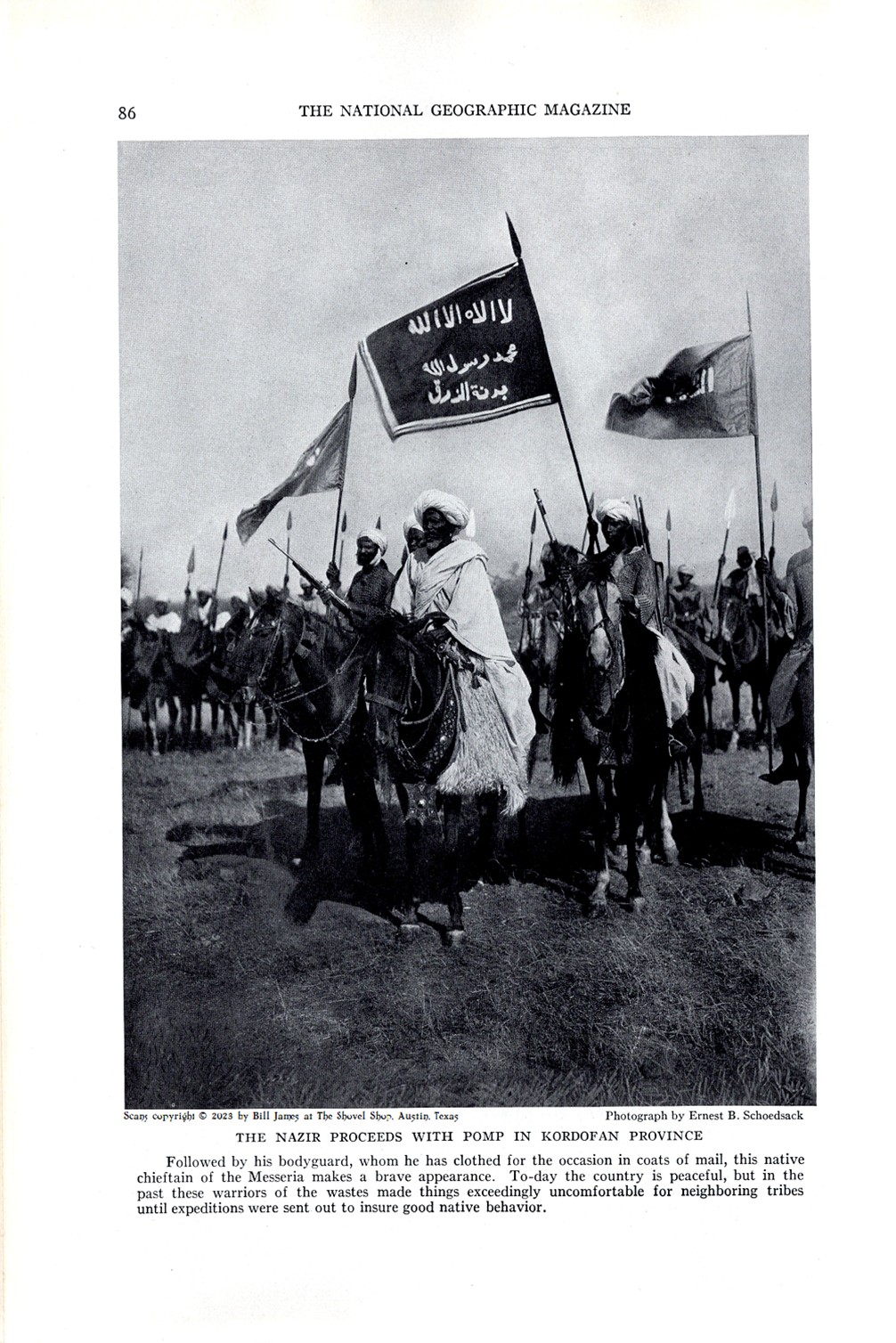
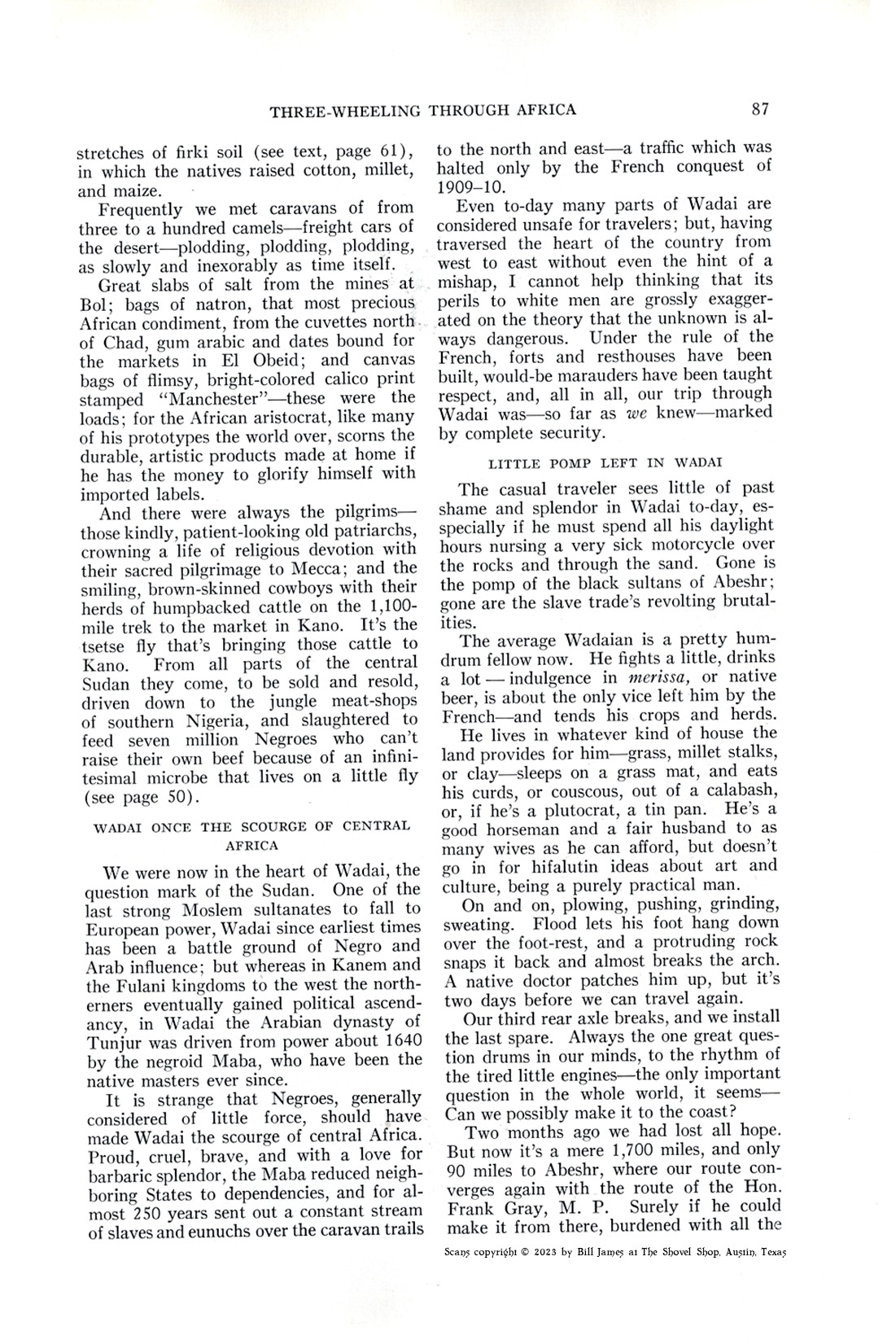
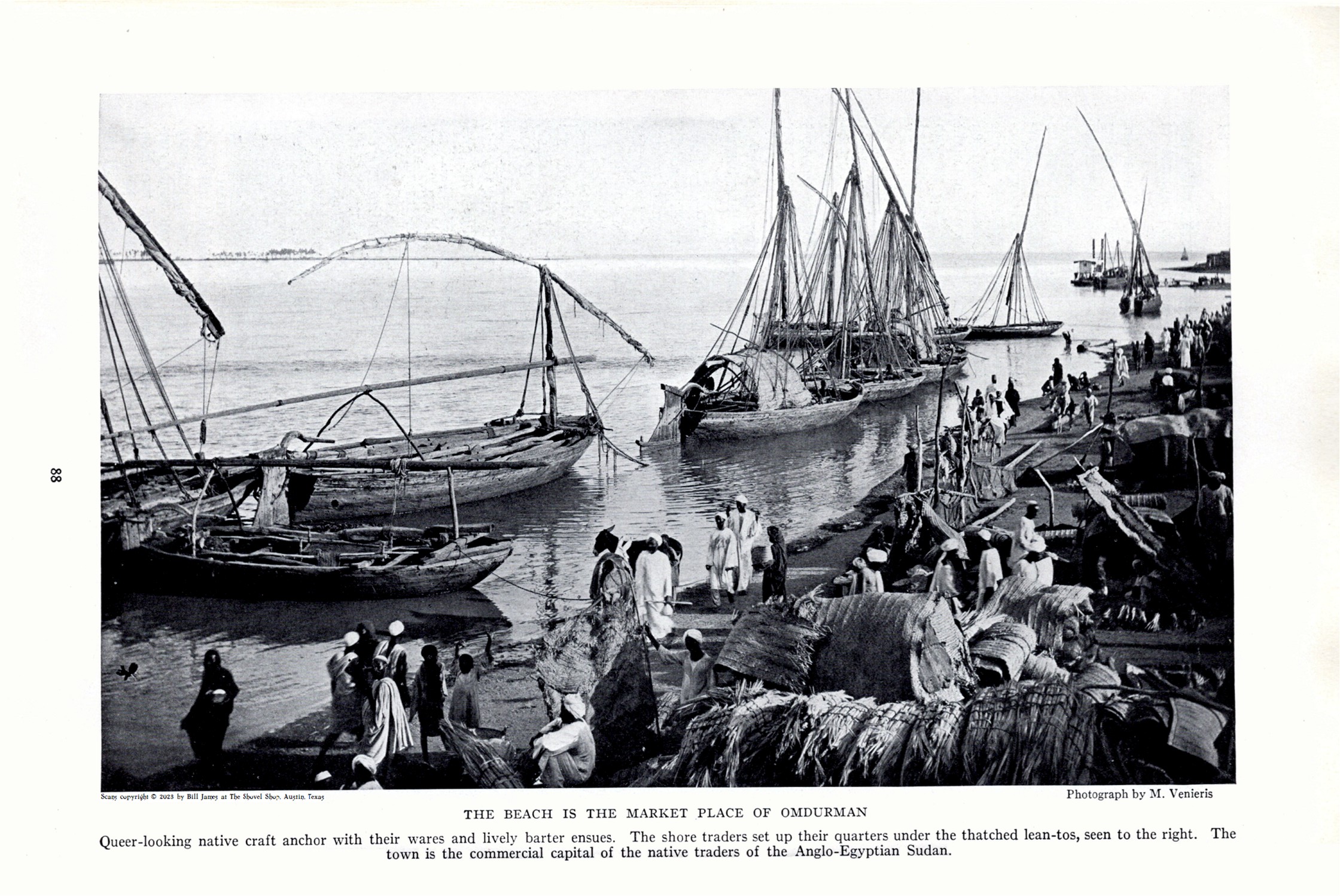
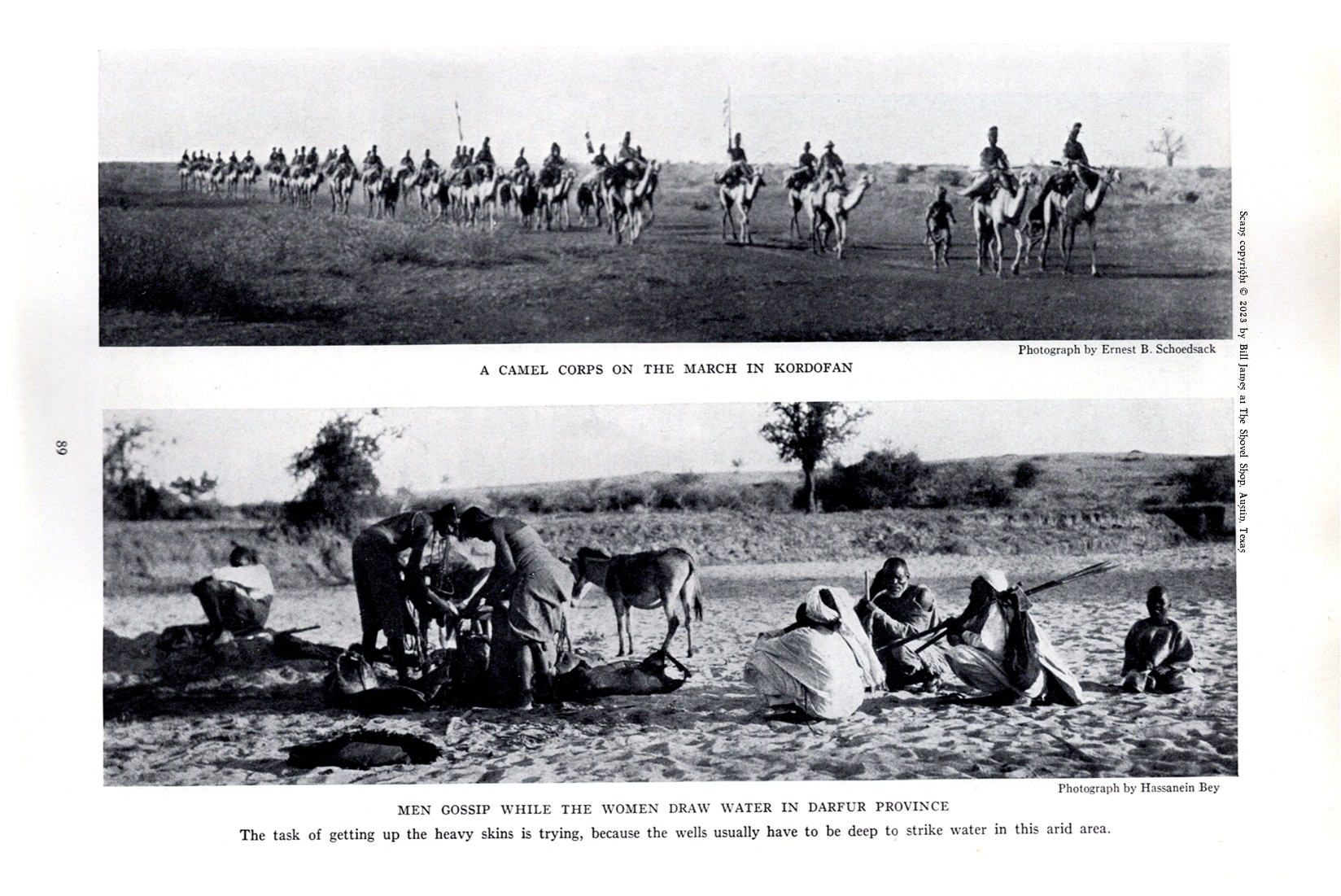
Wilson wrote the New York Times bestseller Three-Wheeling Through Africa, published by Bobbs Merrill, New York, in 1936. He also authored a lengthy article with numerous photographs in National Geographic (January, 1934, reproduced below) and a well-illustrated three-part serial in Popular Mechanics (1936) about the Wilson-Flood Excursion, with numerous photographs. If you’ve ever dreamt of a ’round-the-world ride, Wilson wrote the primer for you.
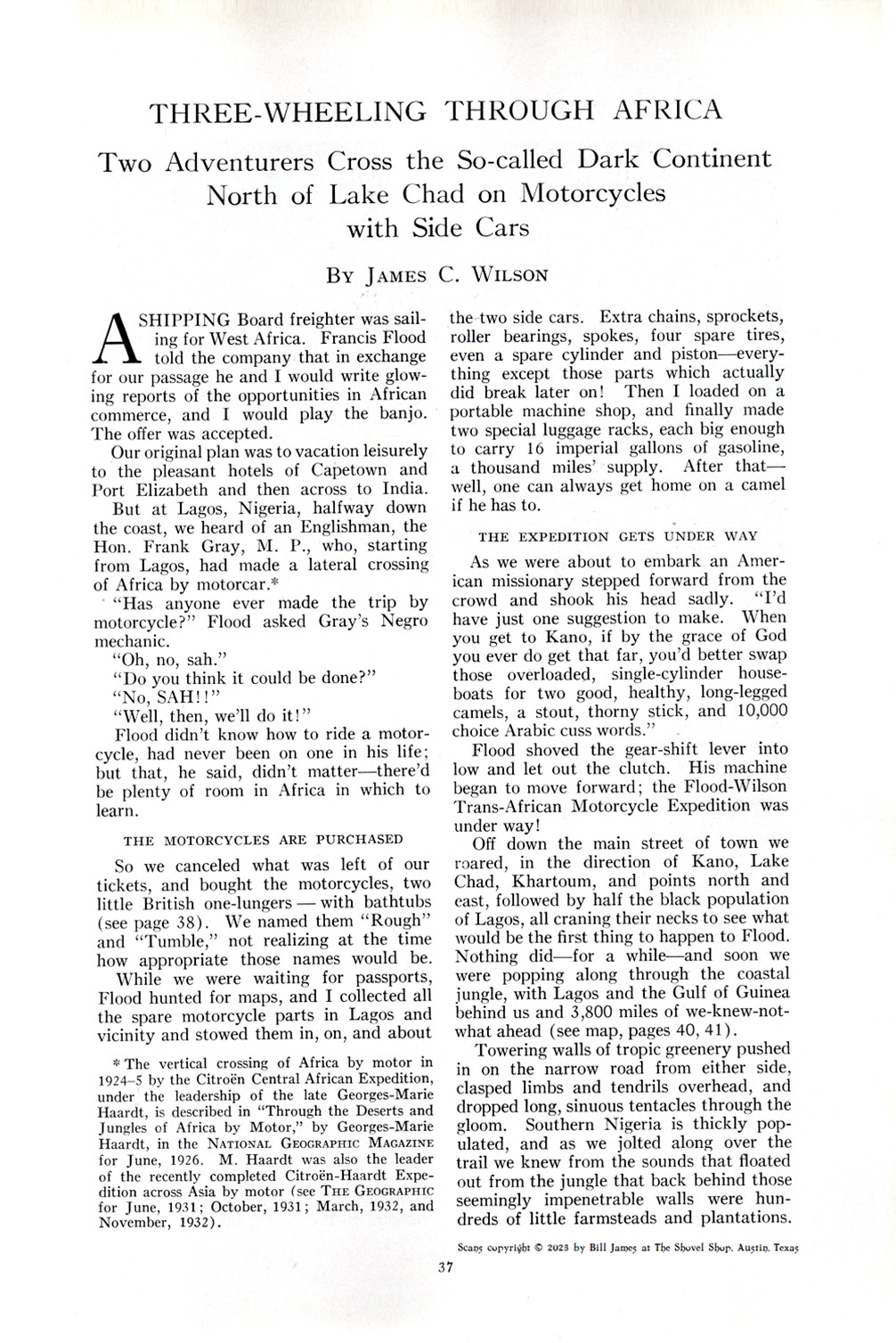
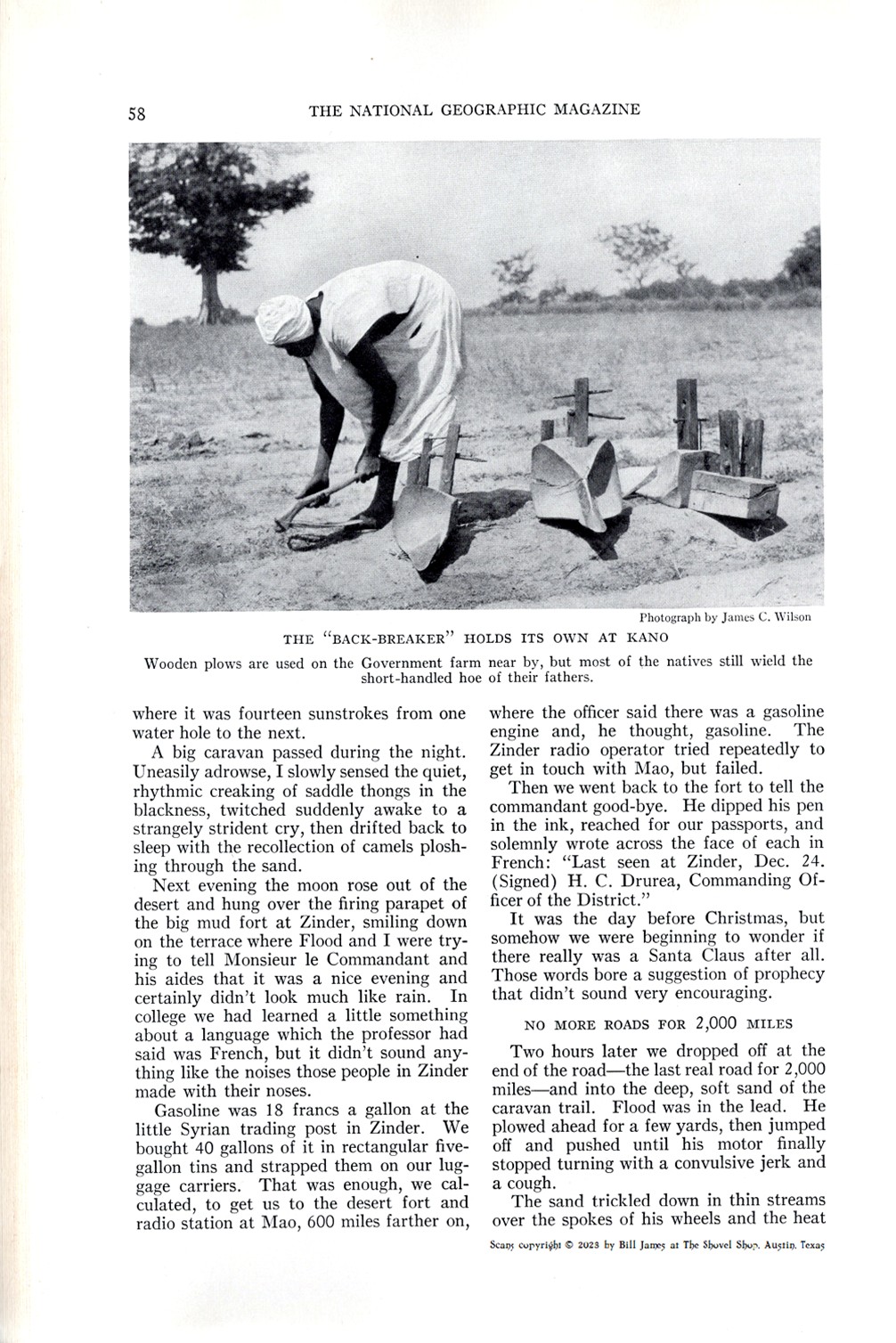
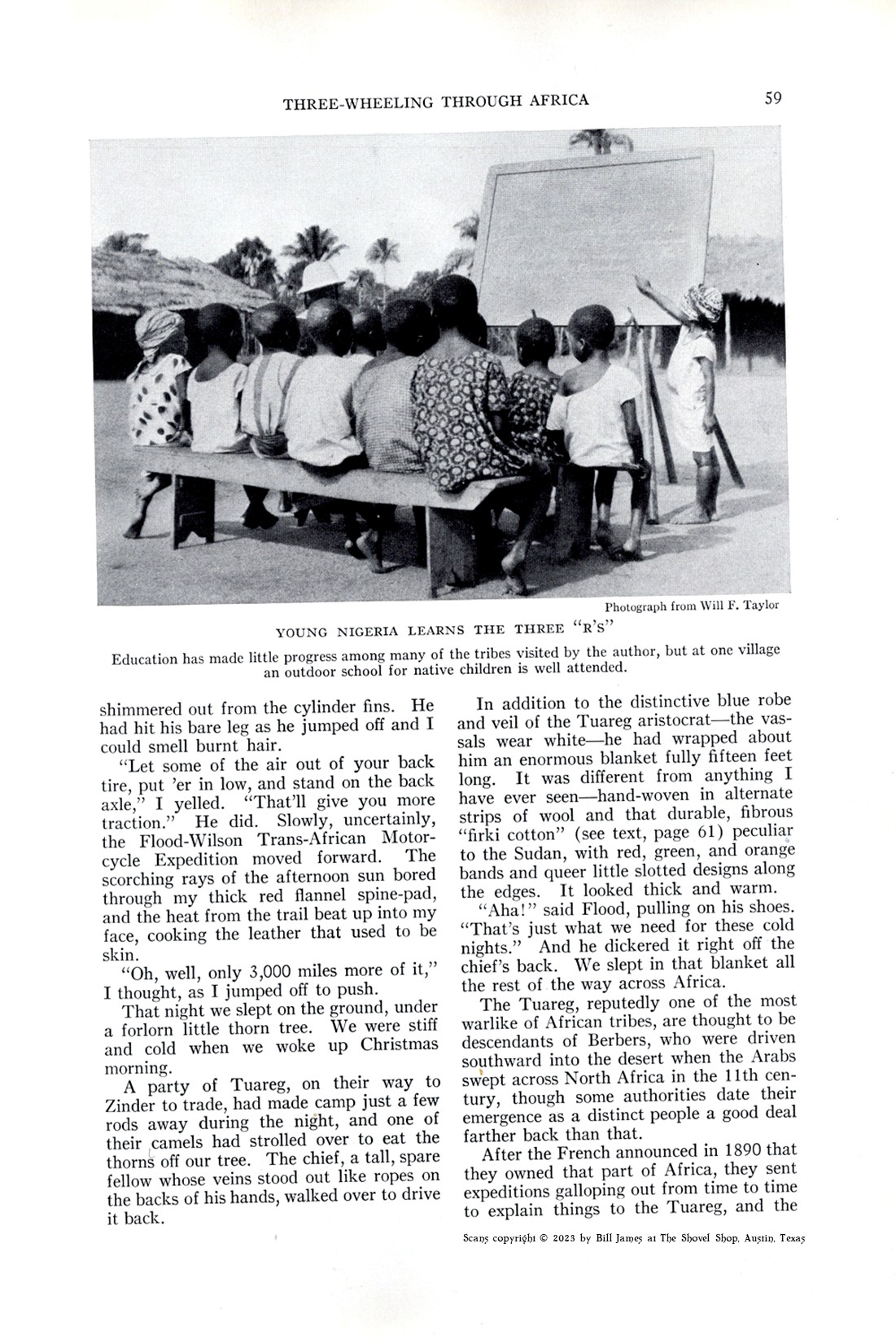
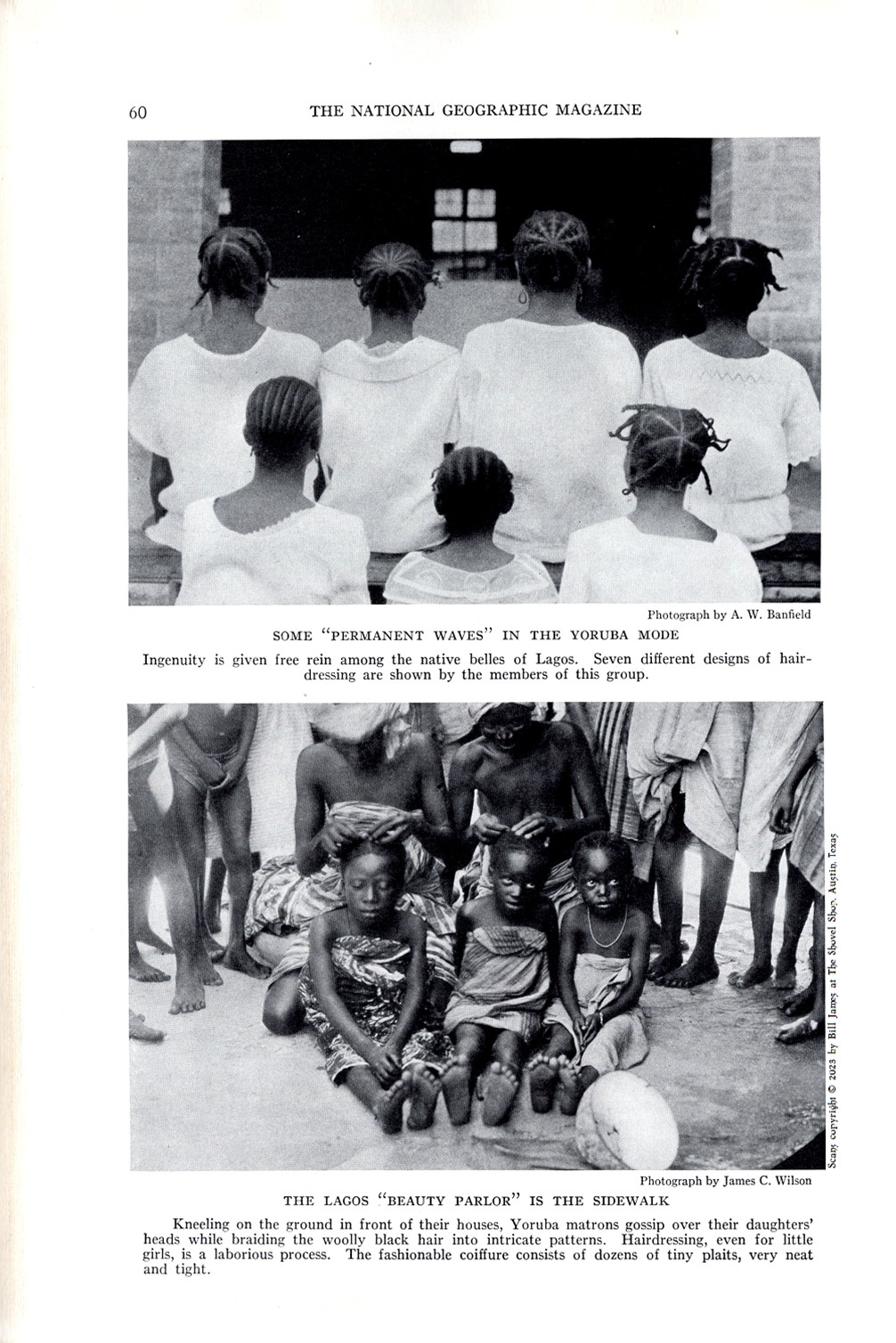
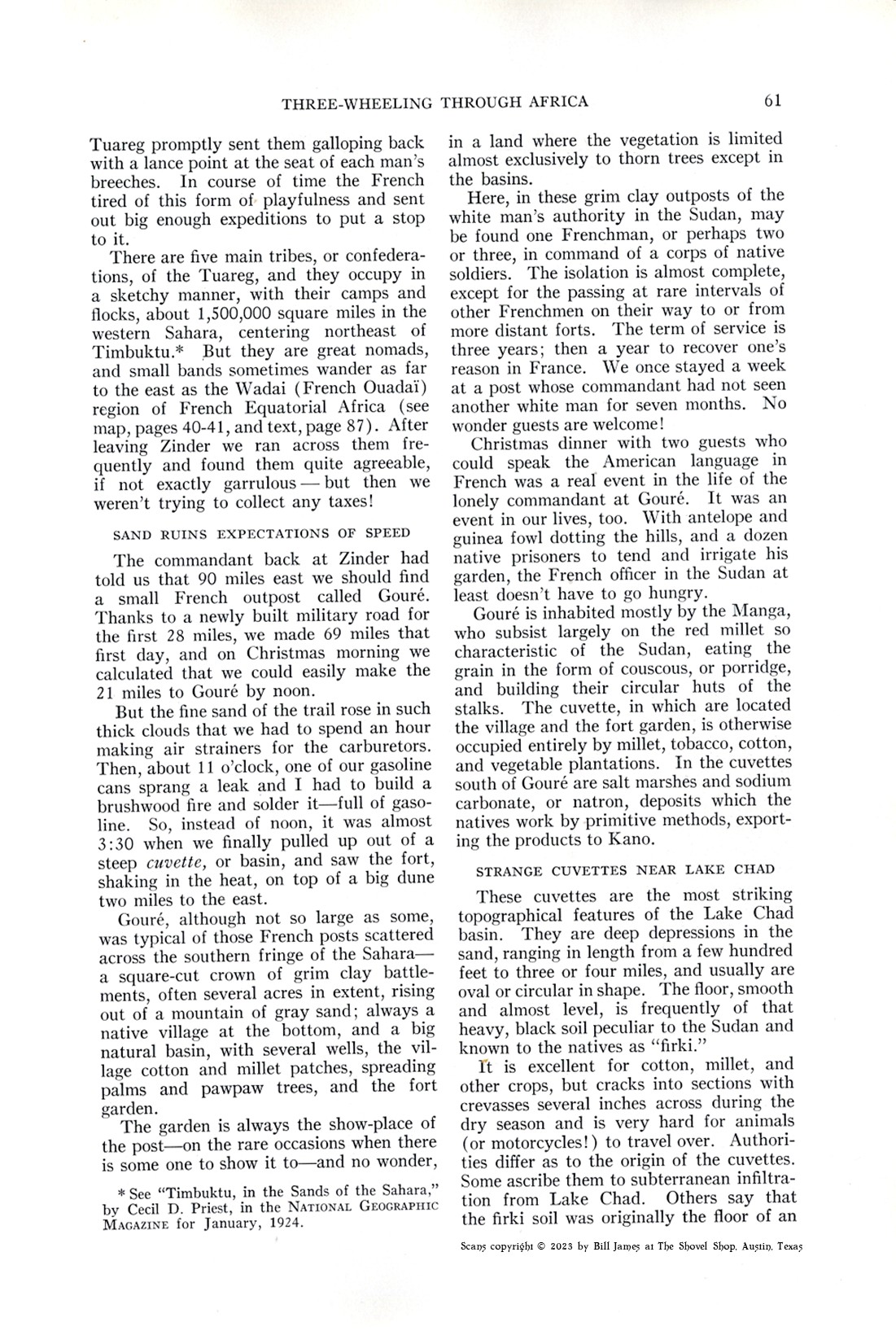
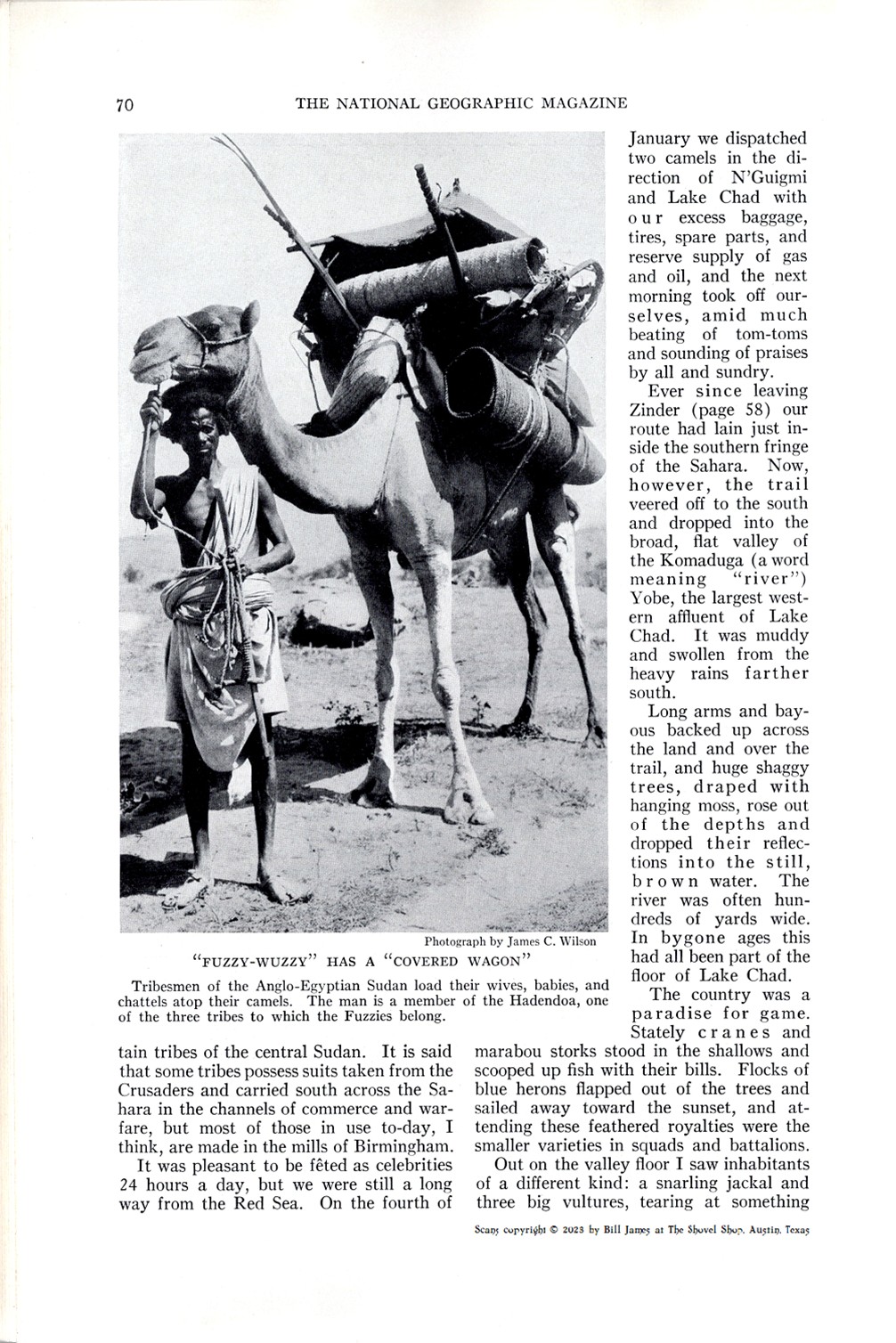
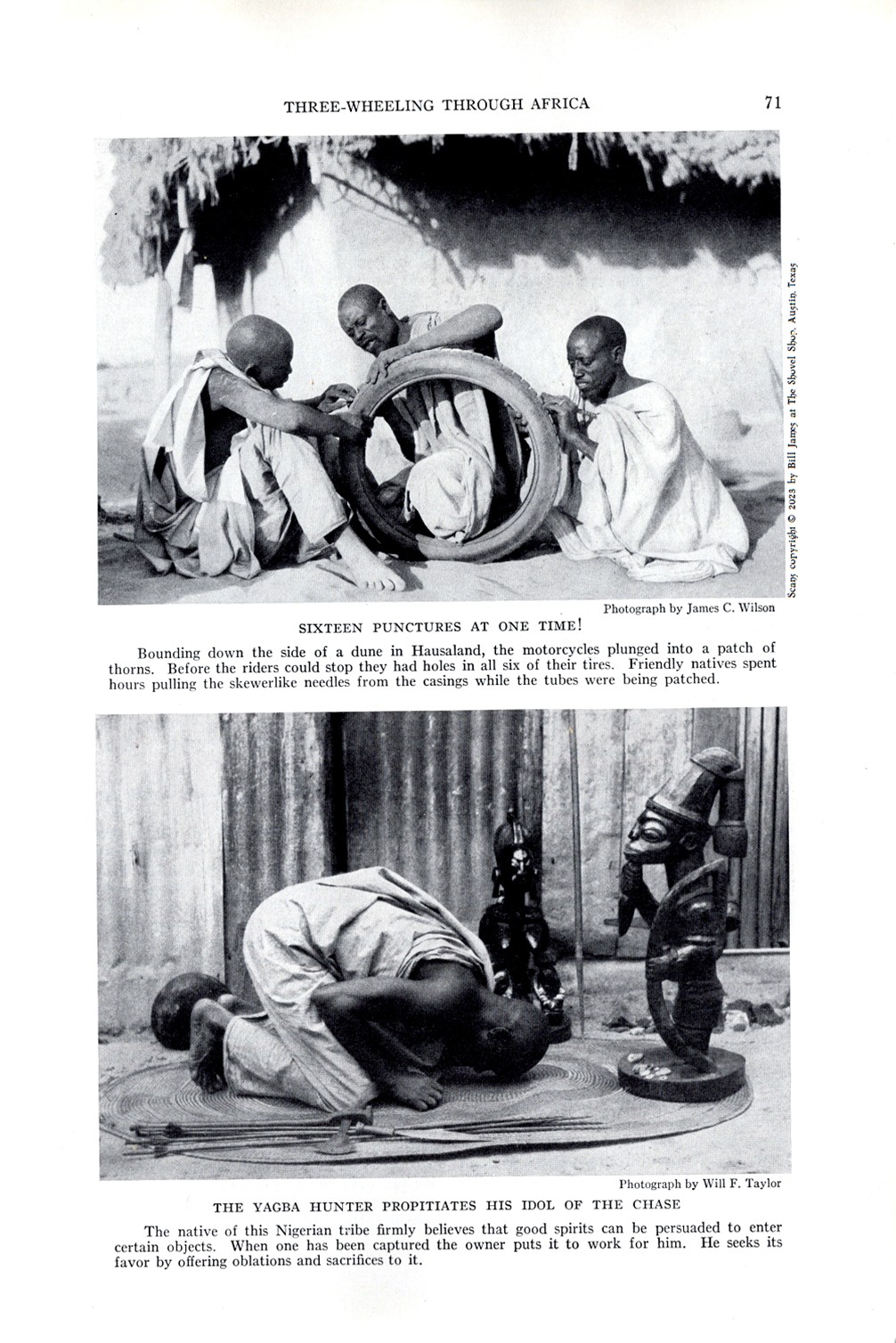
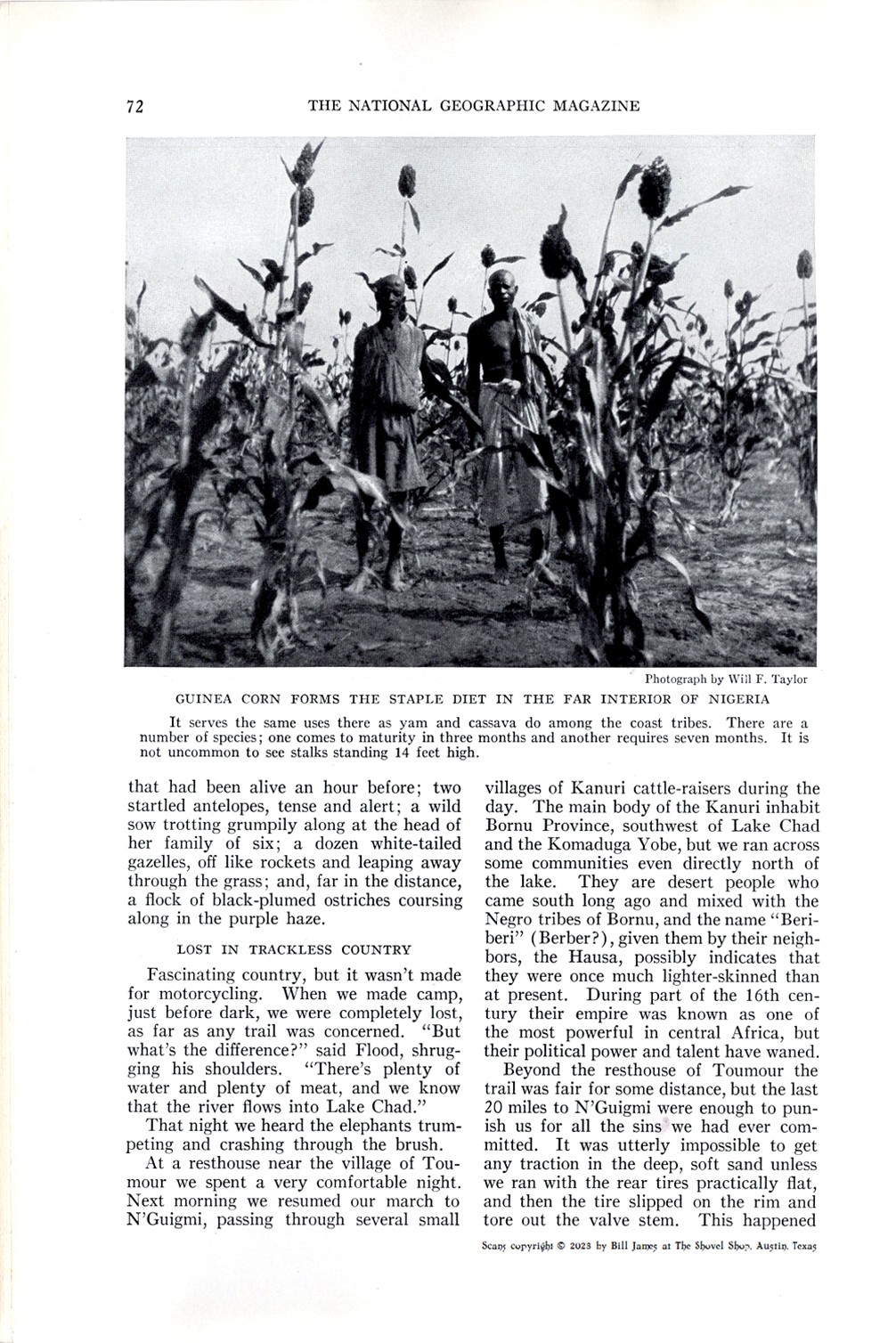
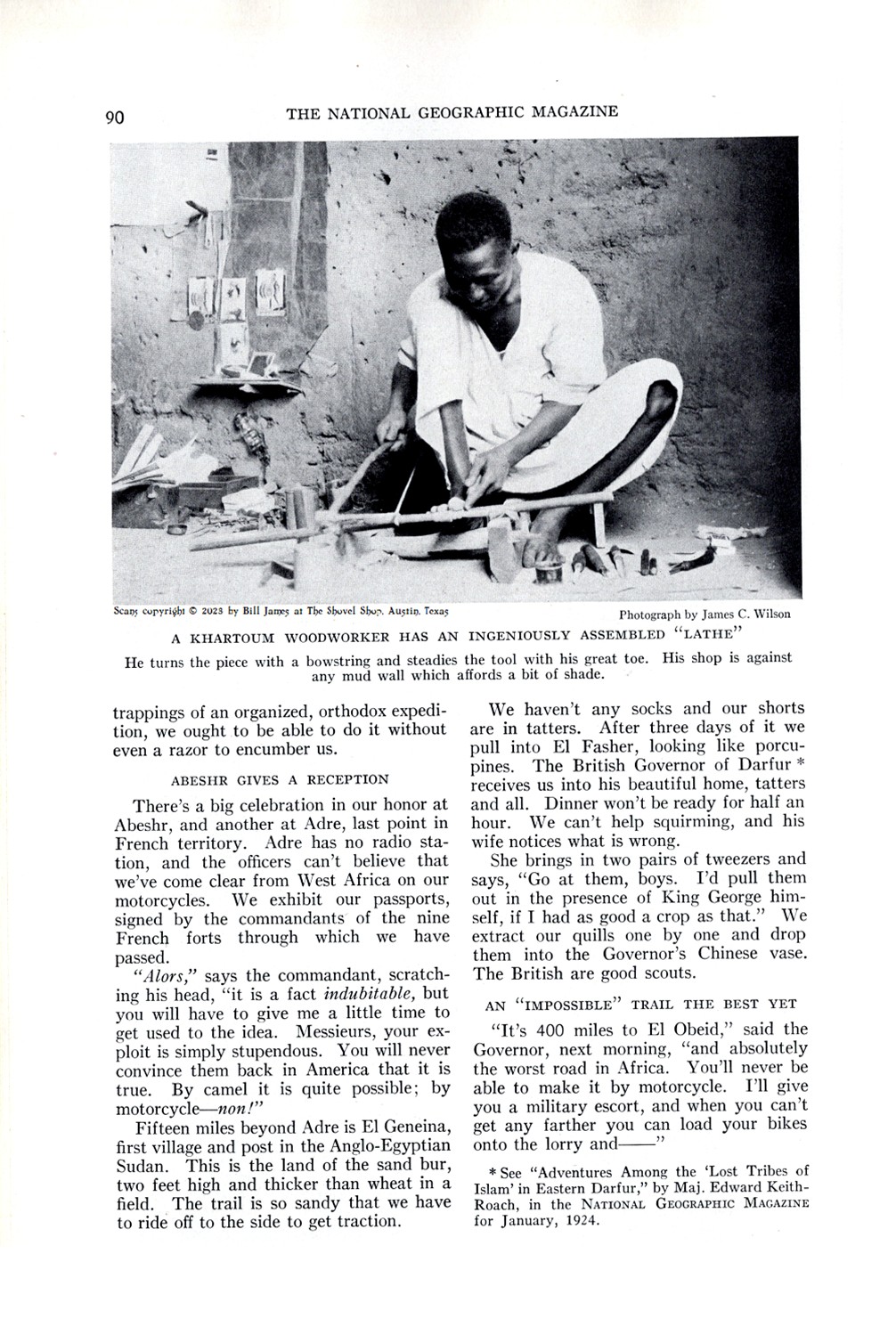
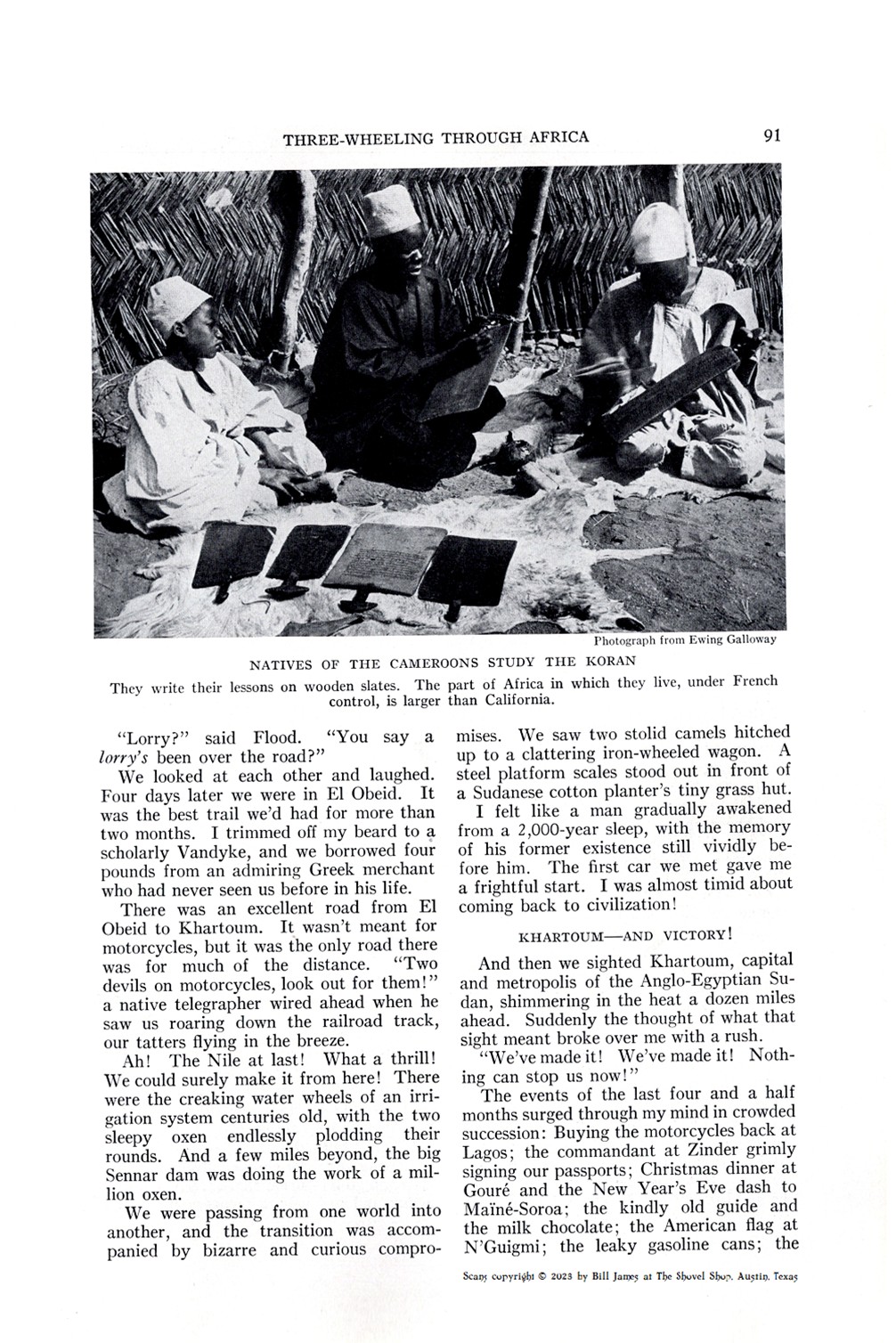
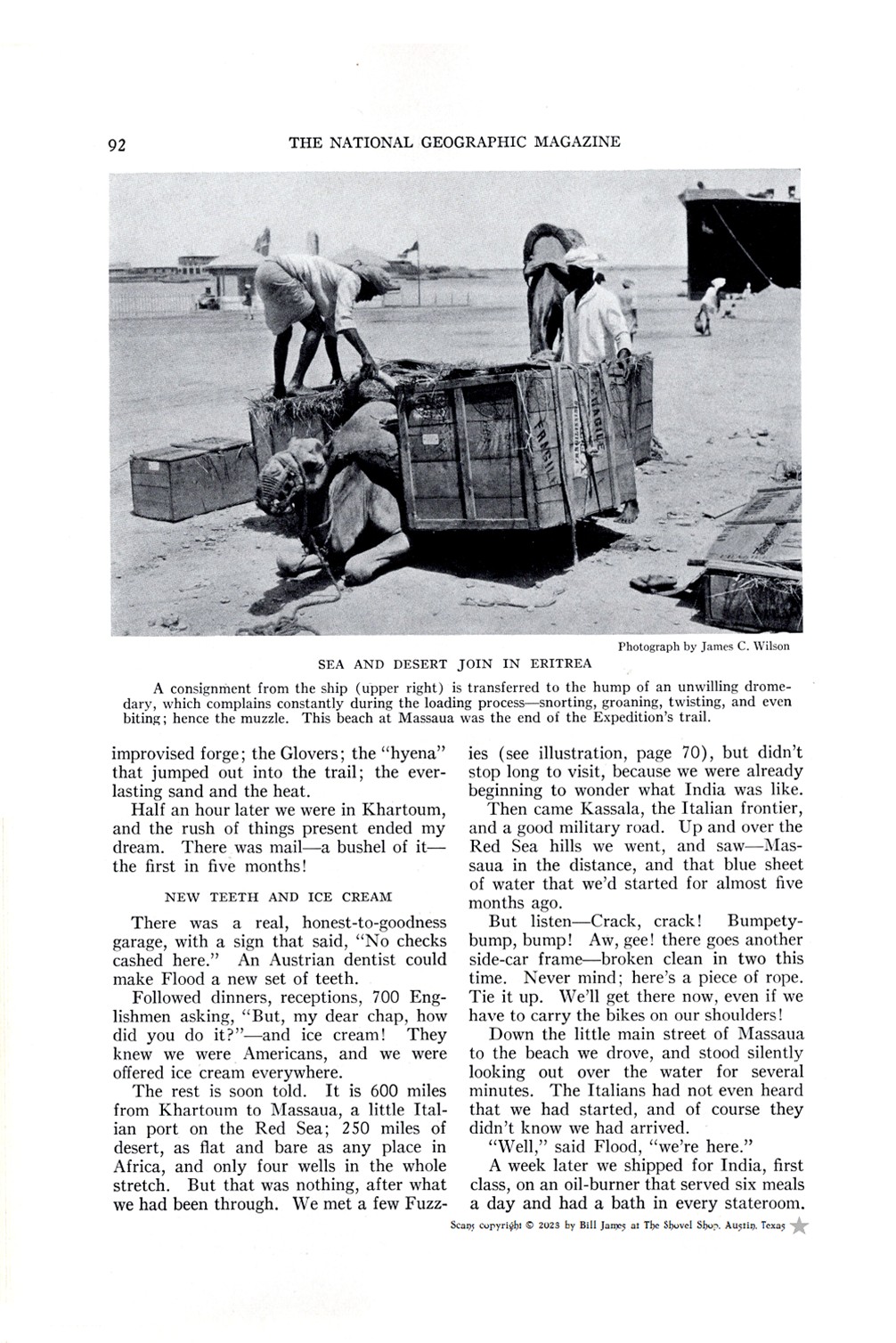
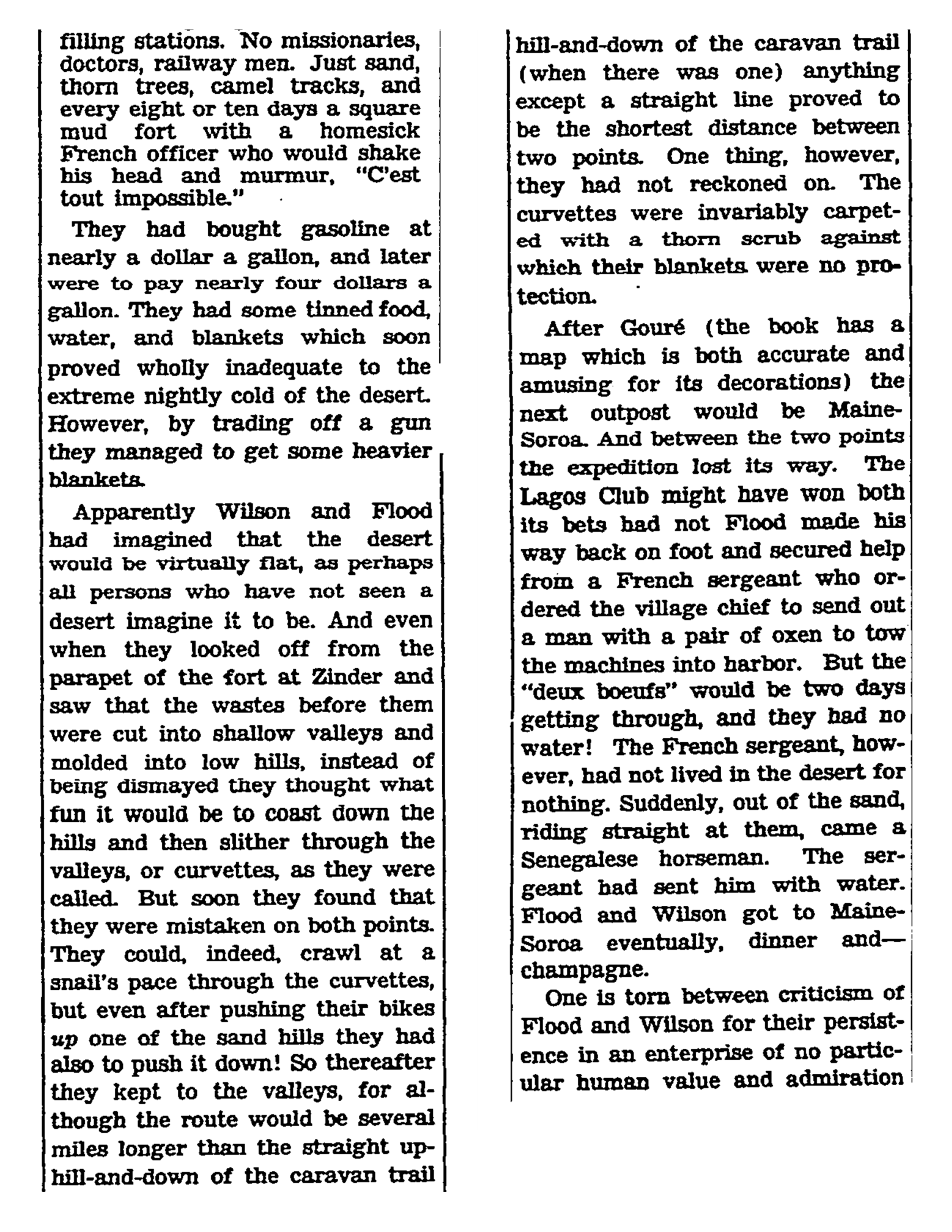
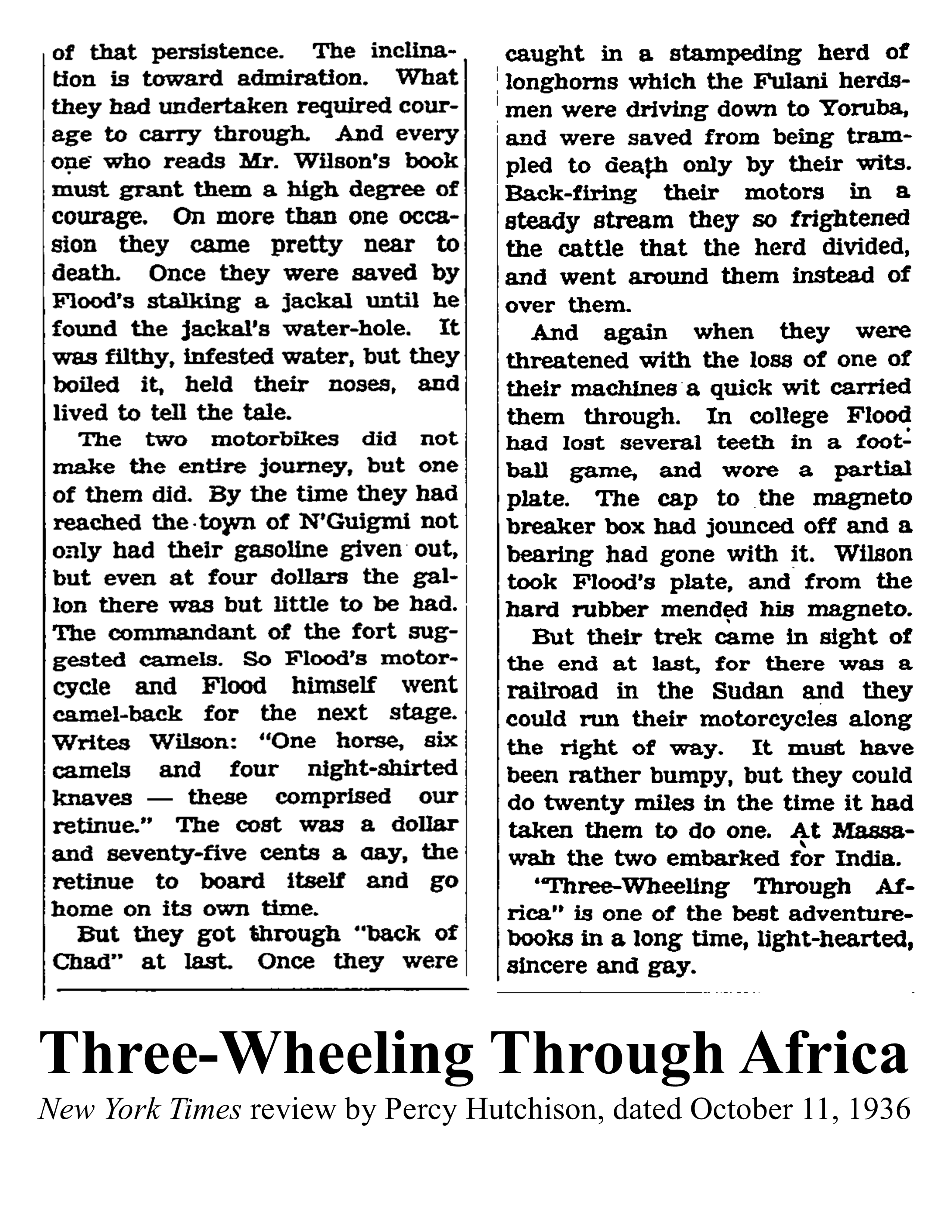
Review of Three-Wheeling Through Africa by Percy Hutchinson, The New York Times, October 11th, 1936
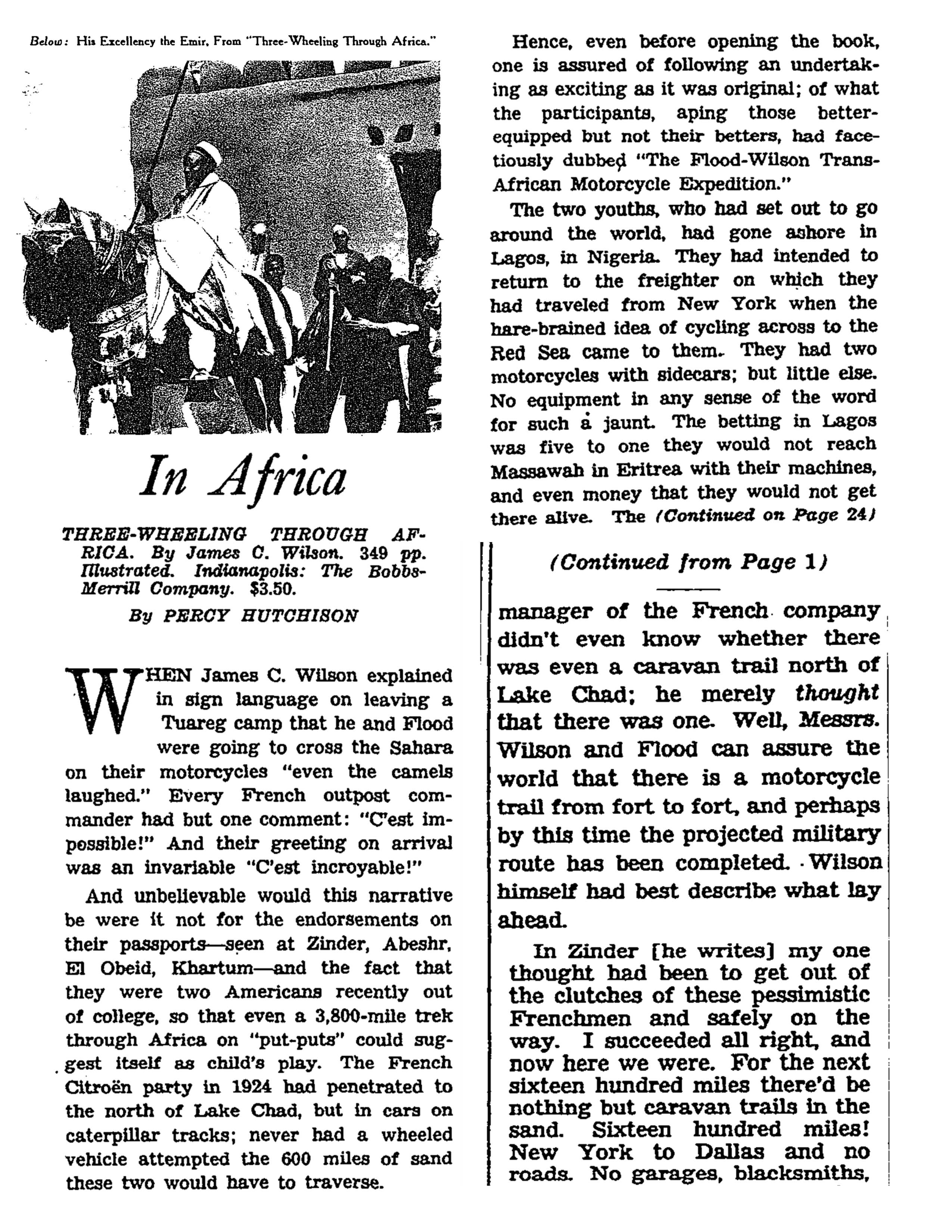
James C. Wilson
James Calmar Wilson was born in Stromsburg, Nebraska, on October 8th, 1900. He took a bachelor’s degree in Business Administration from the University of Nebraska at Lincoln in 1922. Before setting off on the adventure detailed above, he attempted to make it as a jazz musician in New York City.
After the Africa crossing, Wilson and Flood traveled on to India, Burma, and Siam (now known as Thailand), where Wilson contracted a ‘severe tropical fever’. He recovered, nursed to health by his future wife, Alice Olmsted.
After returning from his wide-ranging adventures, Wilson became an English professor at Iowa State University. An aspiring songwriter, Wilson also won a $100 prize for penning the university’s alma mater song, ‘The Bells of Iowa State’. In addition, he toured the United States as a travel lecturer, and wrote articles for magazines.
Following service during World War II, Wilson took up teaching at Colorado A&M University (now Colorado State University) at Fort Collins.
Wilson and his family ultimately settled near Polk, Nebraska, in the 1950s, where he became an agricultural journalist, publisher and acknowledged expert on prairie grasses, known as ‘the Grass Guru’. Later in life he co-authored a book on the subject – Grass Land (1967, publisher unknown) – with his wife, Alice, and son, Steven. He also wrote the musicals Hey! Where’s Nebraska? (1989) and Say it With Music, Nebraska! (1990).
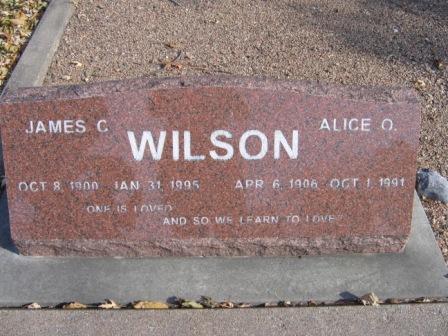
James Calmar Wilson died on January 31st, 1995, at the age of ninety-four, and is buried beside his wife at Stromsburg Cemetery in Polk County.
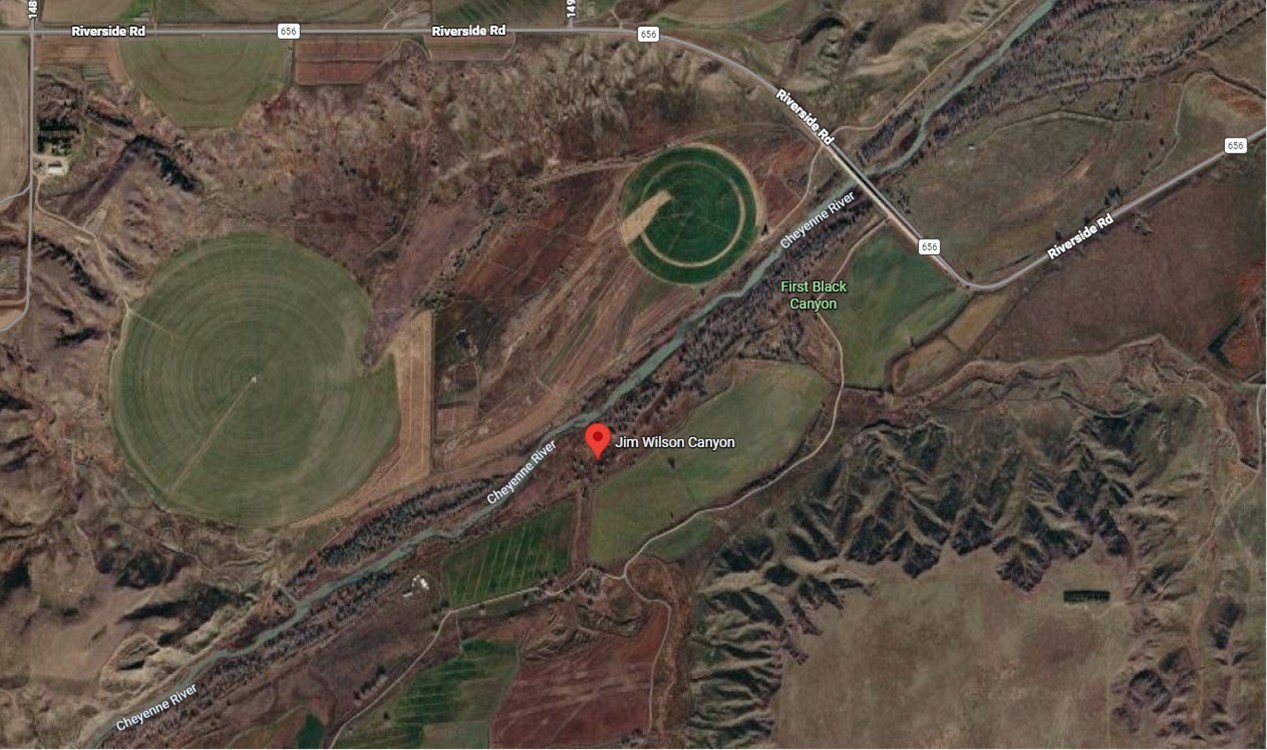
Jim Wilson Canyon in the Buffalo Gap National Grassland near the Pine Ridge Reservation (Fall River County, South Dakota) is named for James Calmar Wilson.
An in-depth biography of James C. Wilson may be found at Grokipedia. I thank them for their contributions to this post.
The 1936 three-part serial published in Popular Mechanics is posted on the ADVrider site.

