SONNY BARGER (October 8, 1938 – June 29, 2022)

Sonny Barger joined the Hells Angels Motorcycle Club the same year I was born, and was still a member in good standing when he passed away on June 29th, 2022. That’s one long career!

Myself, I never met the man – to the best of my knowledge I never met any member of his club – but Barger was still a big influence in my life. He features prominently in Hunter S. Thompson’s Hell’s Angels: The Strange and Terrible Saga of the Outlaw Motorcycle Gangs (Random House, 1967) and parts of Tom Wolfe’s The Electric Kool-Aid Acid Test (Farrar Straus Giroux, 1968), and my nascent view of what it meant to be a motorcyclist – the life path I’d already chosen for myself – was informed by Barger’s and his brothers’ exploits. Not for me the ‘nicest people on a Honda’ as the infamous mid-’60s advert suggested. I would be a biker….

….and that’s what I did.

HELLS ANGELS ATTACH ANTIWAR PROTESTERS, AND SONNY LEARNS HOW TO USE THE PRESS

Aside from Evel Knievel, who was much more masochist than motorcyclist, Sonny Barger is assuredly the most famous biker in the world, and was in the news numerous times throughout his tenure. For example, after members of the Oakland chapter of the Hells Angels, which Sonny served as President, broke up an antiwar demonstration in October, 1965, Sonny held a press conference in which he foreswore violence against future protests because ‘Any physical encounter would only produce sympathy for this mob of traitors.’ He also read a telegram he’d sent then-President Lyndon Johnson, volunteering his club brothers for ‘behind the line duty in Vietnam’ as ‘a crack group of trained gorillas [sic]’ who would ‘demoralize the Vietcong and advance the cause of freedom.’
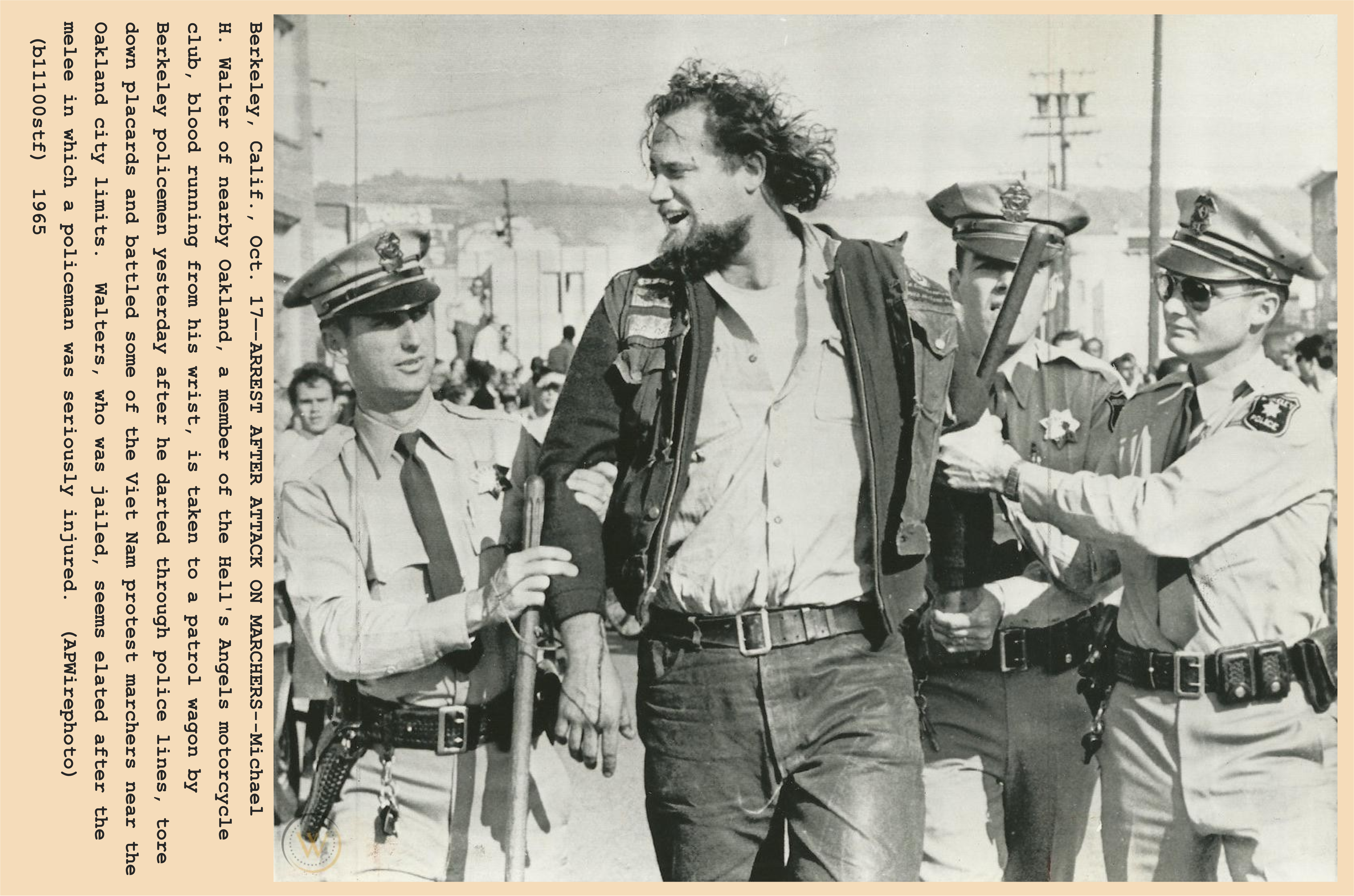
Hells Angel MC member Michael Walter is led away after attacking antiwar protesters in 1965.
Sonny Barger holds press conference in November, 1965, to renounce violence against antiwar protesters and read a telegram sent to President Lyndon B. Johnson. He suggested Hells Angels members serving as ‘a crack team of trained gorillas [sic] would demoralize the Vietcong and advance the cause of freedom.’

ALTAMONT FREE CONCERT, DECEMBER 6th, 1969
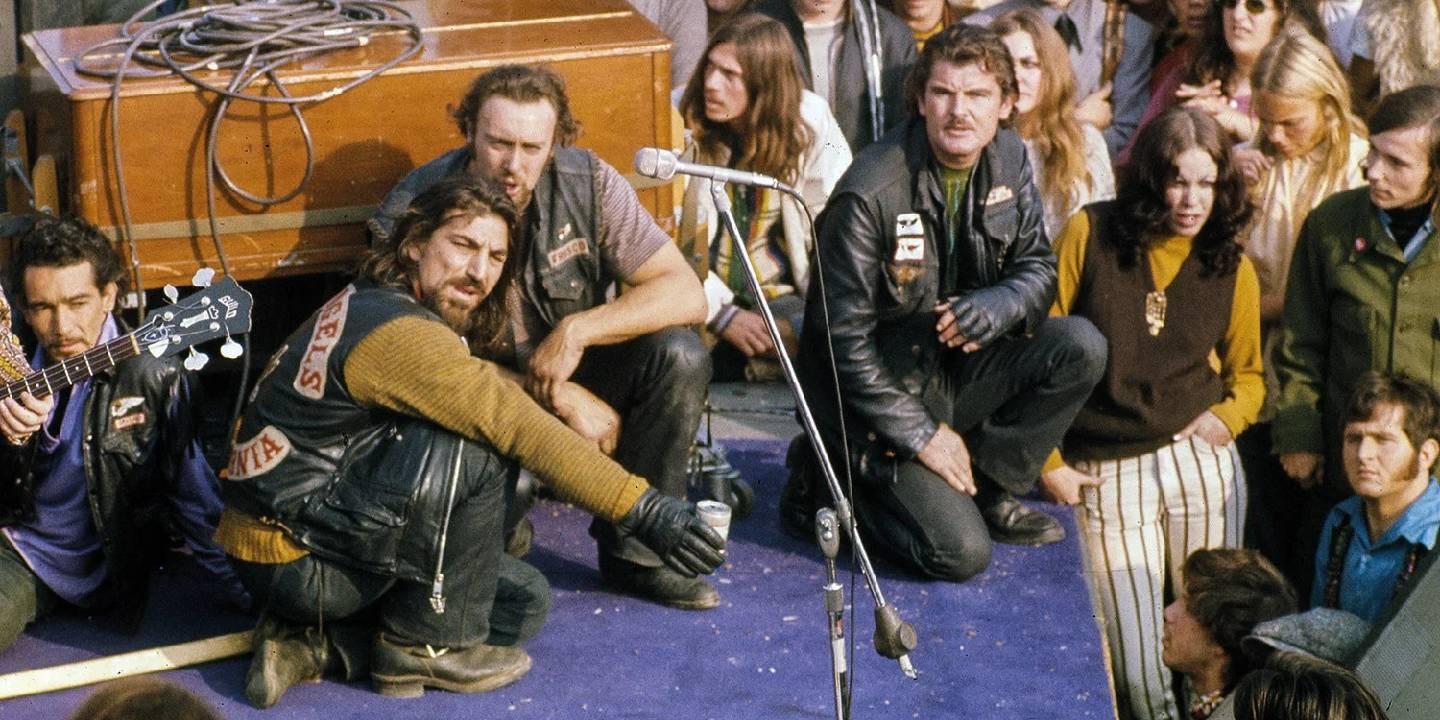
Hells Angels members on stage at the Altamont Free Concert, December 6th, 1969.

Sonny was also the voice of the Hells Angels after the disastrous Altamont Speedway concert in December, 1969, which resulted in the stabbing death of an eighteen-year-old African American named Meredith Hunter. Although accounts differ as to why they were present, the Angels had been sitting on the front edge of the low-slung stage, acting as a human barrier between the crowd and the performers. Hunter, who had been tossed off the stage by Hells Angels during a previous altercation, returned with a handgun and began waving it around, firing at least one shot into the crowd. Hells Angel member Alan Passaro stabbed and disarmed Hunter, who later died of his wounds.
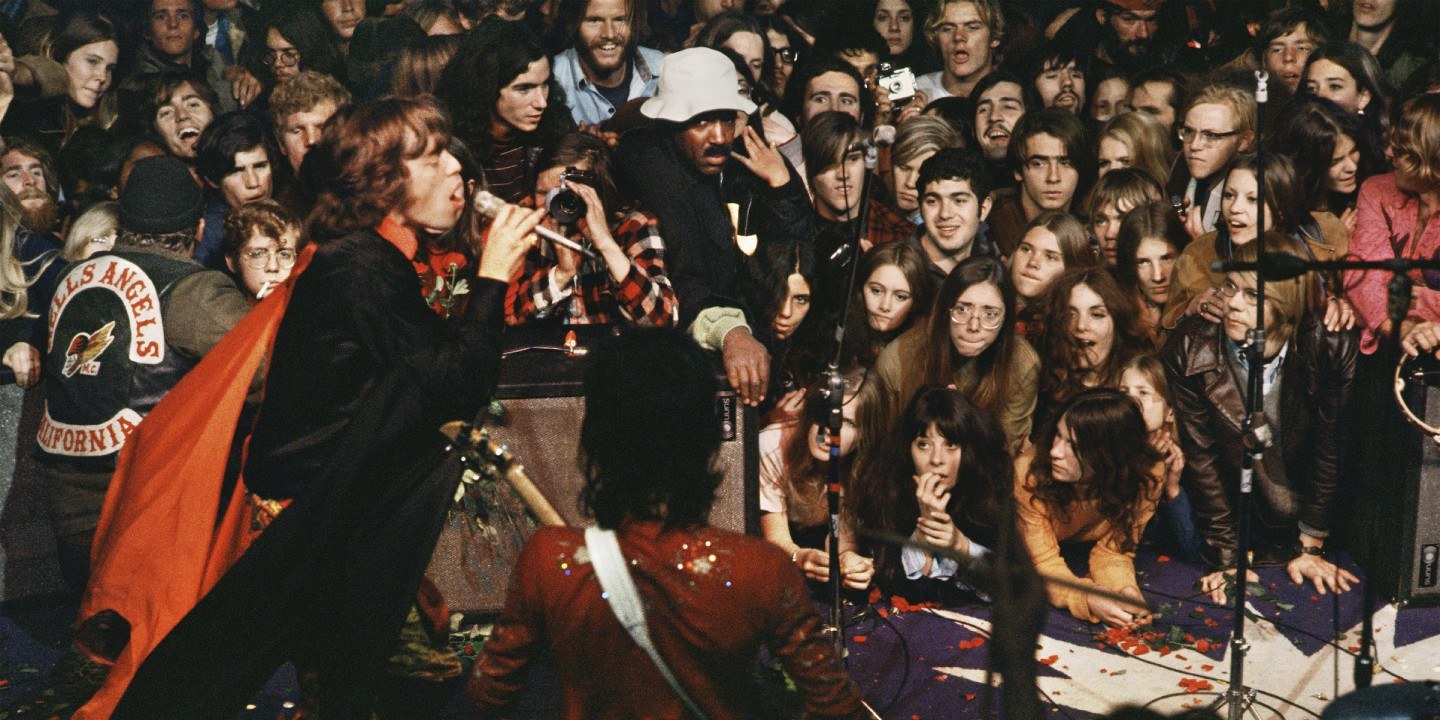
Rolling Stones singer Mick Jagger prances on stage surrounded by Hells Angels MC members. So many mistakes in such a tiny space — stage built too low to the ground, inadequate professional security to protect performers and equipment, the band’s lengthy delay in starting their set (reportedly because Jagger wanted cover of darkness to go with his ‘Satanic’ imagery) — but the biggest mistake of all was the band’s assumption that American Hells Angels would be the same relatively mild-mannered rough boys as their British counterparts. The Stones had used UK Angels as security at concerts over there, and took for granted that these California blokes would be just as obliging and well-behaved. 🙄

The next morning, as the talking heads on local radio station KSAN attempted to unravel the chaotic stream of events, Sonny Barger called in and gave his club’s side of the story – the only official statement the club ever offered about the concert or the killing. Barger defended his patch holders, telling radio host Stefan Ponek ‘You can say anything you want and you can call them people flower children and this and that, and there was three hundred thousand people there approximately or whatever they say, and I guarantee you that the largest majority of them were there to have a good time, but there was a couple thousand of them that was there looking for trouble.’

Jagger tried to coax the crowd — which had been drinking, drugging and brawling in the hot sun all afternoon — into mellowing out and behaving like good little flower children…. to no avail.

Brushing aside the host’s attempt to cut in, Barger went on to say ‘Some of them people out there ain’t a bit better than what some of the people think of the worst of us, man, and it’s about time they realized it….’

In this screenshot from the documentary Gimme Shelter, ill-fated Meredith Hunter, in the pistachio green suit can be seen brandishing a pistol as his girlfriend Patty Bredehoft, in the white crochet vest, attempts to calm him. Witnesses claim Hunter fired into the crowd, and Barger alleges that an Angel was struck by a bullet from Hunter’s firearm.

The incident at Altamont and Barger’s telephone call to the radio station were captured on film by documentarians Albert and David Maysles and Charlotte Zwerin, and the resulting movie, Gimme Shelter, was released in 1970. One week after its premiere Hells Angel Alan Passaro went on trial, charged with murdering Meredith Hunter. However, when the film was played in court, it clearly showed Passaro acting in defense of self and third parties, and he was acquitted of all charges.

In this screenshot from the documentary Gimme Shelter, Meredith Hunter is taken down by Hells Angel Alan Passaro.
It annoys the fuck out of me when I hear people claim ‘those mean ol’ Hells Angels murdered poor li’l Meredith Hunter.’ 🤬 So far as I’m concerned, Alan Passaro deserved a medal for valor for going up against a wild-eyed gunman, armed with nothing but a knife and brass cojones. His bravery protected his brothers, the performers and stagehands, and every innocent concertgoer in that crowd who could have been wounded or killed by Hunter’s reckless gunplay.
Instead, because he was one of ‘those mean ol’ Hells Angels,’ Passaro was indicted on a charge of murder. However, when the jury say these scenes from the documentary, they voted (quite properly, IMO, to acquit Alan Passaro.
In 1985 Passaro died in a drowning police considered ‘suspicious’ (although no foul play was ever confirmed) but rumors that a second, unidentified assailant may have been involved in Hunter’s death kept the Altamont case open until 2005. In May of that year, the Alameda County Sheriff’s Office dismissed the theory that a second Hells Angel member took part in the fatal scuffle.

HOLLYWOOD CALLS….

American International, filmmaker Roger Corman’s outfit, was responsible for classic biker exploitation films like The Wild Angels, the Peter Fonda/Nancy Sinatra vehicle which helped kickstart the careers of actress Diane Ladd, director Peter Bogdanovich, stuntman Gary Littlejohn, character actor Michael J. Pollard, et alia. Corman was also involce in the production of movies like Devil’s Angels (1967, an underrated classic), Naked Angels (1969), Angels Die Hard (1970), Angels Hard as They Come (1971), The Dirt Gang (1972), The Darktown Strutters (1975, featuring African American women on wildly customized VW-powered trikes! 😮 ), Deathsport (1978), Fast Charlie… The Moonbeam Rider (1979), The Dirt Bike Kid (1985), The Lawless Land (1988), Nam Angels (1989) and Back to Back (1989).

Given the Hells Angels’ hard-won reputation as thuggish brutes prone to violence and lawlessness, Barger was preternaturally media savvy – an excellent spokesman for his club and a wily self-promoter. He finagled parts for himself and other Angels in a couple of biker films – Hells Angels on Wheels with Adam Roarke and future Easy Rider star Jack Nicholson, and Hells Angels ’69, starring ’60s heartthrob Jeremy Slate, who later played the biker gang leader in The Born Losers.

In his memoir, Sonny reports that ‘Sweet Cocaine’ (pictured above, on the set of the Hell’s Angels ’69 movie) was stolen while he was running errands one day. A few brutal hours later, he had his bike back, and the thieves were paying a dear price for their poor decision-making.

….BUT SO DO THE COPS

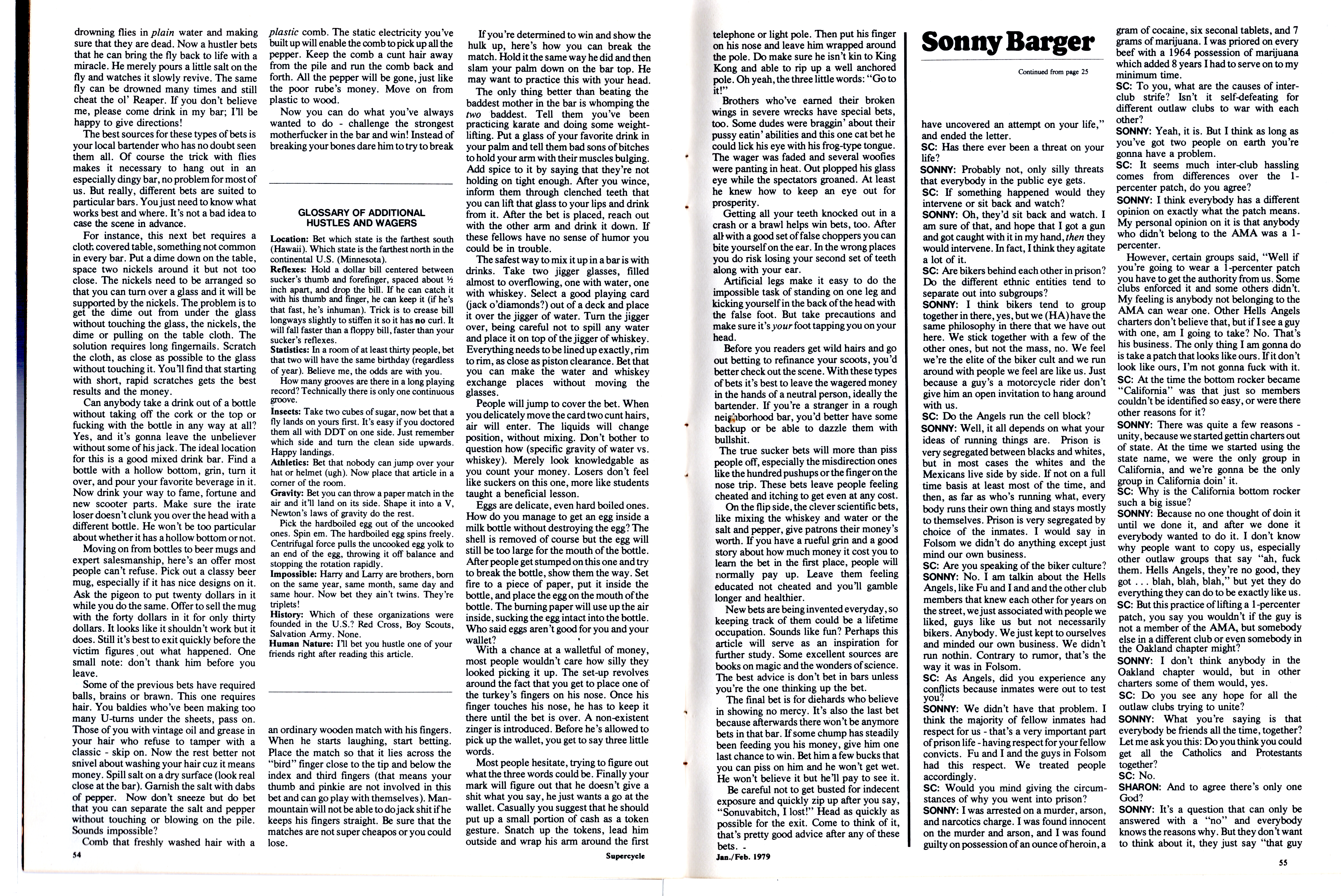
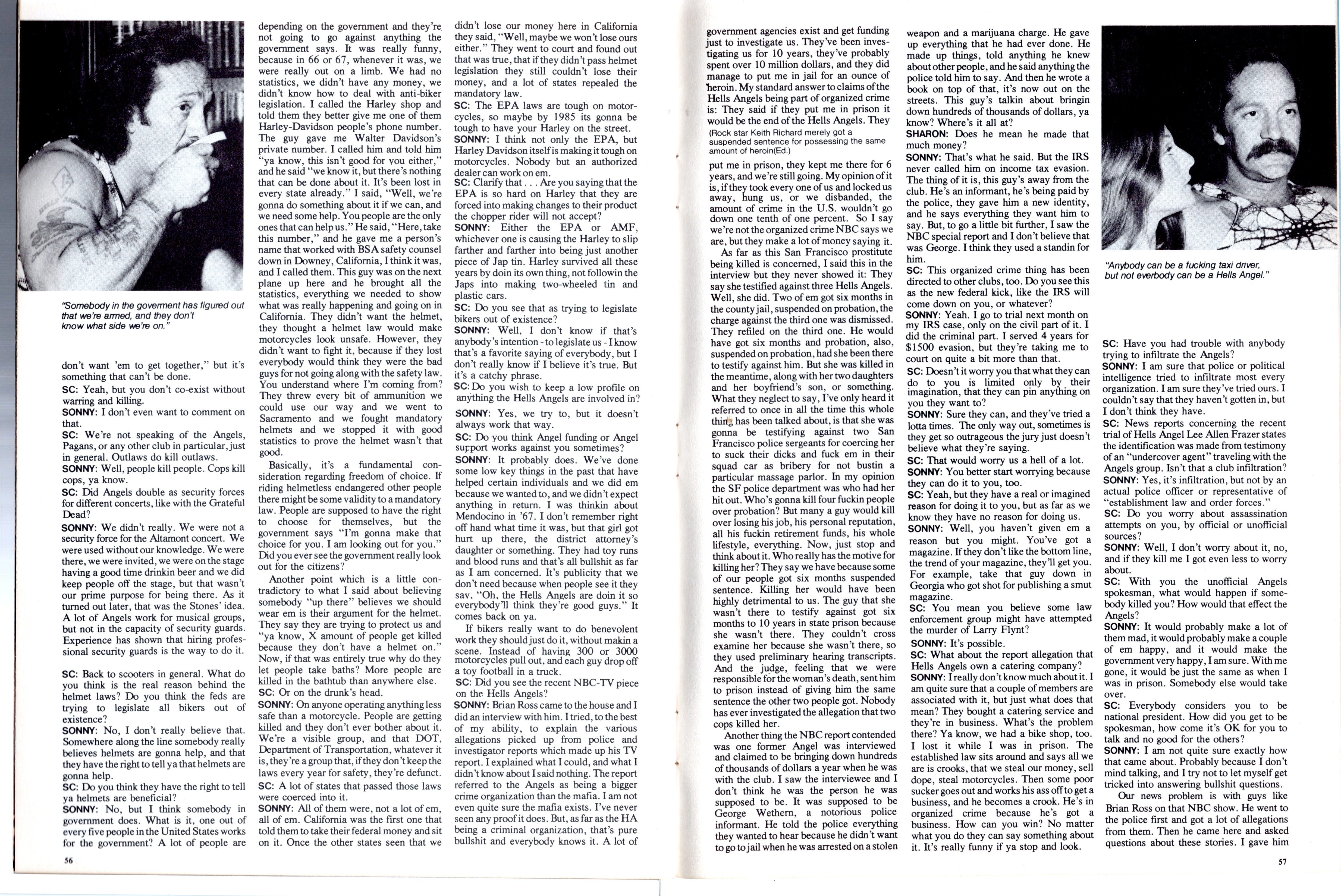
Barger was also in the headlines for numerous arrests on charges ranging from drugs and weapons charges to conspiracy and murder, and, while acquitted of the more serious charges, still spent several years in prison. During this time he gave several interviews to motorcycle magazines, including two for Supercycle, published in February and December, 1979.

Sonny speaks, and the ‘Voice of the American Biker’ listens.

SONNY BECOMES AN AUTHOR

During these years, and despite his numerous legal woes, Sonny discovered that he was a marketable commodity. The ‘Free Sonny’ t-shirts his wife sold during his incarceration were wildly popular, and other merchandise soon followed, but he really hit the jackpot when he teamed up with writers Keith and Kent Zimmerman and penned his memoir, Hell’s Angel: The Life and Times of Sonny Barger and the Hell’s Angels Motorcycle Club (William Morrow, 2000).

The book quickly became a best-seller, so he followed up with two biker-themed crime novels also co-authored by the Zimmerman Brothers – Dead in 5 Heartbeats and 6 Chambers, 1 Bullet (William Morrow, 2004 and 2006). He released a collection of road tales titled Ridin’ High, Livin’ Free: Hell-Raising Motorcycle Stories (William Morrow, 2003) and Freedom: Credos from the Road (William Morrow, 2005). Finally, with Darwin Holstrom, he co-authored Let’s Ride: Sonny Barger’s Guide to Motorcycling (William Morrow, 2010) in which he dissed American motorcycle manufacturer Harley-Davidson, for decades the only motorcycle Hells Angels were permitted to ride. In what can only be seen as heresy by those loyal to the brand, Barger wrote:

In terms of pure workmanship, personally, I don’t like Harleys. I ride them because I’m in the club, and that’s the image, but if I could I would seriously consider riding a Honda ST1100 or a BMW. We really missed the boat by not switching over to the Japanese models when they began building bigger bikes. I’ll usually say “Fuck Harley-Davidson.”

Sonny Barger

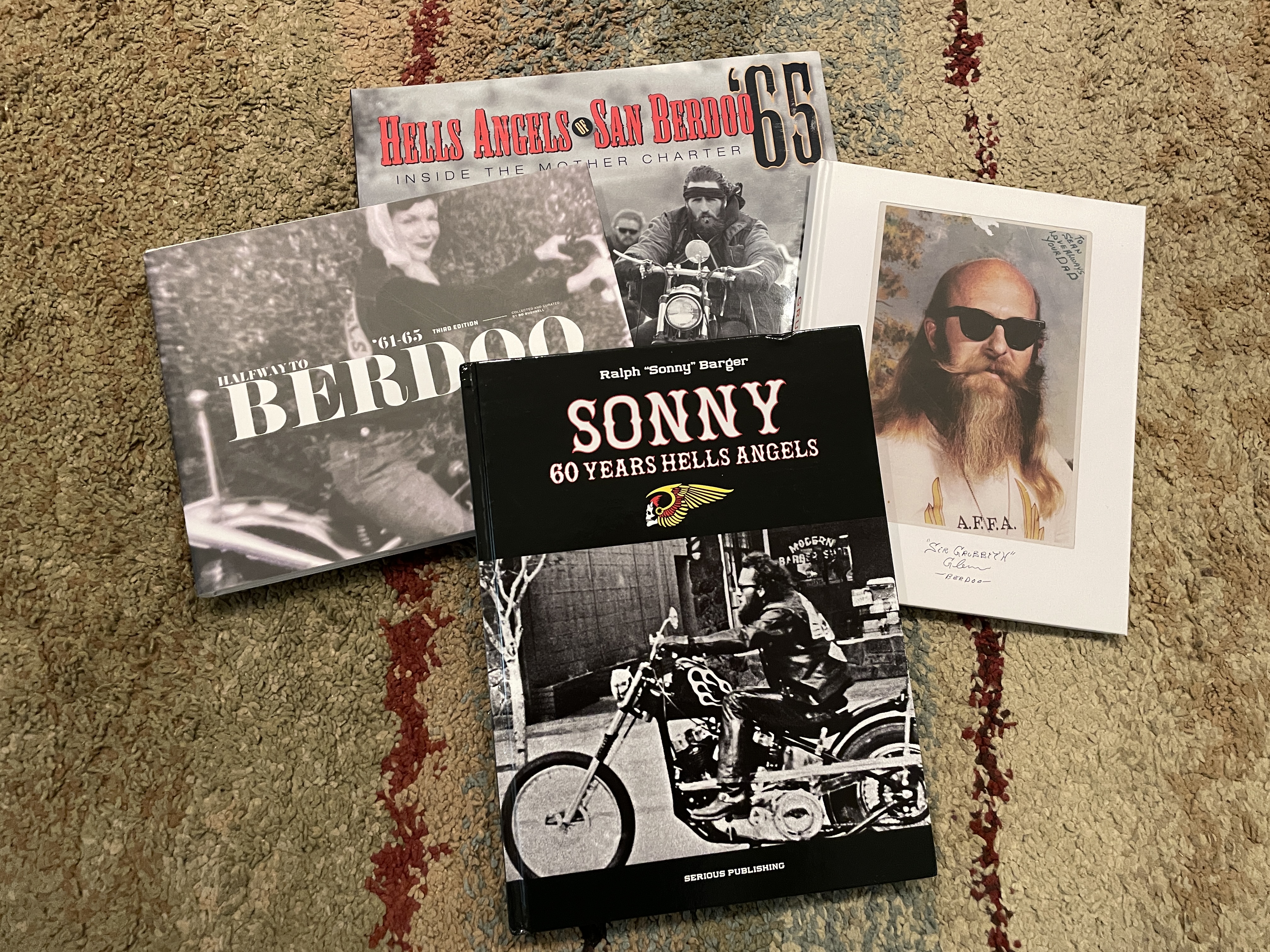
Sonny’s final contribution to the literature of motorcycling seems to be his massive scrapbook-styled tome, Sonny: 60 Years Hells Angels, published by the French imprint Serious Publishing in 2017. Copies are currently listed on Amazon at $357 USD! 😳 I swear, I did not pay even a fifth of that for my copy! 😎
Anyway, here is the first of the two 1979 interviews:
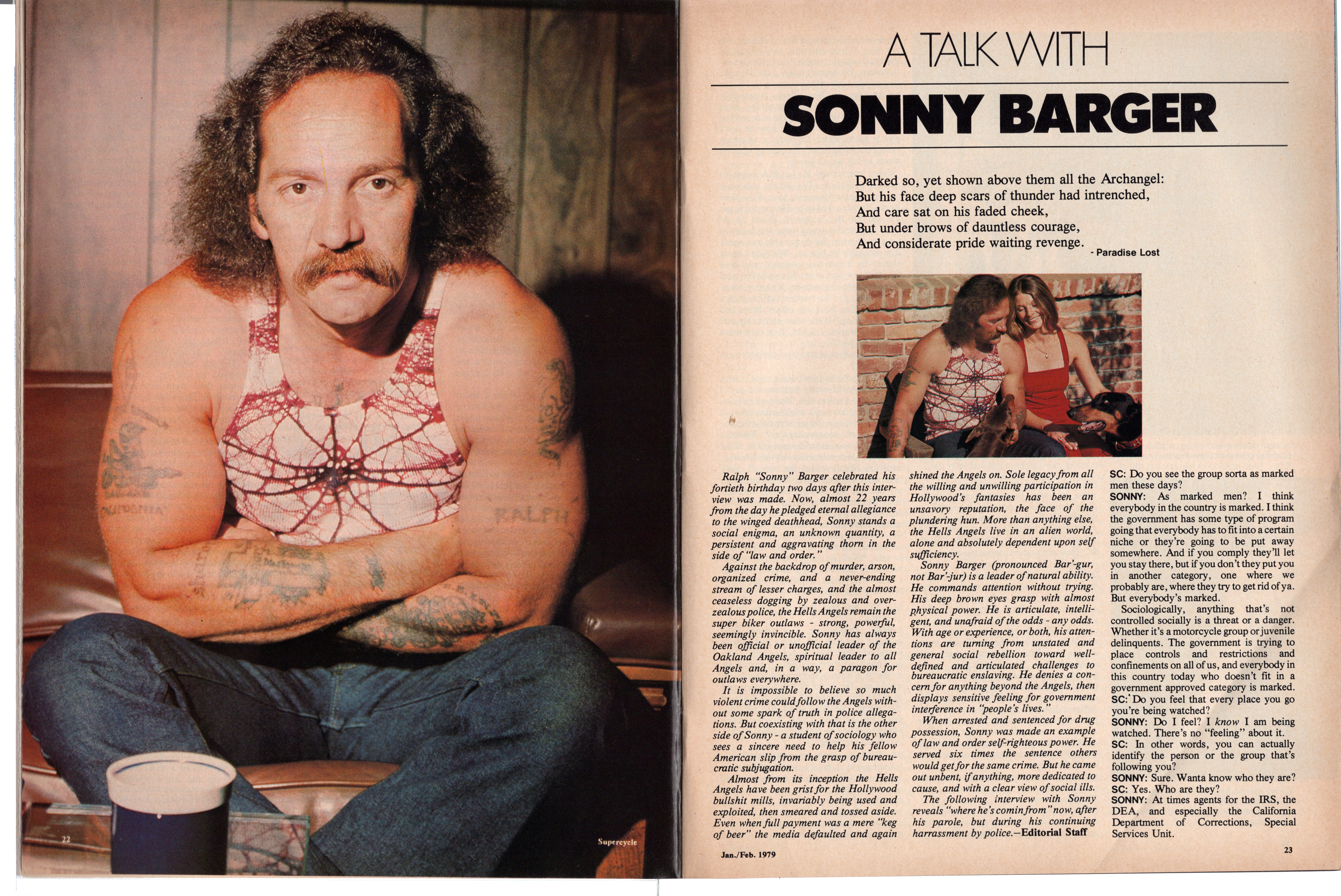
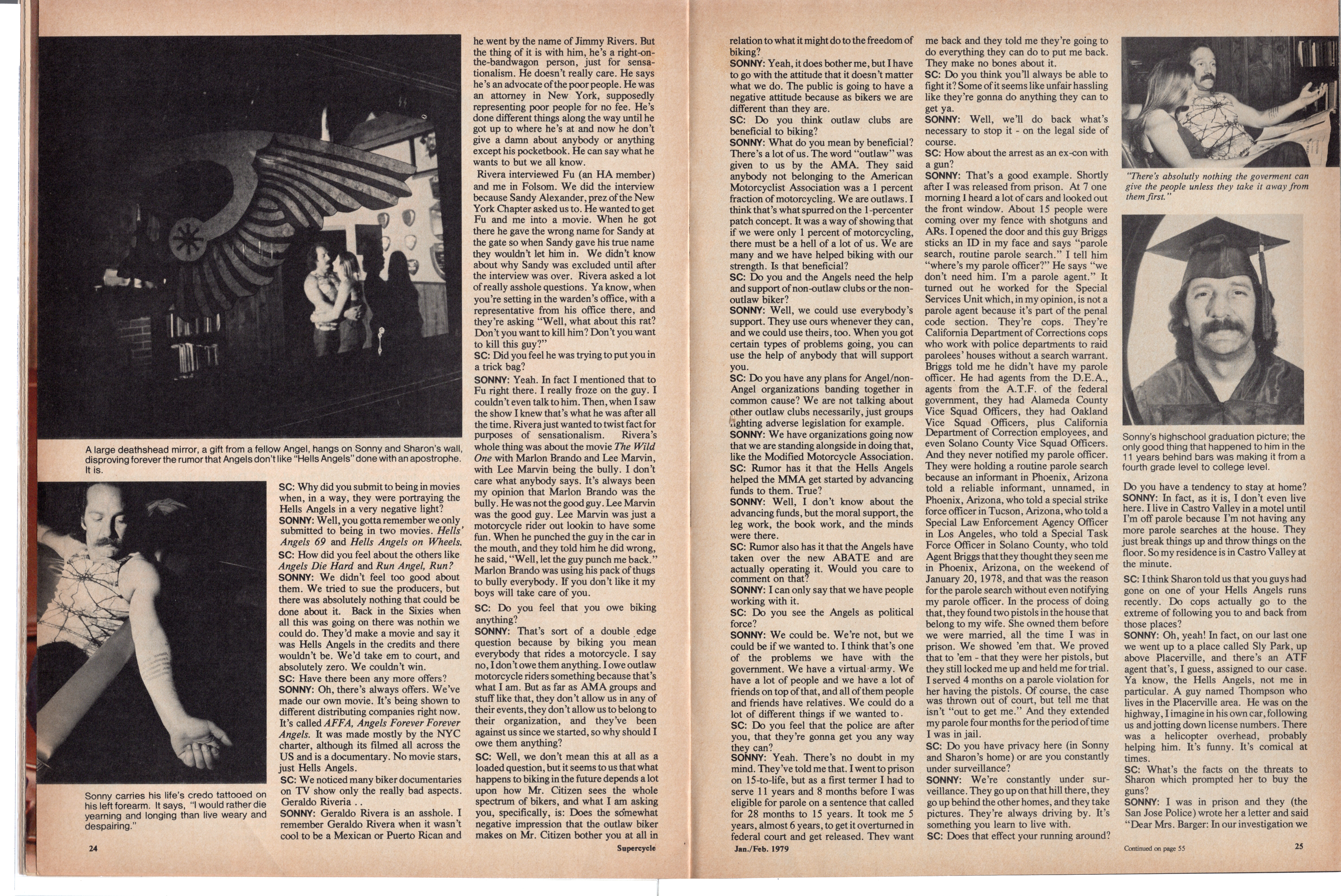
Supercycle, February 1979

If enough folks are interested, I’ll post the second interview soon, along with some other articles about this and other clubs.

AS NOTED ABOVE: I am not associated with the Hells Angels Motorcycle Club (or any other club) and am only posting these images and this information in the interest of preserving and sharing the collective culture and history of the motorcycling world for historians and bikers like me, who are fascinated by it all. Sláinte!
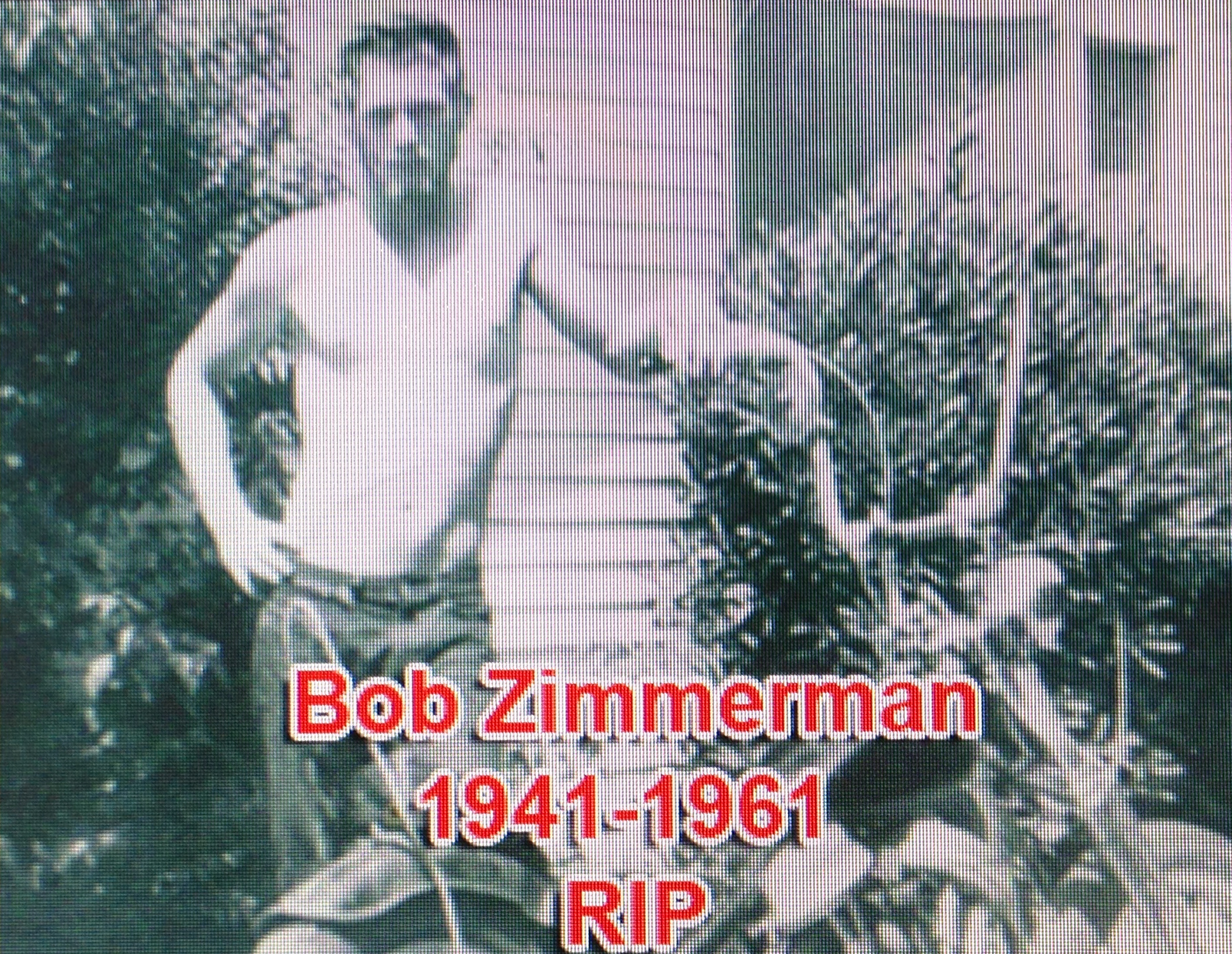
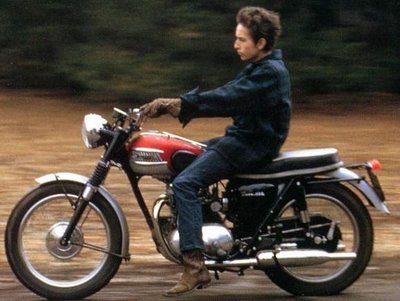
Bobby Zimmerman 1941-1961

As a longtime biker, any mention of motorcycles, riders, clubs, etcetera, intrigues me, so when Bob Dylan mentioned late Hells Angel Berdoo President Bobby Zimmerman (Chronicle: Volume One, 2004, pg. 79), while explaining his own renaming, I went looking for more info.  First, I located a photo of the deceased, posted on the Berdoo chapter’s Memorial page:

Image

Dylan apparently had the date of death wrong: He said Zimmerman died in 1964, but Zimmerman’s *Angel brothers have him dying three years earlier.

Then I dug a little further, and found this article, a human-interest item by John Weeks of the San Bernardino Sun, published last fall, in which Dylan claims a spiritual bond with the soul of the dead Angel:                                                                                   

A surprise addition to the local family

Ladies and gentlemen, let’s put our hands together and give a warm hometown welcome to a local boy who has made good, who has distinguished himself as one of the most influential singers and songwriters of all time, a living legend, a Presidential Medal of Freedom honoree, a recipient of multiple Grammy, Oscar and People’s Choice awards, the one and only, the Inland Empire’s own … Bob Dylan!

Image

Whoa, hold on here. Let’s check our notes.

Says here that Bob Dylan was born Robert Zimmerman in 1941 in Duluth, Minn., that he grew up in Hibbing, Minn., that he went to college in Minneapolis, that he moved to New York and became famous, that he later lived in both New York and Minnesota, and that for the last couple of decades he has made his home in Malibu. There’s no mention here at all of the Inland Empire.

Oh, wait, there’s more. Wow, this is new. Says here that Bob Dylan had a bonding experience with the soul of a dead San Bernardino biker, also named Robert Zimmerman, in the 1960s, and that he was transformed into a different person at that time.

An Inland Empire person, evidently.

Is this a joke?

If it is, it’s Bob Dylan himself who is telling it. In public.

Here are his own words, in an interview with Mikal Gilmore that appears in a recent cover story in Rolling Stone magazine:

“When you ask some of your questions, you’re asking them to a person who’s long dead. You’re asking them to a person that doesn’t exist. But people make that mistake about me all the time. … Transfiguration is what allows you to crawl out from under the chaos and fly above it. That’s how I can still do what I do and write the songs I sing and just keep on moving.”

That Bob Dylan! What a card! What a kidder!

No, wait. Later in the interview, he starts talking about transfiguration again, and he presses the point. He brandishes a dog-eared copy of the book Hell’s Angel: The Life and Times of Sonny Barger and the Hell’s Angels Motorcycle Club. He cites a chapter in the book that recounts how Robert Zimmerman, the 21-year-old president of the San Bernardino chapter of the Hells Angels, who lived on Walnut Street in San Bernardino, was killed in a 1961 motorcycle accident in Madera County. That accident was a precursor, Dylan believes, to his own motorcycle accident in 1966 near Woodstock, N.Y. The two events were directly related and they completed Dylan’s transformation into a new person, he says.

He can’t be serious about this, right?

Wait, he really is. He goes off on it for a third time during the course of the interview. “I’m showing you a book that’s been written and published. I mean, look at all the connecting things: motorcycles, Bobby Zimmerman. … And there’s more to it than even that. … I’d always been different than other people, but this book told me why. … I didn’t know who I was before I read the Barger book.”

Well, if he really means it, we should start now to prepare for that hometown concert in the Inland Empire that now seems inevitable. We’ll put up banners. “Welcome home, Bob!”

He can perform in the giant San Manuel Amphitheater in Devore, or perhaps he would prefer a smaller arena show, at the Epicenter, say, in Rancho Cucamonga, or the San Manuel Stadium in downtown San Bernardino, or Coussoulis Arena at Cal State San Bernardino. Or, he could do a series of small, intimate shows in theater settings, such as the Glass House in Pomona, or the Fox Riverside, or the historic California Theatre in San Bernardino.

Many towering figures in the music industry do have strong roots in the Inland Empire. The list includes Tennessee Ernie Ford of San Bernardino, Kris Kristofferson of Claremont, Frank Zappa of Rancho Cucamonga, Jimmy Webb and Jim Messina of Colton, Sammy Hagar and Travis Barker of Fontana, and Liberace, Dick Clark and Herb Alpert, all of whom had homes in Lake Arrowhead.

Jazz legend Pearl Bailey, in her retirement, ran a popular guest ranch in Apple Valley.

Singers Bonnie Raitt and Joan Baez both have University of Redlands connections, thanks to their fathers. Raitt’s father, the Broadway star John Raitt, was a University of Redlands graduate. Baez, whose father taught there, writes about living in Redlands in her autobiography, “Daybreak.”

Now, it appears, we must add a new name to the list of musical hometown heroes.

Bob Dylan.

Of course, unlike the others, Dylan neither was born nor raised here, nor did he ever work or go to school here. No, he’s here only in spirit, as the result of transfiguration.

That means he is in a category of his own.

But we knew that already, didn’t we?

http://www.sbsun.com/johnweeks/ci_21766920/surprise-addition-local-family

The story is addressed in greater detail by author Grant Maxwell, in a post he describes as “a (slightly modified) excerpt from my forthcoming book, How Does It Feel?: Elvis Presley, the Beatles, Bob Dylan, and the Meaning of Rock and Roll,” which may be seen here:

http://rockandrollphilosopher.wordpress.com/2013/06/26/bob-dylans-transfiguration/

In that post Maxwell delves deep into the chronology of events, and how Zimmerman’s death ties in not only with Dylan’s own motorcycle crash, but with the entirety of Dylan’s professional career!  So, I guess that would make Zimmerman Dylan’s “guardian angel,” right?

Food for thought, if you’re inclined to think along those lines.

* NOTE: In the book Dylan mentions in his interview – Hell’s Angel: The Life and Times of Sonny Barger and the Hell’s Angels Motorcycle Club – Hells Angel Sonny Barger relates the story of Zimmerman’s death on the ride home from the Bass Lake Run, an annual Angel event immortalized in Hunter S. Thompson’s book on the Angels.  However, while on page 70 he gives the same 1964 date that Dylan used, on page 130, again recounting Zimmerman’s death, he writes that Zimmerman died in1962.  I can’t explain the discrepancies between Barger’s recollections and the chapter’s official website.