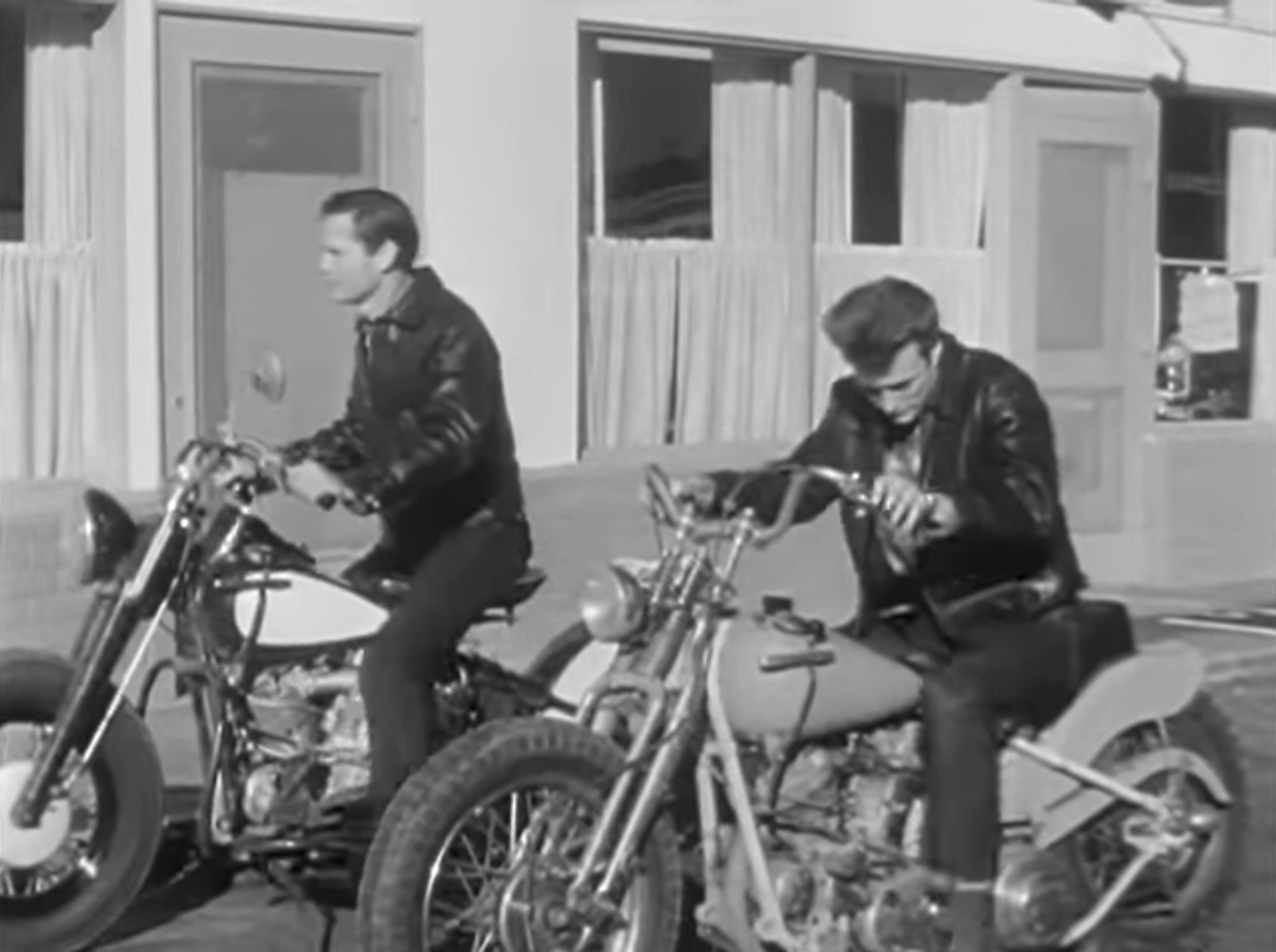
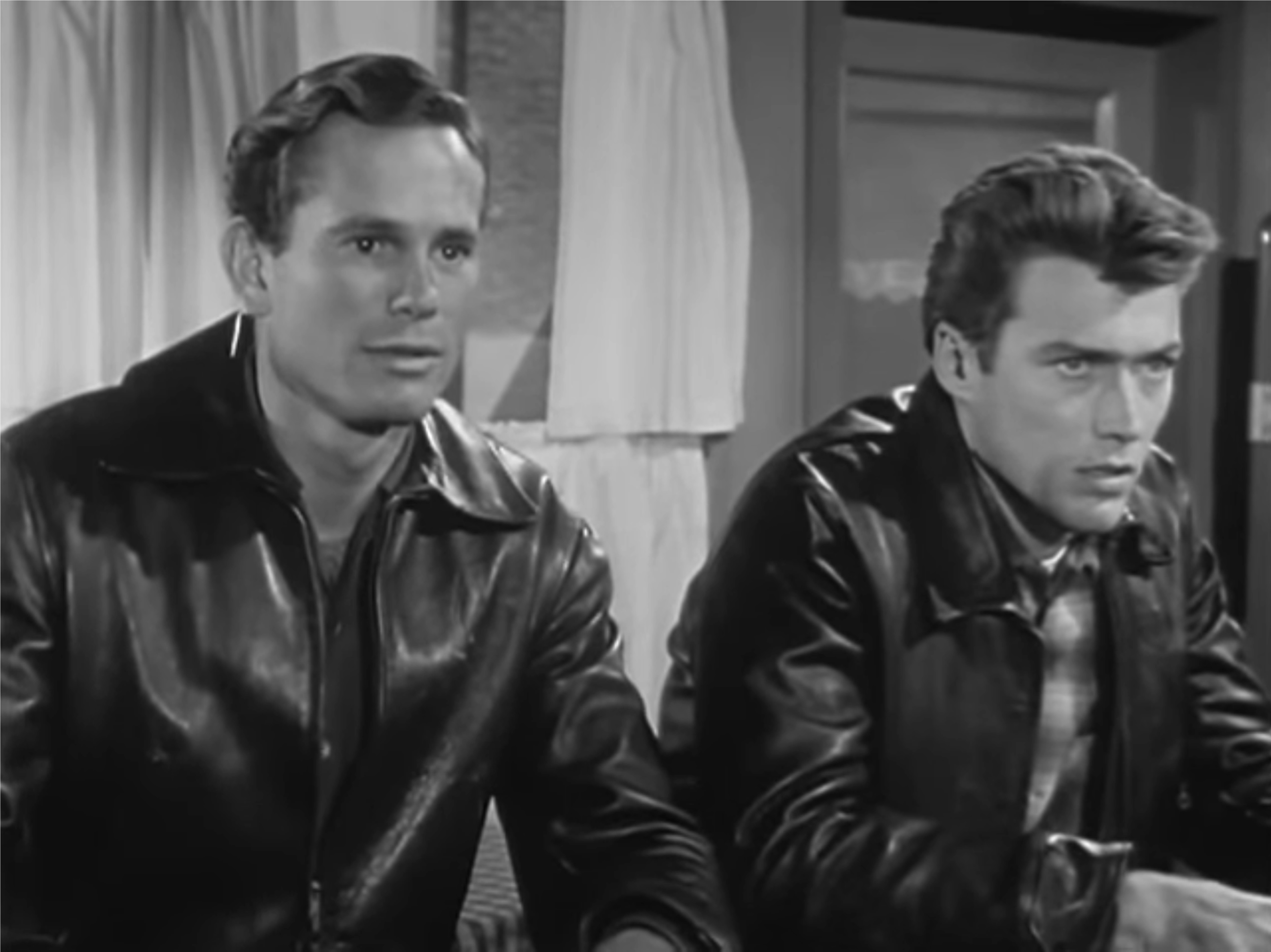
In an episode of the 1950s television show Highway Patrol, aired 2 April 1956, two motorcycle club members (Clint Eastwood as ‘Joe Keeley’ and John Compton as ‘Nick West’) ride their stripped-down Harleys into a small town and stop at a café for breakfast. They are shocked when the café owner (Jack Edwards as ‘Bernie Sills’) confronts them with a shotgun, forces them outside and orders them to leave.
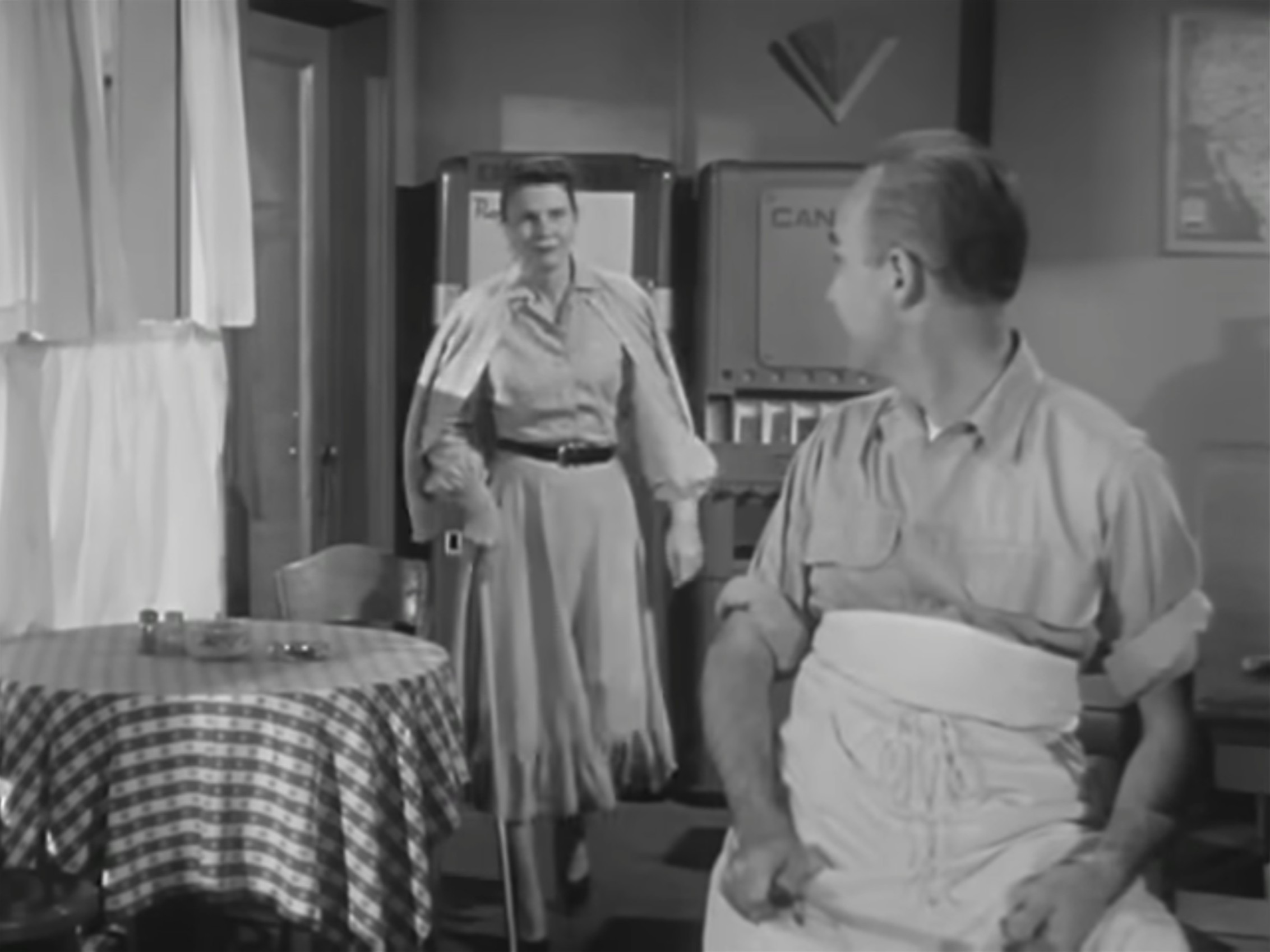
It turns out the café owner’s wife (Paula Houston as ‘Mrs. Sills’) was injured during a ‘motorcycle raid’ by a renegade club eight months earlier. Sills just assumes that because Joe and Nick are on bikes and wearing leather jackets, they must be part of that renegade club.
As his wife calls the Highway Patrol, her husband menaces and provokes the bikers until Nick snatches the shotgun from Sills and punches him on the jaw. Joe drags Nick away, they jump on their bikes (accurately customized in the fashion of the day, BTW) and roar out of town.
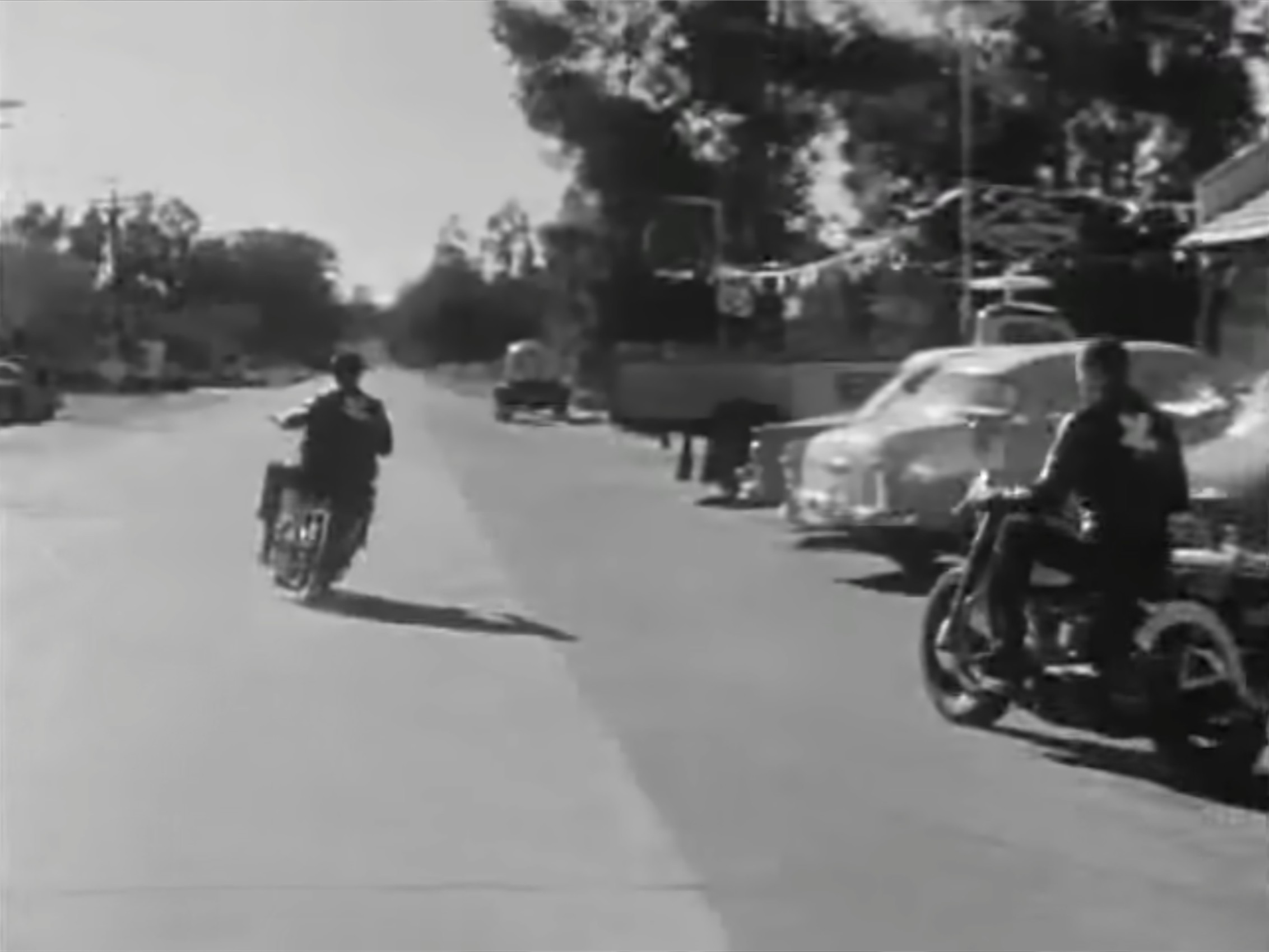
When Sills learns that his wife has called the Highway Patrol, the first thing he does is hide the gun. Then he lies to the responding officer, who is also on a motorcycle, telling him the cyclists started the trouble, that they’re dangerous and so on. Relying on the café owner’s words, the motorcycle cop sets off in hot pursuit of the bikers, only to be struck and fatally injured by a distracted trucker who runs a red light.

Sills is there when Broderick Crawford (‘Chief Dan Mathews’) shows up, and does his best to convince the head cop that those ‘cycle bums’ are responsible for the patrolman’s crash. He swears out a complaint against the bikers for ‘disturbing the peace’, infuriated that a more serious charge can’t be laid against them immediately.
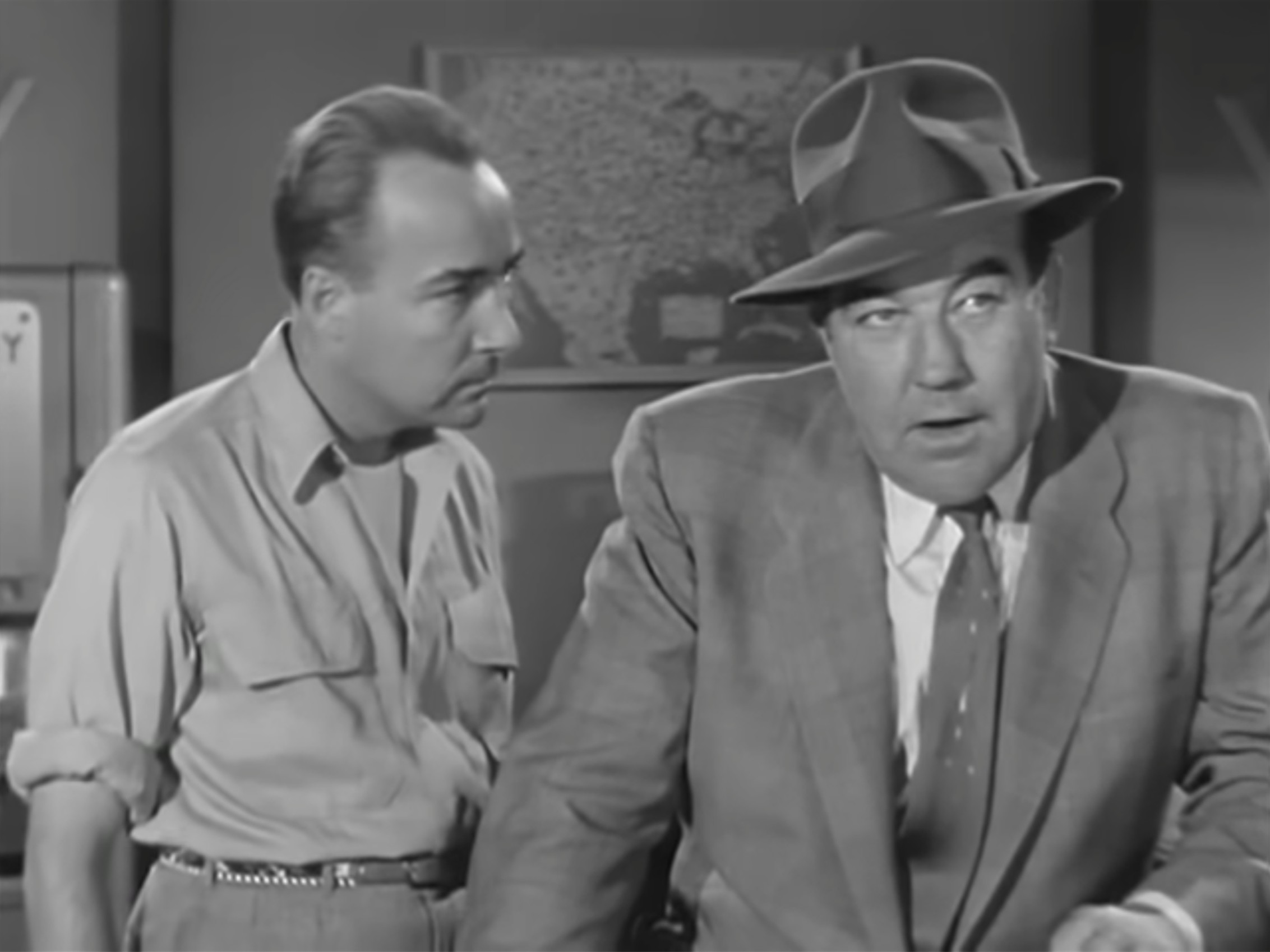
Back in his squad car, however, Mathews questions the café owner’s story — he doubts two bikers would take on an entire town — and tracks them down solely to question them as possible witnesses. When he hears their version of the morning’s events, he is incensed that Sills lied to him, so Mathews sets a trap for Sills. He outfits one of his motor patrolmen with a customized Harley and a borrowed motorcycle club jacket, and sends him into town to stop at the café.
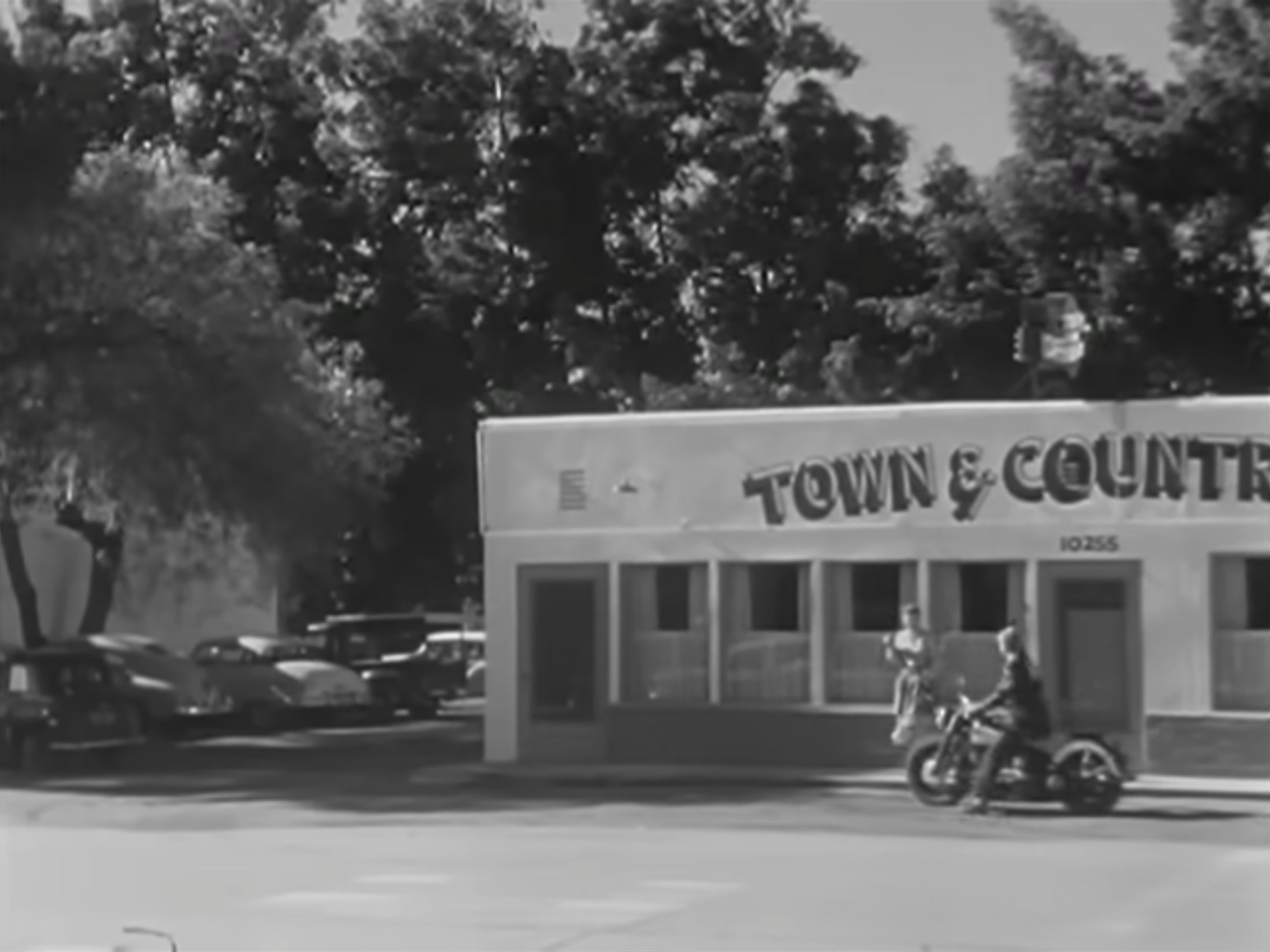
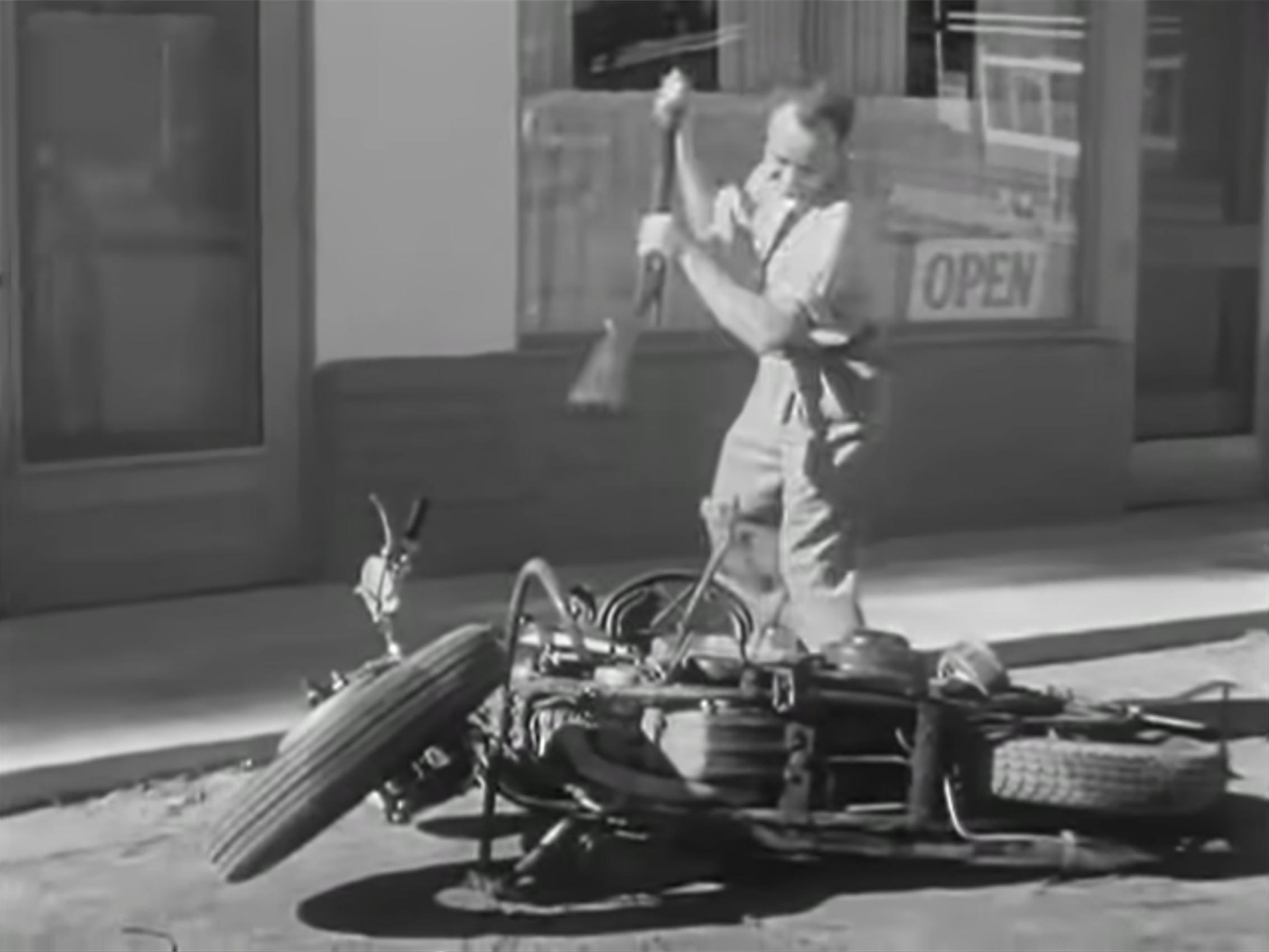
Sure enough, Sills goes off on the ersatz ‘biker’, knocking over his Harley, beating on it with the stock of his shotgun, and threatening to shoot the ‘biker’. Sills even admits he’s using the same shotgun he used on Joe and Nick.
At that point, Mathews and his driver appear, having witnessed the entire incident, and arrest Sills on two charges of assault with a deadly weapon. As he tries to weasel his way out of the trouble he’s in, the café owner’s wife calls him a bitter old fool, and vows to tell Mathews the truth about the incident with Joe and Nick.

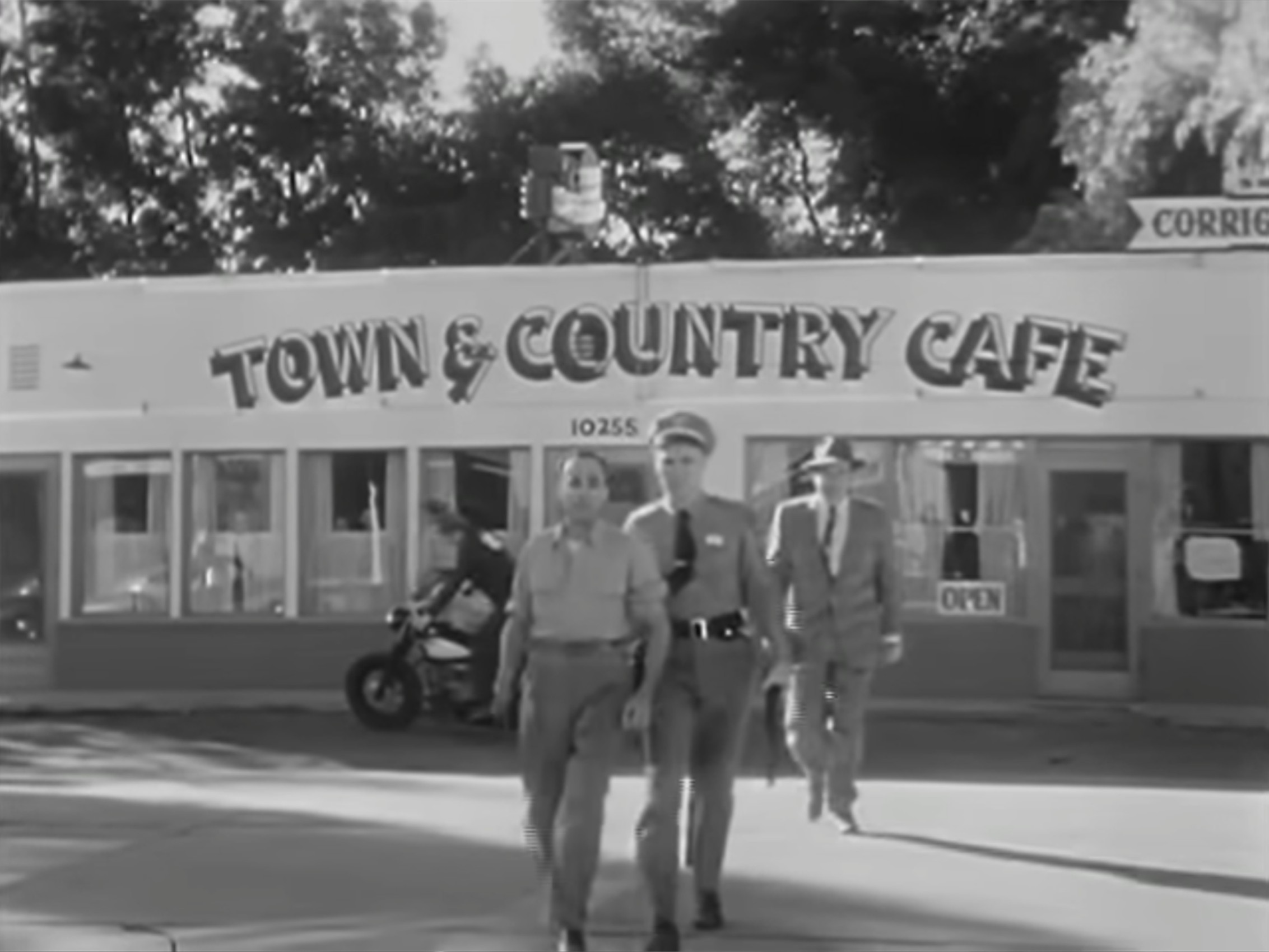
I tracked this episode down because, as a longtime biker, I’m interested in anything and everything to do with our history, and this episode is part of that history.
HISTORY
The ‘outlaw biker’ of today first became an identifiable character in the summer of 1947, when the town of Hollister, California, hosted a Gypsy Tour (a large motorcycle rally) which included races, hill-climbs, tire-kicking and socializing. This event was sanctioned by the AMA – the American Motorcycle Association, as it was then known – and drew a large number of ‘straight’ clubs: mom-and-pop touring clubs and sport-minded racing clubs.
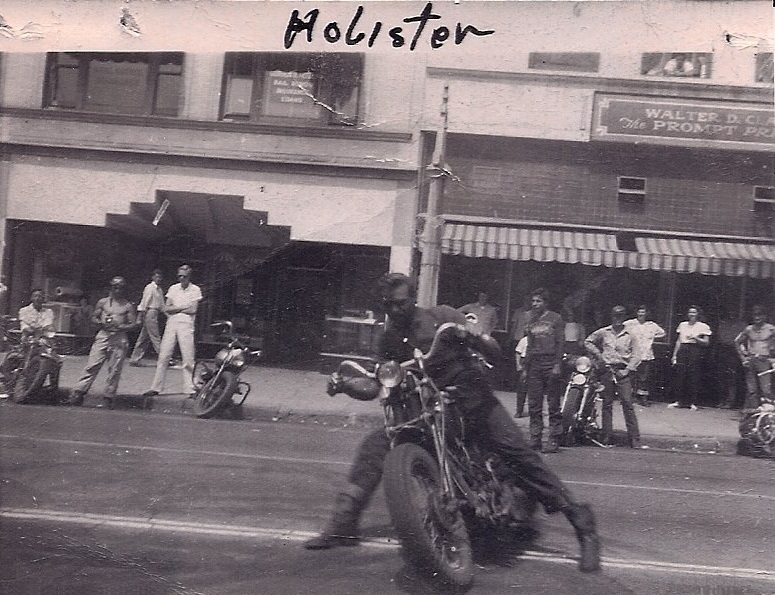
However, a small number of clubs, with names like Galloping Goose and Boozefighters, and comprised primarily of recently returned World War Two combat veterans, were more interested in partying than anything else, and began drinking, brawling, racing and performing motorcycle stunts on the town’s main drag.
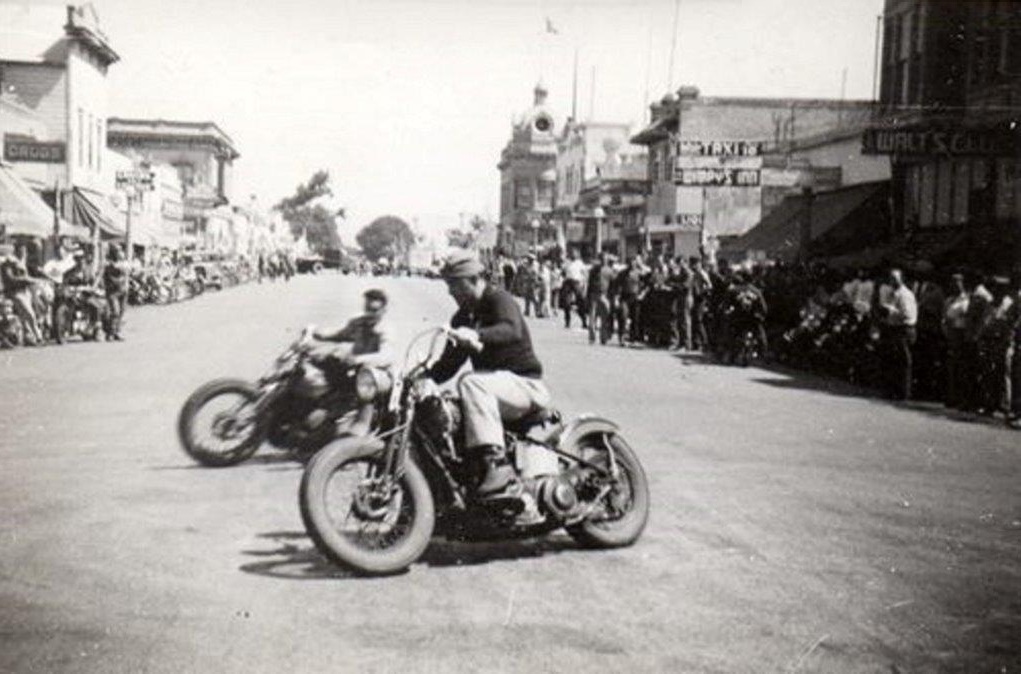
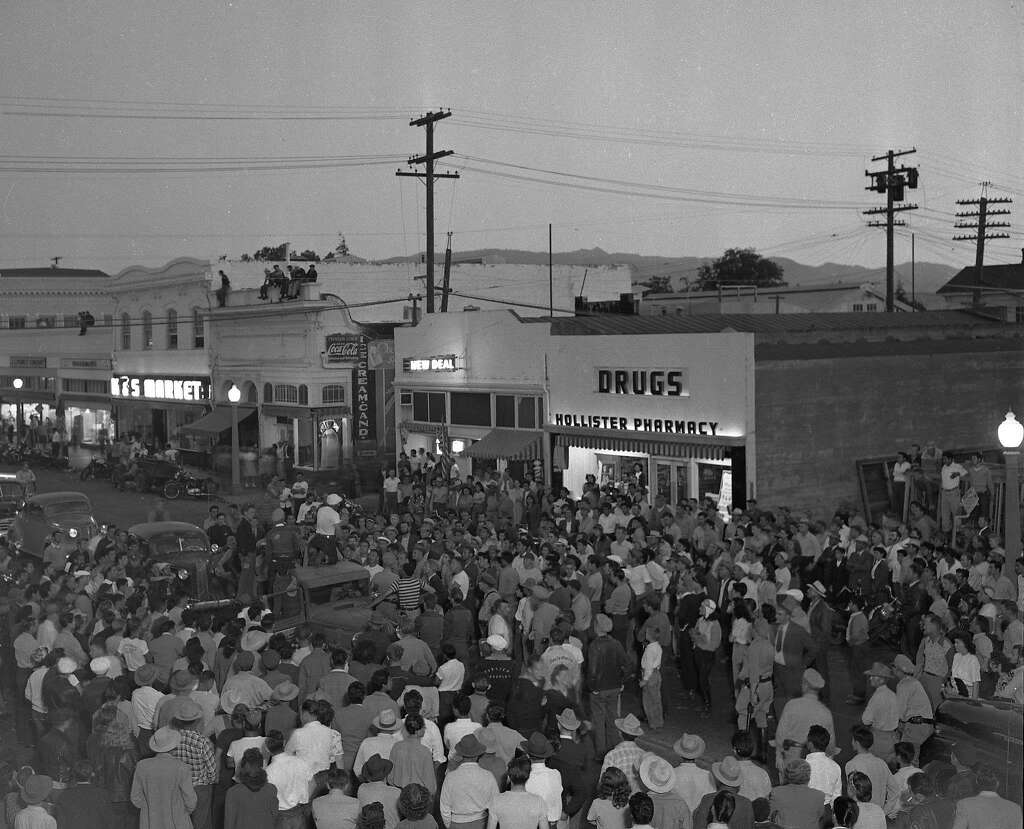
Some windows were broken, some people were arrested, and the overwhelmed local police called the Highway Patrol in to assist in restoring order. This was finally accomplished by commandeering a dance band and a flatbed truck to serve as a stage. The damages were paid for on the spot, and the roughhousing came to a halt as the rebels took to the streets to dance!
It would have been a non-story but for the efforts of an enterprising (and desperate) photographer named Barney Peterson. The San Francisco Chronicle sent Peterson to photograph the reported carnage, but he reportedly arrived too late to capture anything but the peaceful aftermath. According to witnesses, the photographer, eager to secure his commission, artfully arranged broken beer bottles beneath a bike parked at the curb, to make it look as if the town were awash in drunken revelers, and then grabbed a local fellow named Eddie Davenport and posed the visibly intoxicated Davenport on the bike with a bottle in each hand.
The resulting photograph appeared in LIFE magazine two weeks later, and seared the image of bikers as drunken louts and ruffians into the consciousness of Americans from coast to coast. Similar shenanigans at a rally the following summer, in Riverside, California, cemented that image.
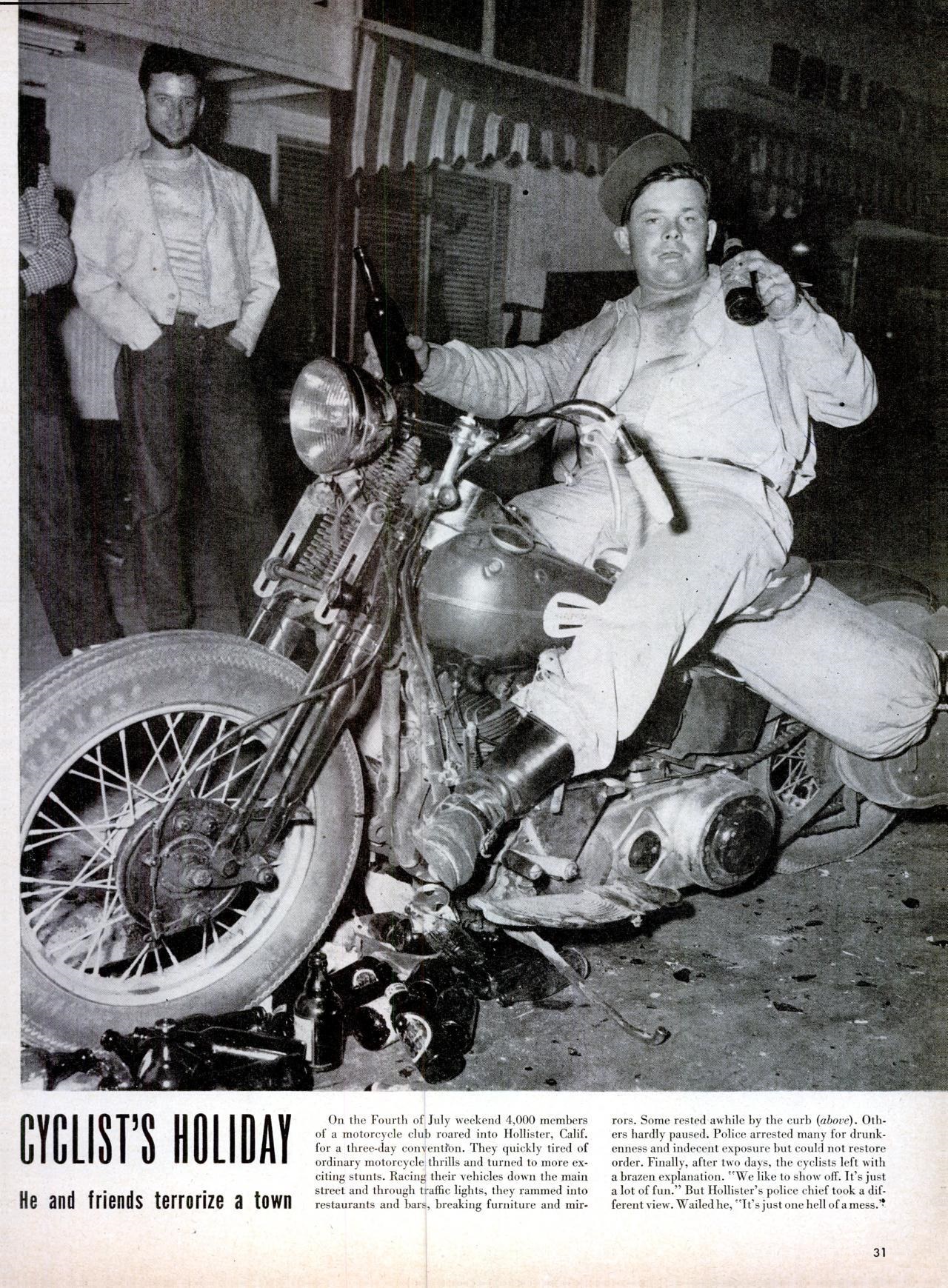
The AMA reportedly insisted that ‘99% of all motorcyclists are upright, law-abiding citizens,’ and announced that the clubs misbehaving at Hollister and Riverside would be ‘outlawed’ by the AMA. This merely meant that its members would be barred from taking part in AMA-sanctioned competition – a harsh punishment for a club that cared about winning trophies and national titles.
However, for a band of hooligans that described itself as ‘a drinking club with a motorcycle problem,’ the way the Boozefighters MC did, being ‘outlawed’ was a badge of honor. It wasn’t long before certain outlawed clubs (and those that aspired to be) devised a diamond-shaped 1% patch, which marked them as proud members of the 1% of all motorcyclists who did not fit in the AMA’s neat white-picket-fence world. They would be the elite, the baddest of the bad.
A few years after the ‘riot’ at Hollister, author Frank Rooney published a highly fictionalized version of the Hollister story in Harper’s Magazine, reinforcing the stereotype of bikers as thuggish ruffians, now made even more dangerous by traveling in well-organized, almost paramilitary packs under the direction of a psychotic leader. Naturally, death and destruction ensue.
Rooney’s ‘Cyclist’s Raid’ and the real-life events at Hollister and Riverside helped inspire Stanley Kramer’s 1953 film The Wild One, which featured a smarmy motorcycle club leader (Marlon Brando as ‘Johnny Strabler’) opposite a far more realistic biker named ‘Chino’ (Lee Marvin) and his outlaw club, The Beetles. That, in turn, led to the April 1956 airing of the Highway Patrol episode titled ‘Motorcycle A’.
So why is this relatively unremembered half-hour television program worth all this verbiage? Well, kids, it stands out because, unlike The Wild One or Rooney’s fiction, or a lot of newspaper reports of the day, the bikers in this Highway Patrol episode are not the bad guys!
See? History, made fresh right here! 😁
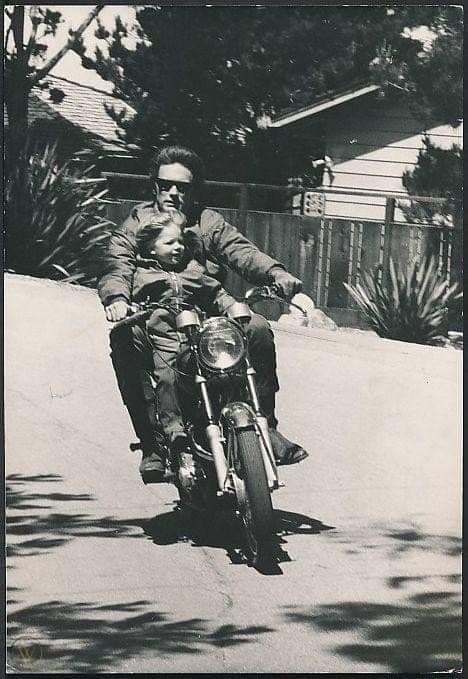
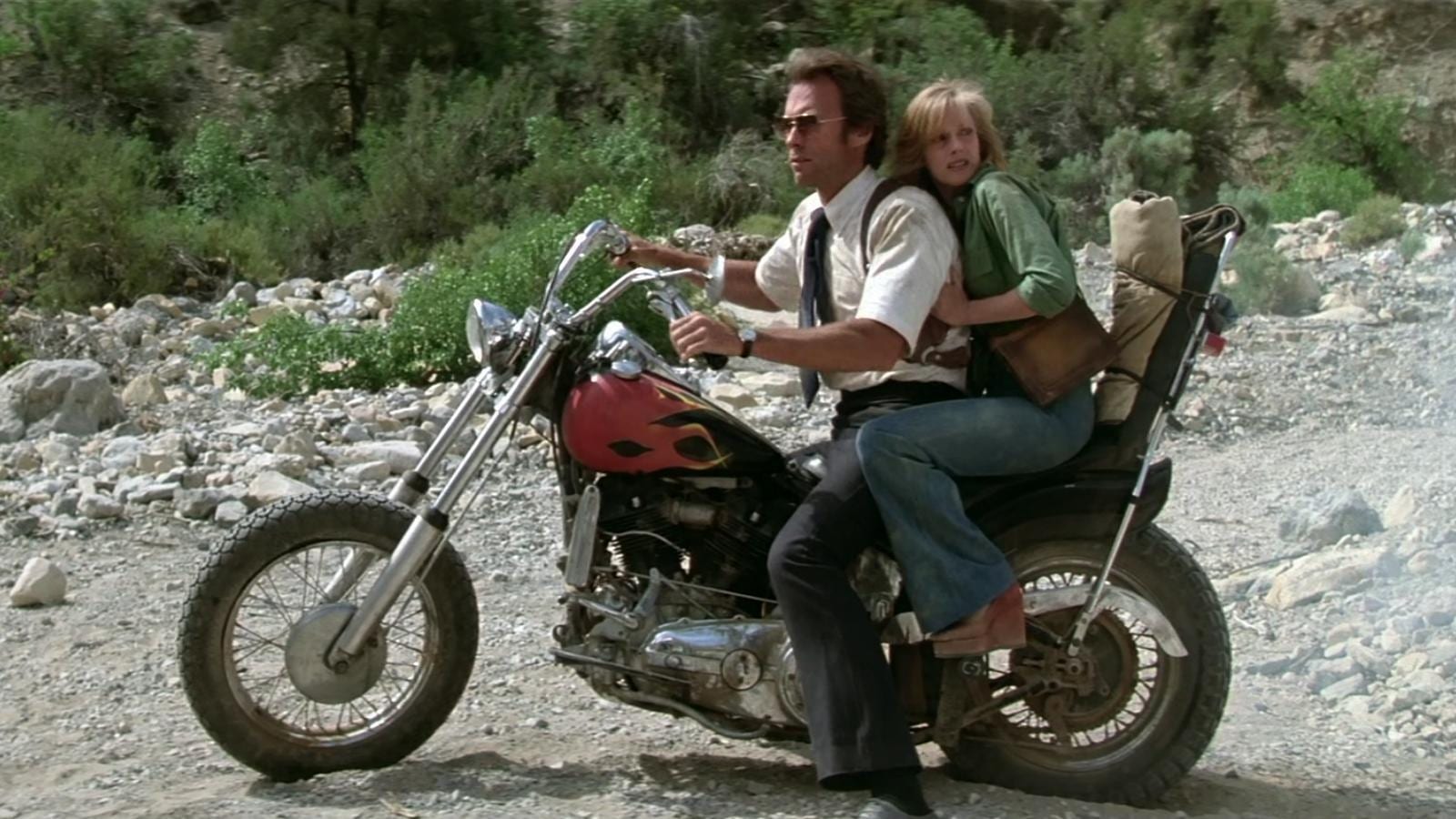
And just to show that Highway Patrol wasn’t a one-off for Clint Eastwood’s riding abilities, here are two more pics of the man on wheels.
 The Shovel Shop