DAVE MANN STRIKES AGAIN!

A few weeks back, I wrote a lengthy piece about David Mann, the artist and illustrator who spent four decades chronicling the biker life for Choppers publisher Ed ‘Big Daddy’ Roth and, later, for Easyriders, the most enduring rag ever published by and for bikers, until new owners ran it into the weeds…. ๐Ÿคฌ

….but Rest in Peace, Dave Mann, and R.I.P. the original Easyriders and its late editor Lou Kimzey, who is the closest thing my writing career ever got to a mentor. What commercial success I’ve had (and granted, I never tried to make writing my primary occupation) is due to Lou Kimzey’s kind words.

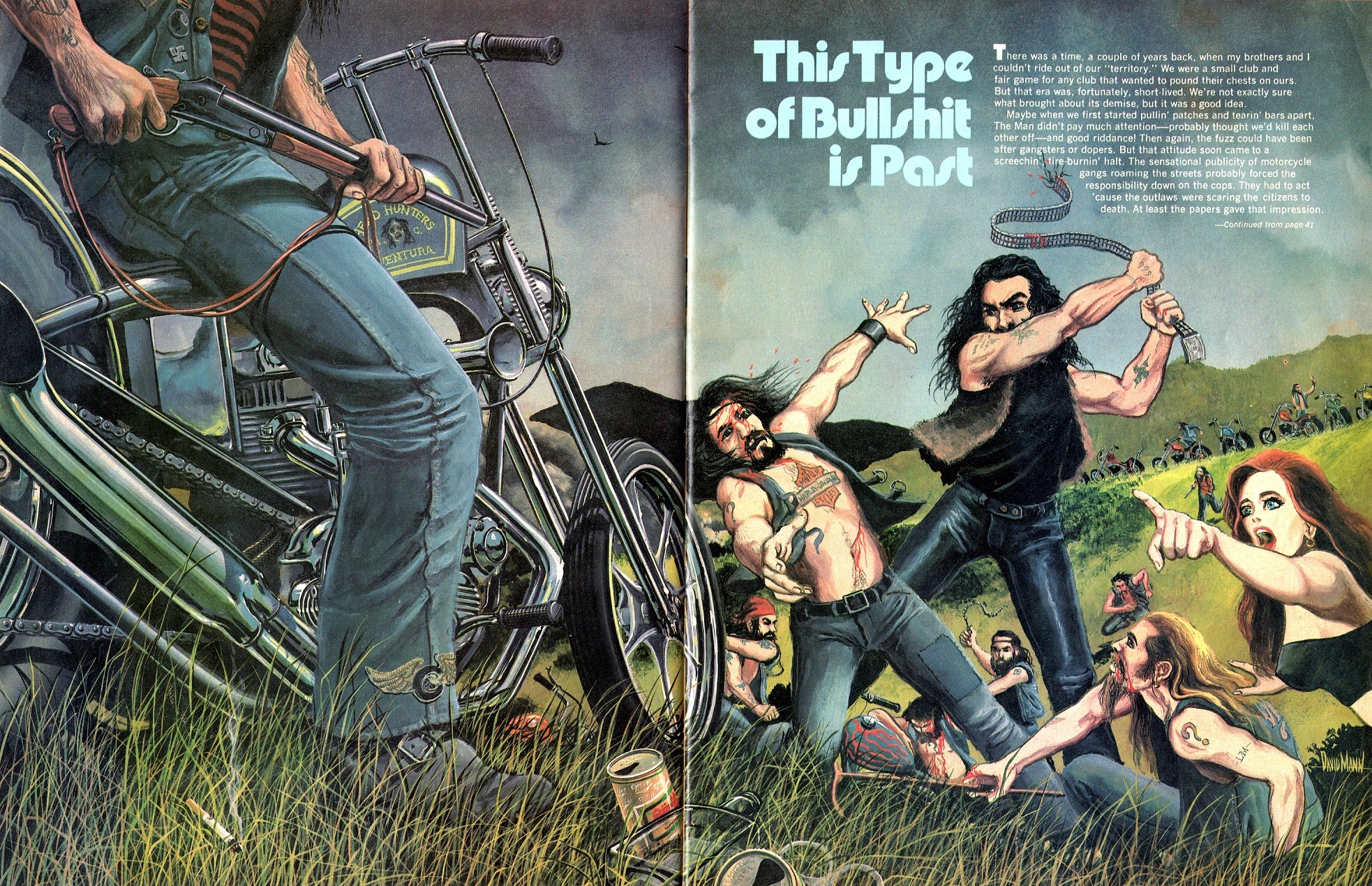
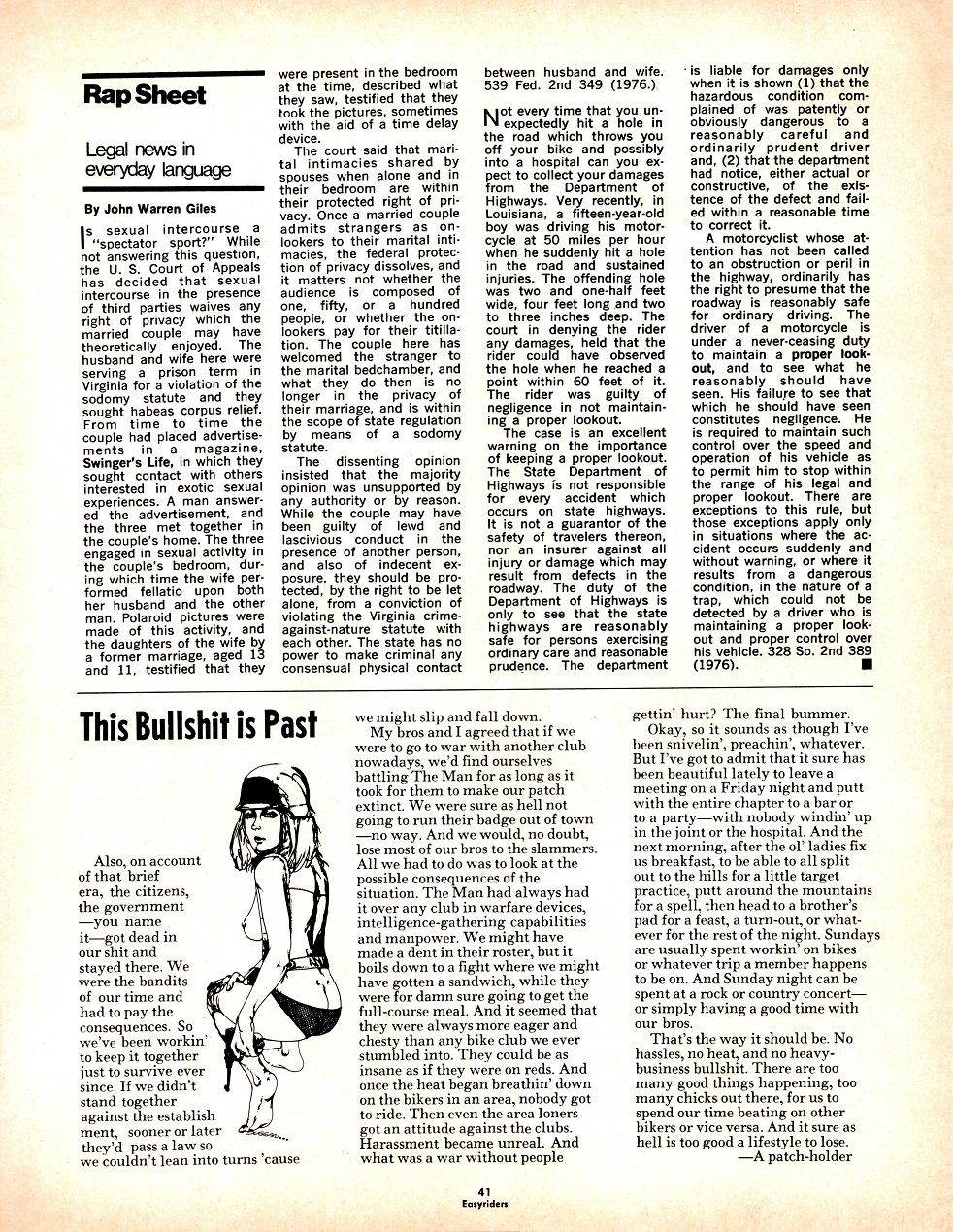
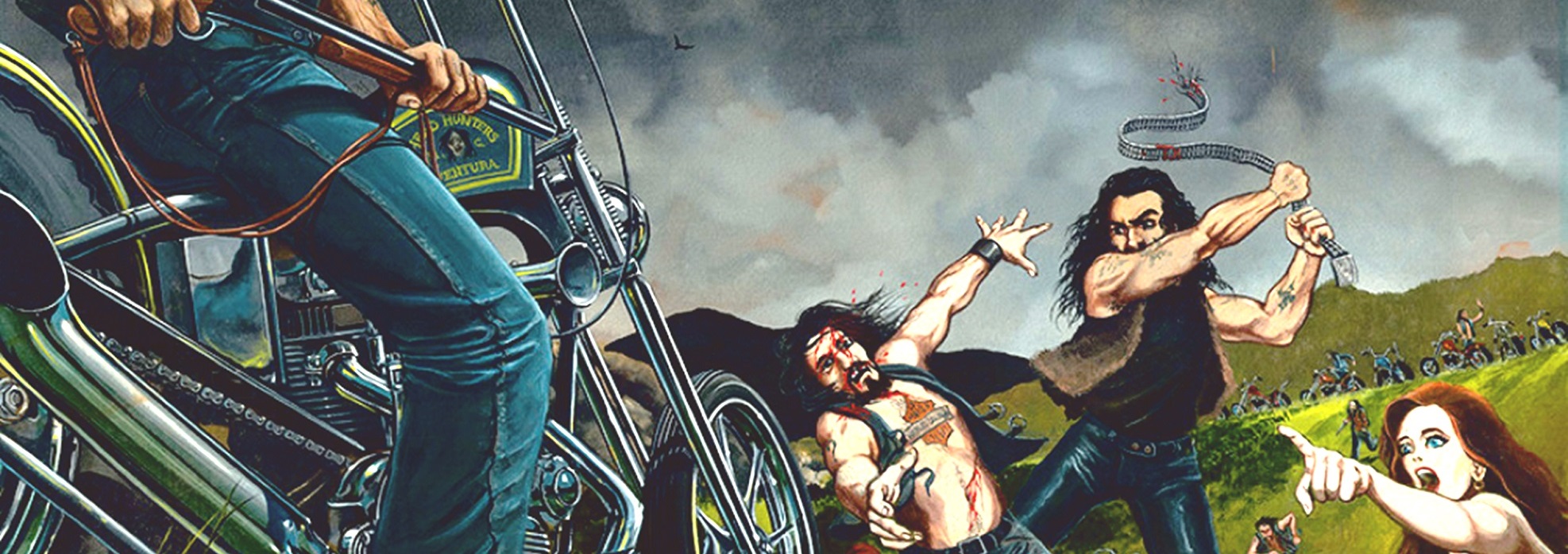
Anyhoo, at Dave Mann’s Facebook page (https://www.facebook.com/davidmannstore) a post recently appeared featuring a particularly dark and gritty image, even for Dave Mann, who did dark and gritty better than anyone. It was used as an illustration for an essay about violence between motorcycle clubs. Half the essay’s text appeared on the page over Dave’s artwork…. but the other half? ๐Ÿคทโ€โ™€๏ธ Even though it says ‘Continued from page 41,’ the jump was actually to page 41. Mr. Kimzey and the boys ran a loose ship back in the day, and errors were to be expected.  ๐Ÿ˜

But me and my fellow Mann fans didn’t care about to or from; we just wanted to see the rest of the damned article!

I hate being left hanging like that, so I went and found a copy of that issue (April 1977) and got what radio personality Paul Harvey used to call ‘….the rest of the story.’ It was just another half-page, but it was the conclusion of a powerful essay, especially in those grim days when ‘gang warfare’ was decimating motorcycle club rosters and drawing heat on everyone who rode, patched or not, Me, I spent more than one afternoon looking down the barrel of a lawman’s gun because our home team was going tit-for-tat with other clubs over Goddess knows what. ๐Ÿ™„

F’rinstance:

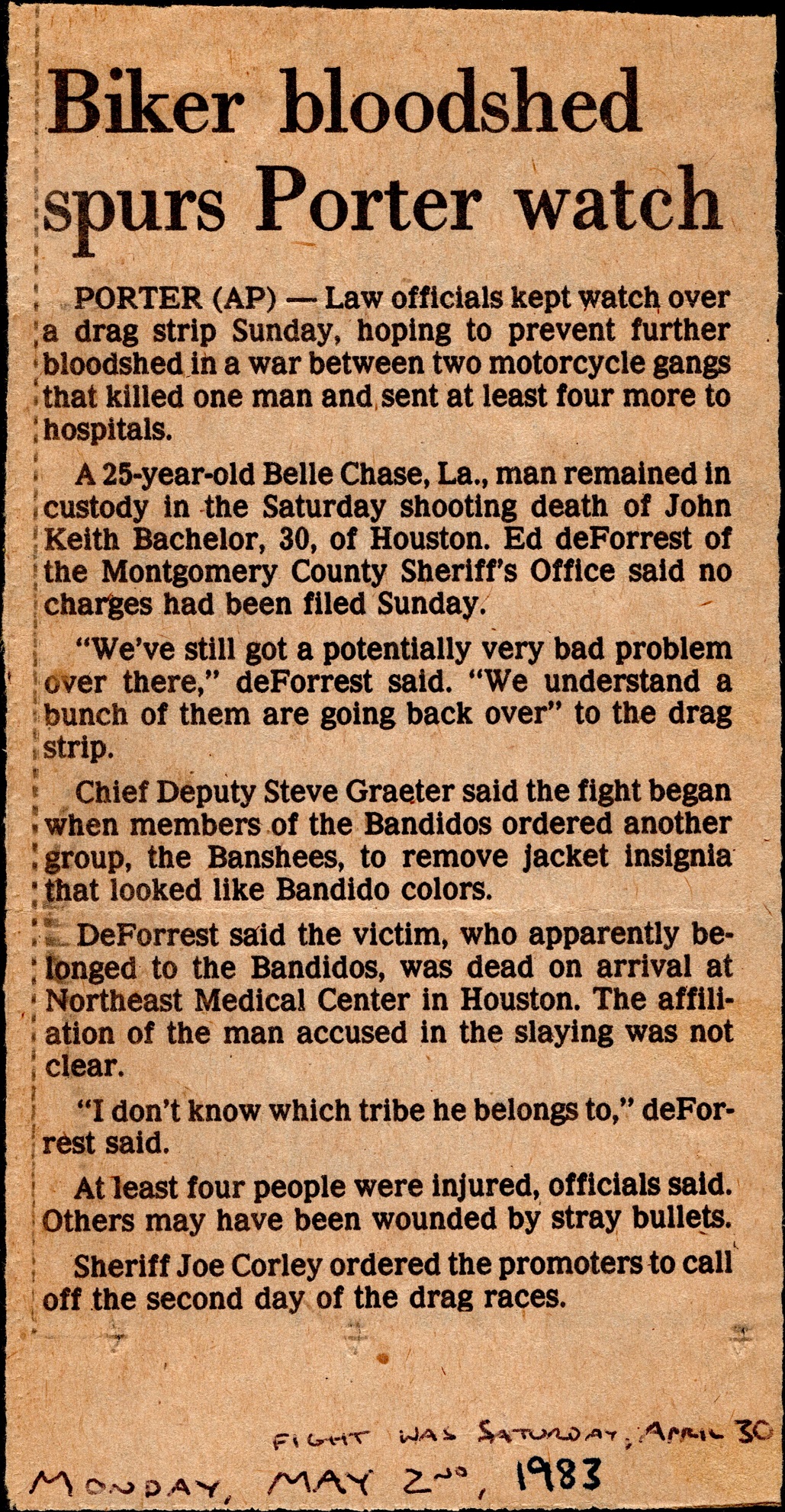
The man who died apparently crawled into a van parked near our campsite and bled out as LEOs searched for perpetrators and victims.  Of course, those guys all had the good sense to split, if they were physically able, long before the po-po made their appearance.
 
We, on the other hand, were not so smart.  We were held at the racetrack for hours under the blazing sun until the cops were satisfied they’d found everything they were going to find. Then they began pointing rifles and shotguns at us, screaming at us to get our bikes moving and get out the gates NOW! or have them impounded and spend the night in jail.
 
The scramble to get several hundred pissed-off bikers out the narrow gates of that racetrack – many of them stoned and/or drunk as Cooter Brown after hours of waiting – might have been farcical if not for the dead body, the wounded, and the ranks of angry LEOs, many on horseback and all a-bristle with long guns.
 
As if that werenโ€™t enough, when my crew reached the gates, most announced they were going to ride into Houston and continue partying!  ๐Ÿ˜ณ  
 
I’d had enough of East Texas, so me and another fellow – a stranger – partnered up for the long ride back to Austin.  Good thing for him, too, since his headlight went out before we reached the Montgomery County line.  I rode beside him the rest of the way back to Austin, the little seven-inch sealed beam on my shovelhead the only light to advise oncoming motorists of our presence!
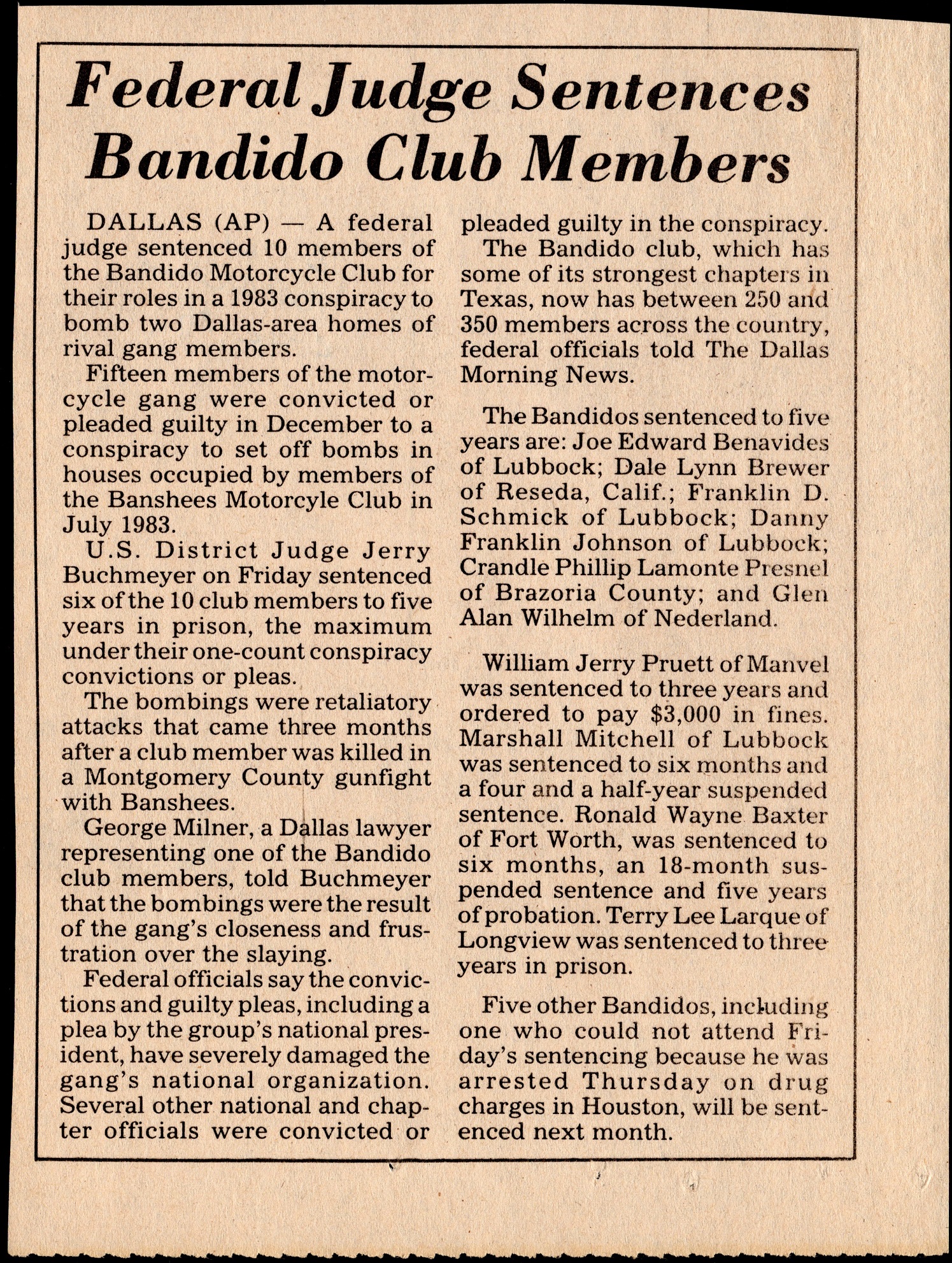
And of course, there was retaliation, as seen in this undated clipping circa 1989, following several bombings of rival club members’ homes. and vehicles.

Sadly, although the Nordic and Canadian Wars have died down, and wholesale slaughter a la Laughlin and Twin Peaks is no longer the rule of the day, there are still too many dust-ups like Porter, too many barroom brawls and killings, and retaliatory strikes, and revenge for those retaliatory strikes, and paybacks and drive-bys and so on and so on…. ad nauseam.

Maybe someday this bullshit really will be past.

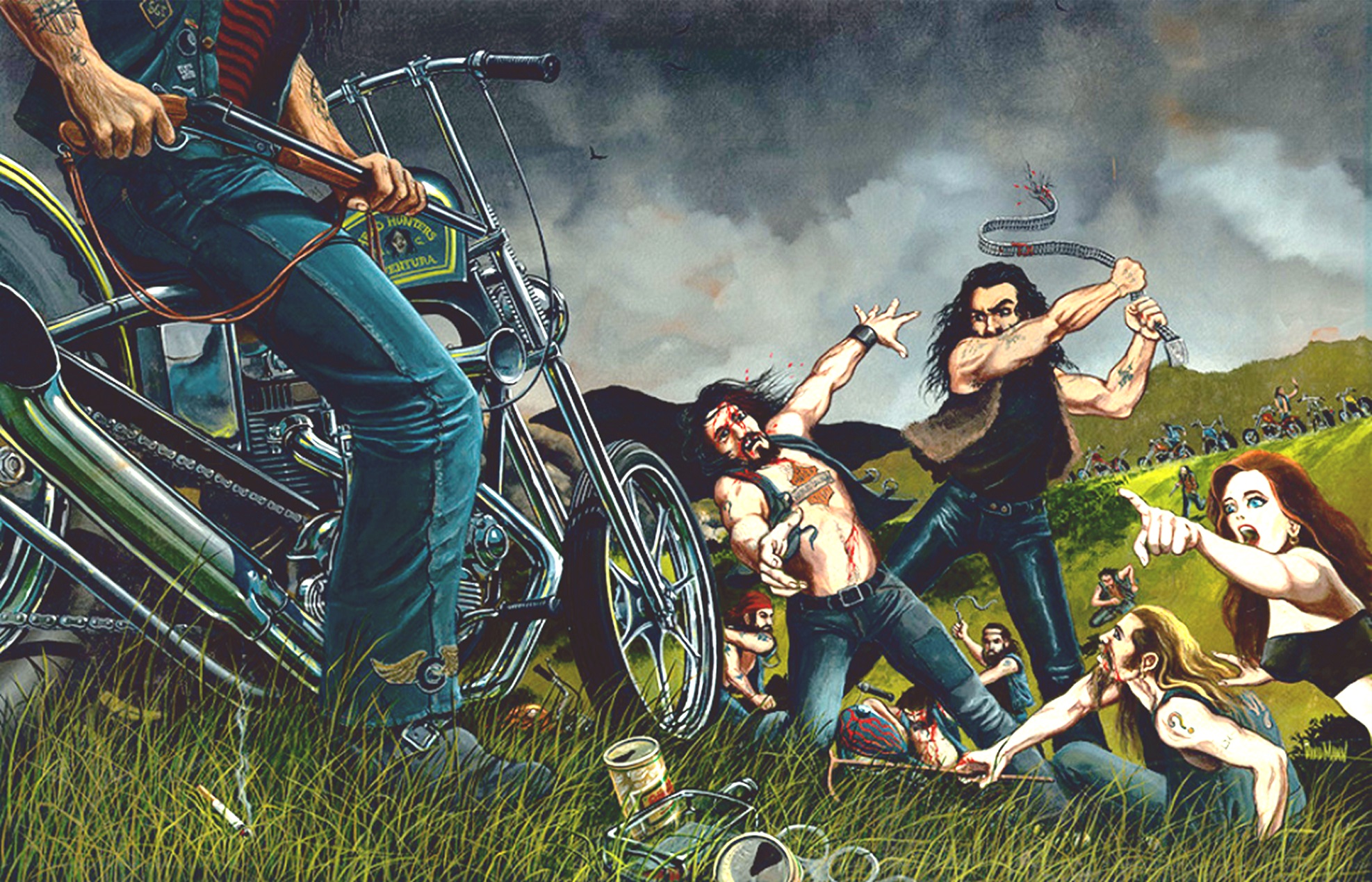
Finally, here is the artwork as it first appeared on Dave Mann’s easel. George Christie, former President of the Hells Angels Motorcycle Club’s Ventura, California, charter, and now an accomplished author and podcaster, owns the original painting, and offers prints for sale through his website at http://www.georgechristie.com/. I wouldn’t mind owning one, just for its value as documentation of our history as bikers, but I wouldn’t want it hanging on my wall with my numerous prints of more serene works by David Uhl, James Guรงwa, Norman Bean, Amanda Zito, et alia…. and that’s assuming Jackie didn’t brain me for even thinking about displaying that violent imagery in our home! ๐Ÿ˜

Since I’ve written about my collection, and art in general, I think my next entry might be a tour of MMMoMMA, also known as ‘My Miniature Museum of Modern Motorcycle Art.’ Maybe I’ll start with my visit to the actual MOMA in New York, and its exhibit of automotive and motorcycle art, and follow the trail through motorcycle museums at Anamosa, Iowa, and Maggie Valley, North Carolina, all the way back to Austin, home of the aforementioned and as-yet-not-world-renowned MMMoMMA. Watch this space! ๐Ÿ˜Ž

A sneak peek at part of My Miniature Museum of Modern Motorcycle Art, located on the banks of scenic Little Walnut Creek in beautiful downtown Northeast Austin…. Texas, that is. ๐Ÿค 

๐Ÿ˜Ž

P.S.: I thought y’all might be interested in two other facts about the incident at Porter, cited above.

First, while violence did erupt between two rival motorcycle clubs, it had been a gentlemanly fistfight – a good old-fashioned punch-up, as the Brits call it – until the security guard hired by the event promoter allegedly waded into the crowd of brawling bikers, pulled his sidearm and fired a couple of rounds in the air. It always worked in the movies, right? However, in Porter, on hearing gunfire, the brawlers simply assumed the fight had escalated. Weapons were produced, shots fired, and, well…. you know the rest.

Second, about those 1988 arrests referenced in the sentencing article: Those arrests took place on April 30, 1988; five years to the day from the incident at Porter, but also the very day the Motorcyclists’ Rights Organization I was a state officer with had scheduled a statewide Motorcycle Safety and Awareness Rally. We had ambitiously slated massive gatherings in Amarillo and Galveston, and at the State Capital in Austin, to press for better awareness of motorcyclists in traffic and improved rider education. We hoped, of course, to make a good impression on the press – rarely kind to us during our legislative efforts – and perhaps convince the motoring public at large that we were just fun-loving motorcyclists, and not an existential threat to their safety.

How far do you suppose that pipedream got when we had to share our coverage on the evening news with reports of mass arrests, bombings, shootouts and the like? To this day, I wonder if the cops didn’t time those arrests for that day, just so they could upstage our event! ๐Ÿ˜’

SONNY BARGER (October 8, 1938 – June 29, 2022)

Sonny Barger joined the Hells Angels Motorcycle Club the same year I was born, and was still a member in good standing when he passed away on June 29th, 2022. That’s one long career!

Myself, I never met the man – to the best of my knowledge I never met any member of his club – but Barger was still a big influence in my life. He features prominently in Hunter S. Thompson’s Hell’s Angels: The Strange and Terrible Saga of the Outlaw Motorcycle Gangs (Random House, 1967) and parts of Tom Wolfe’s The Electric Kool-Aid Acid Test (Farrar Straus Giroux, 1968), and my nascent view of what it meant to be a motorcyclist – the life path I’d already chosen for myself – was informed by Barger’s and his brothers’ exploits. Not for me the ‘nicest people on a Honda’ as the infamous mid-’60s advert suggested. I would be a biker….

….and that’s what I did.

HELLS ANGELS ATTACH ANTIWAR PROTESTERS, AND SONNY LEARNS HOW TO USE THE PRESS

Aside from Evel Knievel, who was much more masochist than motorcyclist, Sonny Barger is assuredly the most famous biker in the world, and was in the news numerous times throughout his tenure. For example, after members of the Oakland chapter of the Hells Angels, which Sonny served as President, broke up an antiwar demonstration in October, 1965, Sonny held a press conference in which he foreswore violence against future protests because ‘Any physical encounter would only produce sympathy for this mob of traitors.’ He also read a telegram he’d sent then-President Lyndon Johnson, volunteering his club brothers for ‘behind the line duty in Vietnam’ as ‘a crack group of trained gorillas [sic]’ who would ‘demoralize the Vietcong and advance the cause of freedom.’

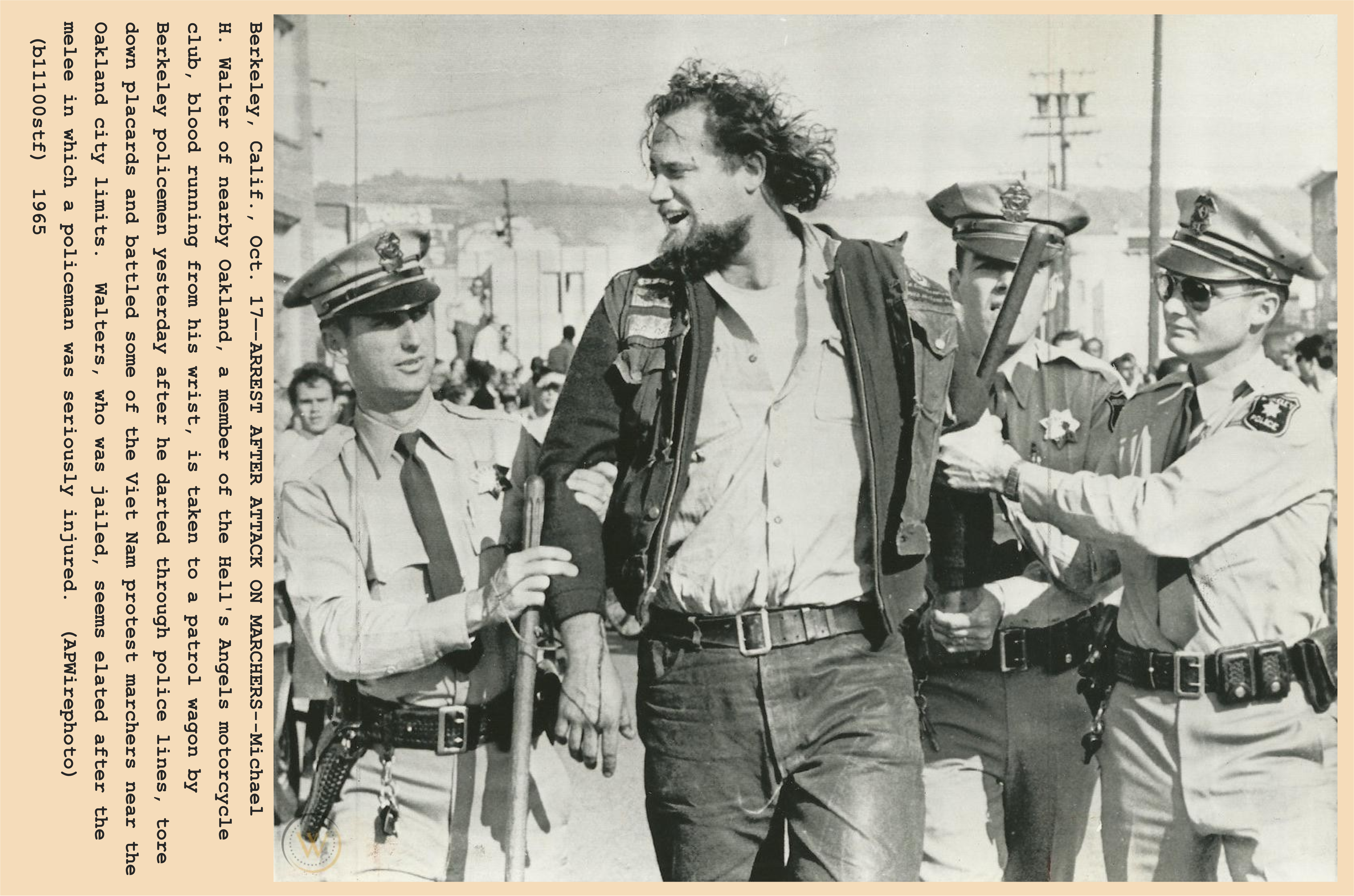
Hells Angel MC member Michael Walter is led away after attacking antiwar protesters in 1965.
Sonny Barger holds press conference in November, 1965, to renounce violence against antiwar protesters and read a telegram sent to President Lyndon B. Johnson. He suggested Hells Angels members serving as ‘a crack team of trained gorillas [sic] would demoralize the Vietcong and advance the cause of freedom.’

ALTAMONT FREE CONCERT, DECEMBER 6th, 1969

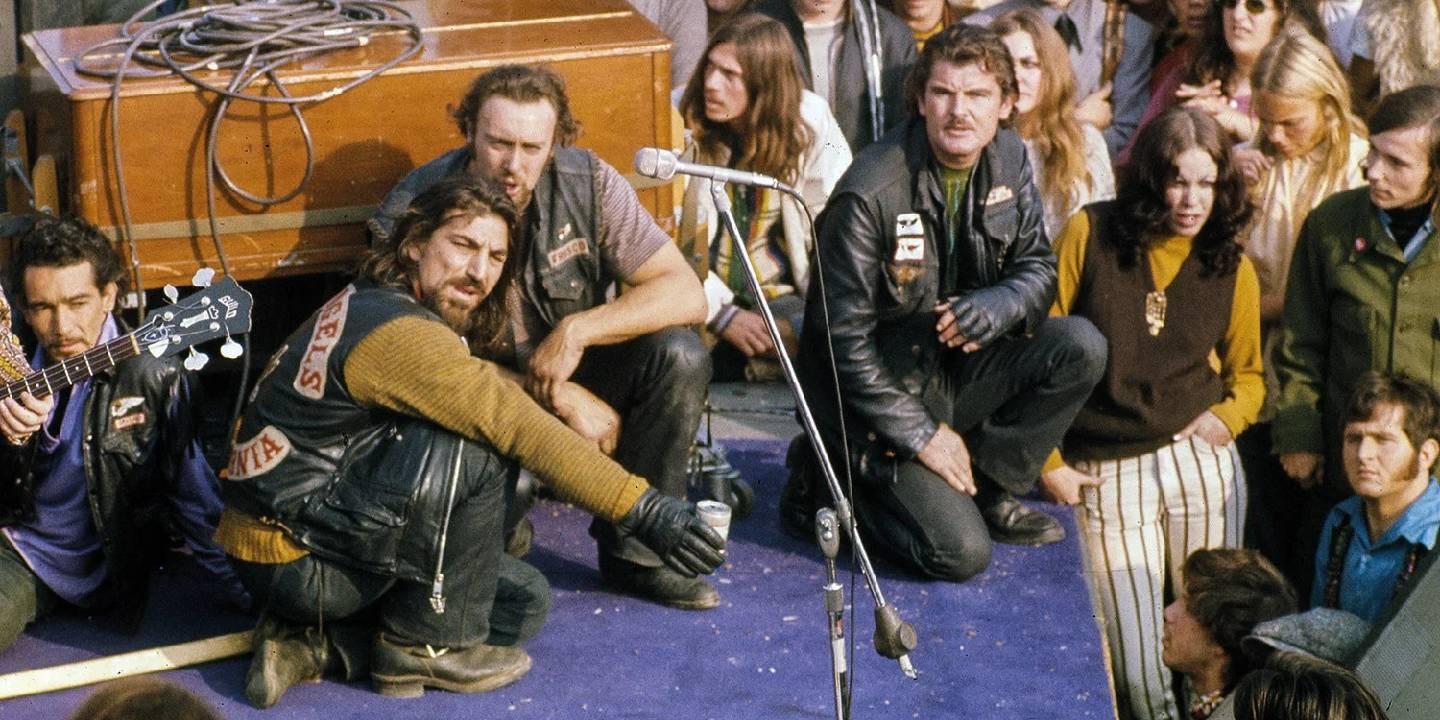
Hells Angels members on stage at the Altamont Free Concert, December 6th, 1969.

Sonny was also the voice of the Hells Angels after the disastrous Altamont Speedway concert in December, 1969, which resulted in the stabbing death of an eighteen-year-old African American named Meredith Hunter. Although accounts differ as to why they were present, the Angels had been sitting on the front edge of the low-slung stage, acting as a human barrier between the crowd and the performers. Hunter, who had been tossed off the stage by Hells Angels during a previous altercation, returned with a handgun and began waving it around, firing at least one shot into the crowd. Hells Angel member Alan Passaro stabbed and disarmed Hunter, who later died of his wounds.

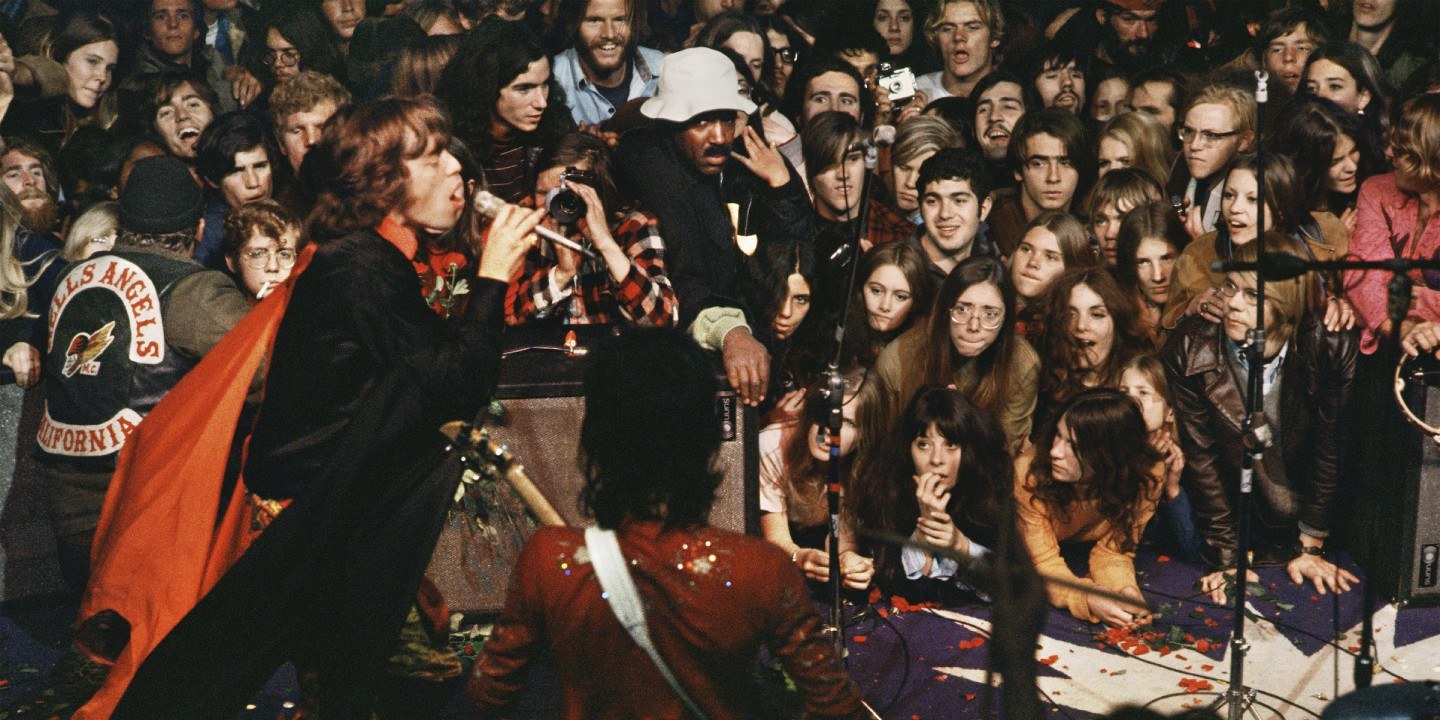
Rolling Stones singer Mick Jagger prances on stage surrounded by Hells Angels MC members. So many mistakes in such a tiny space — stage built too low to the ground, inadequate professional security to protect performers and equipment, the band’s lengthy delay in starting their set (reportedly because Jagger wanted cover of darkness to go with his ‘Satanic’ imagery) — but the biggest mistake of all was the band’s assumption that American Hells Angels would be the same relatively mild-mannered rough boys as their British counterparts. The Stones had used UK Angels as security at concerts over there, and took for granted that these California blokes would be just as obliging and well-behaved. ๐Ÿ™„

The next morning, as the talking heads on local radio station KSAN attempted to unravel the chaotic stream of events, Sonny Barger called in and gave his club’s side of the story – the only official statement the club ever offered about the concert or the killing. Barger defended his patch holders, telling radio host Stefan Ponek ‘You can say anything you want and you can call them people flower children and this and that, and there was three hundred thousand people there approximately or whatever they say, and I guarantee you that the largest majority of them were there to have a good time, but there was a couple thousand of them that was there looking for trouble.’

Jagger tried to coax the crowd — which had been drinking, drugging and brawling in the hot sun all afternoon — into mellowing out and behaving like good little flower children…. to no avail.

Brushing aside the host’s attempt to cut in, Barger went on to say ‘Some of them people out there ain’t a bit better than what some of the people think of the worst of us, man, and it’s about time they realized it….’

In this screenshot from the documentary Gimme Shelter, ill-fated Meredith Hunter, in the pistachio green suit can be seen brandishing a pistol as his girlfriend Patty Bredehoft, in the white crochet vest, attempts to calm him. Witnesses claim Hunter fired into the crowd, and Barger alleges that an Angel was struck by a bullet from Hunter’s firearm.

The incident at Altamont and Barger’s telephone call to the radio station were captured on film by documentarians Albert and David Maysles and Charlotte Zwerin, and the resulting movie, Gimme Shelter, was released in 1970. One week after its premiere Hells Angel Alan Passaro went on trial, charged with murdering Meredith Hunter. However, when the film was played in court, it clearly showed Passaro acting in defense of self and third parties, and he was acquitted of all charges.

In this screenshot from the documentary Gimme Shelter, Meredith Hunter is taken down by Hells Angel Alan Passaro.
It annoys the fuck out of me when I hear people claim ‘those mean ol’ Hells Angels murdered poor li’l Meredith Hunter.’ ๐Ÿคฌ So far as I’m concerned, Alan Passaro deserved a medal for valor for going up against a wild-eyed gunman, armed with nothing but a knife and brass cojones. His bravery protected his brothers, the performers and stagehands, and every innocent concertgoer in that crowd who could have been wounded or killed by Hunter’s reckless gunplay.
Instead, because he was one of ‘those mean ol’ Hells Angels,’ Passaro was indicted on a charge of murder. However, when the jury say these scenes from the documentary, they voted (quite properly, IMO, to acquit Alan Passaro.
In 1985 Passaro died in a drowning police considered ‘suspicious’ (although no foul play was ever confirmed) but rumors that a second, unidentified assailant may have been involved in Hunter’s death kept the Altamont case open until 2005. In May of that year, the Alameda County Sheriff’s Office dismissed the theory that a second Hells Angel member took part in the fatal scuffle.

HOLLYWOOD CALLS….

American International, filmmaker Roger Corman’s outfit, was responsible for classic biker exploitation films like The Wild Angels, the Peter Fonda/Nancy Sinatra vehicle which helped kickstart the careers of actress Diane Ladd, director Peter Bogdanovich, stuntman Gary Littlejohn, character actor Michael J. Pollard, et alia. Corman was also involce in the production of movies like Devil’s Angels (1967, an underrated classic), Naked Angels (1969), Angels Die Hard (1970), Angels Hard as They Come (1971), The Dirt Gang (1972), The Darktown Strutters (1975, featuring African American women on wildly customized VW-powered trikes! ๐Ÿ˜ฎ ), Deathsport (1978), Fast Charlie… The Moonbeam Rider (1979), The Dirt Bike Kid (1985), The Lawless Land (1988), Nam Angels (1989) and Back to Back (1989).

Given the Hells Angels’ hard-won reputation as thuggish brutes prone to violence and lawlessness, Barger was preternaturally media savvy – an excellent spokesman for his club and a wily self-promoter. He finagled parts for himself and other Angels in a couple of biker films – Hells Angels on Wheels with Adam Roarke and future Easy Rider star Jack Nicholson, and Hells Angels ’69, starring ’60s heartthrob Jeremy Slate, who later played the biker gang leader in The Born Losers.

In his memoir, Sonny reports that ‘Sweet Cocaine’ (pictured above, on the set of the Hell’s Angels ’69 movie) was stolen while he was running errands one day. A few brutal hours later, he had his bike back, and the thieves were paying a dear price for their poor decision-making.

….BUT SO DO THE COPS

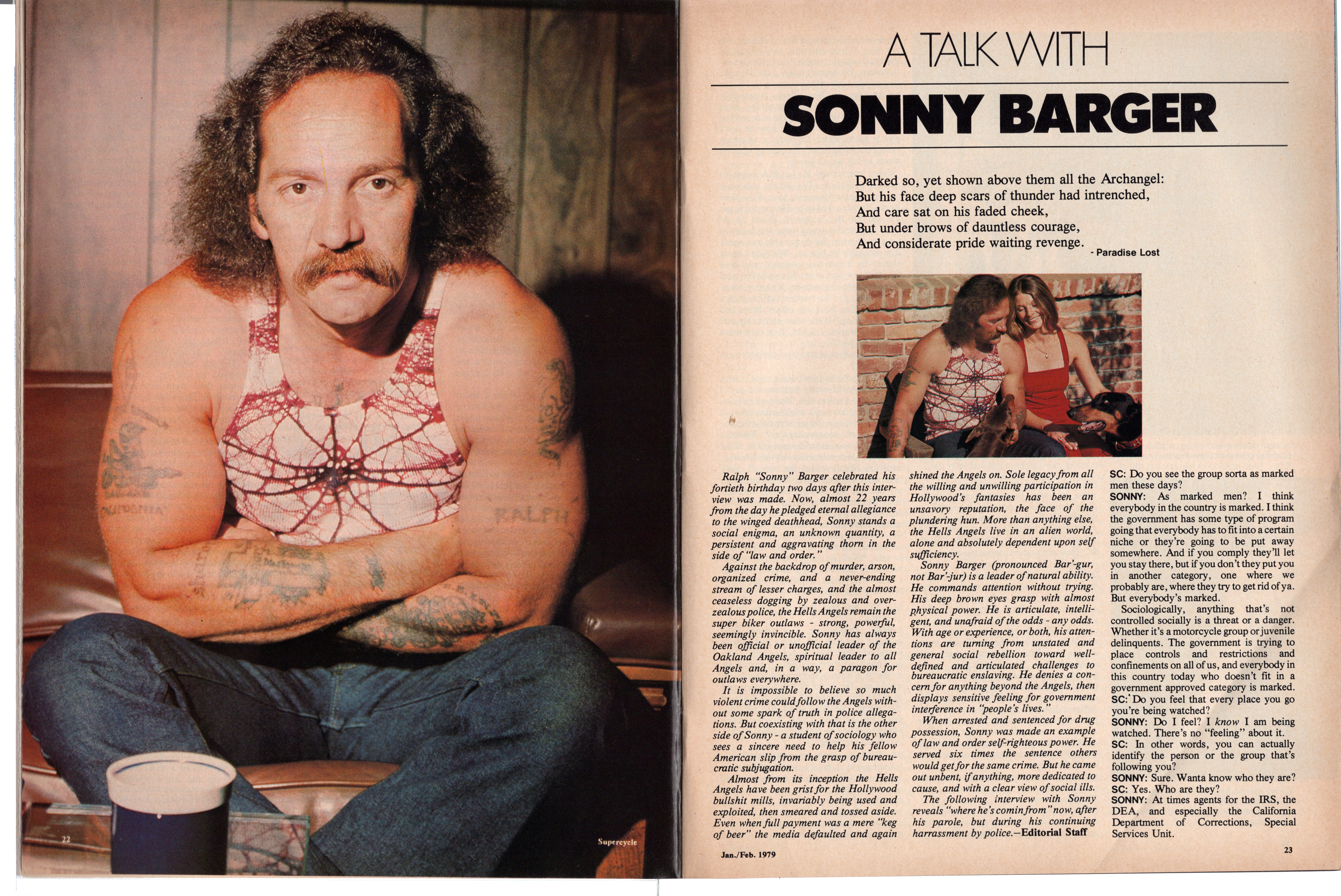
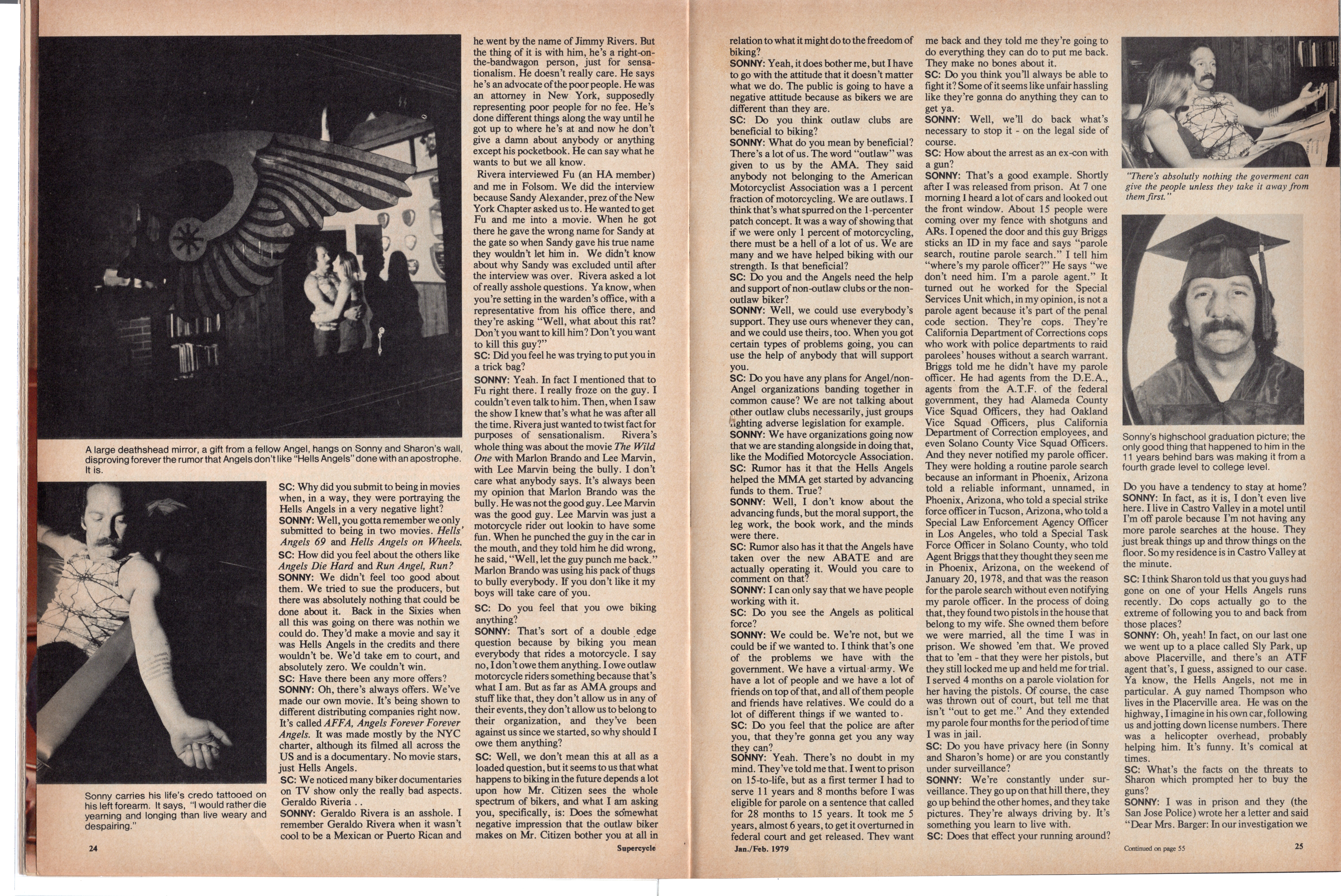
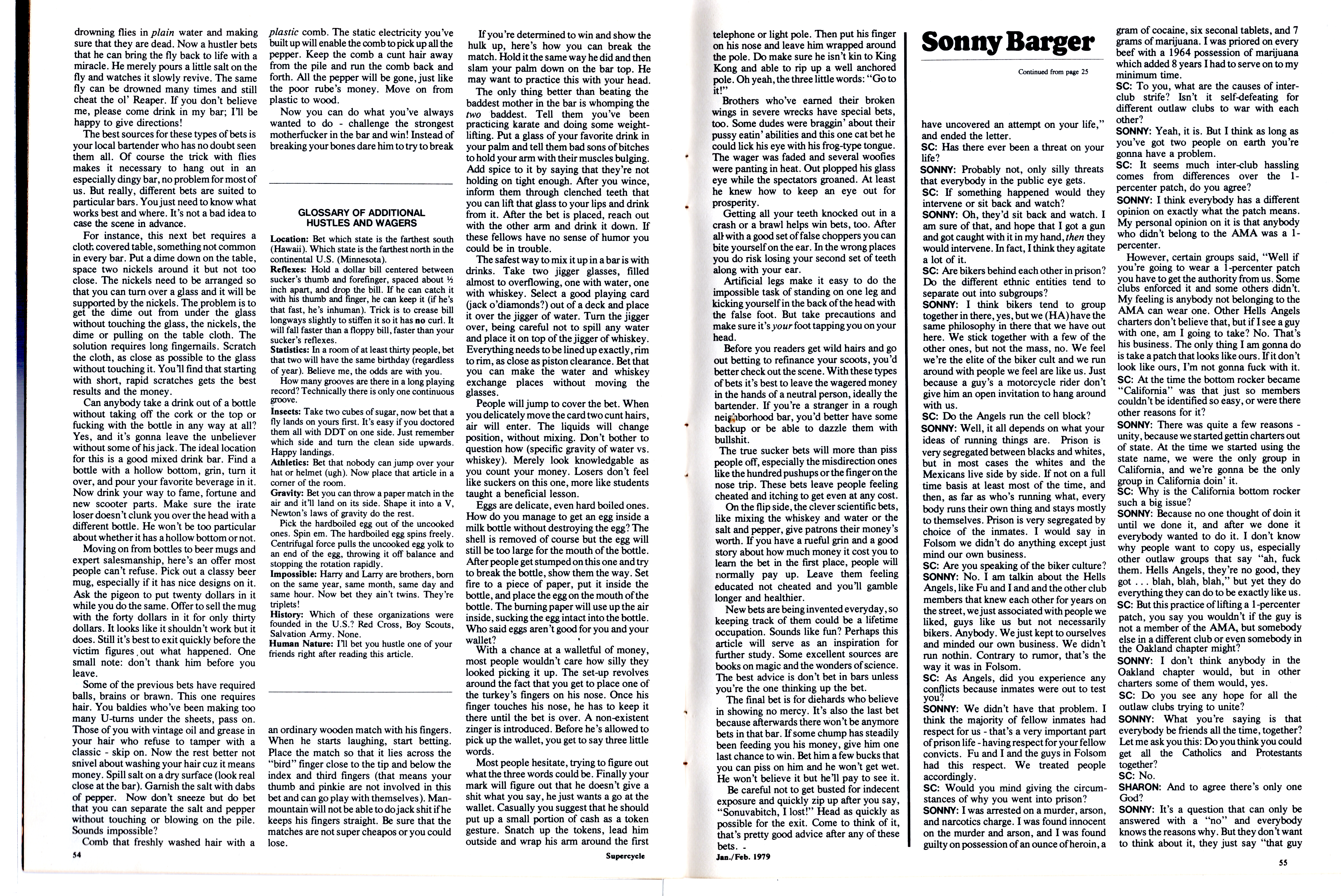
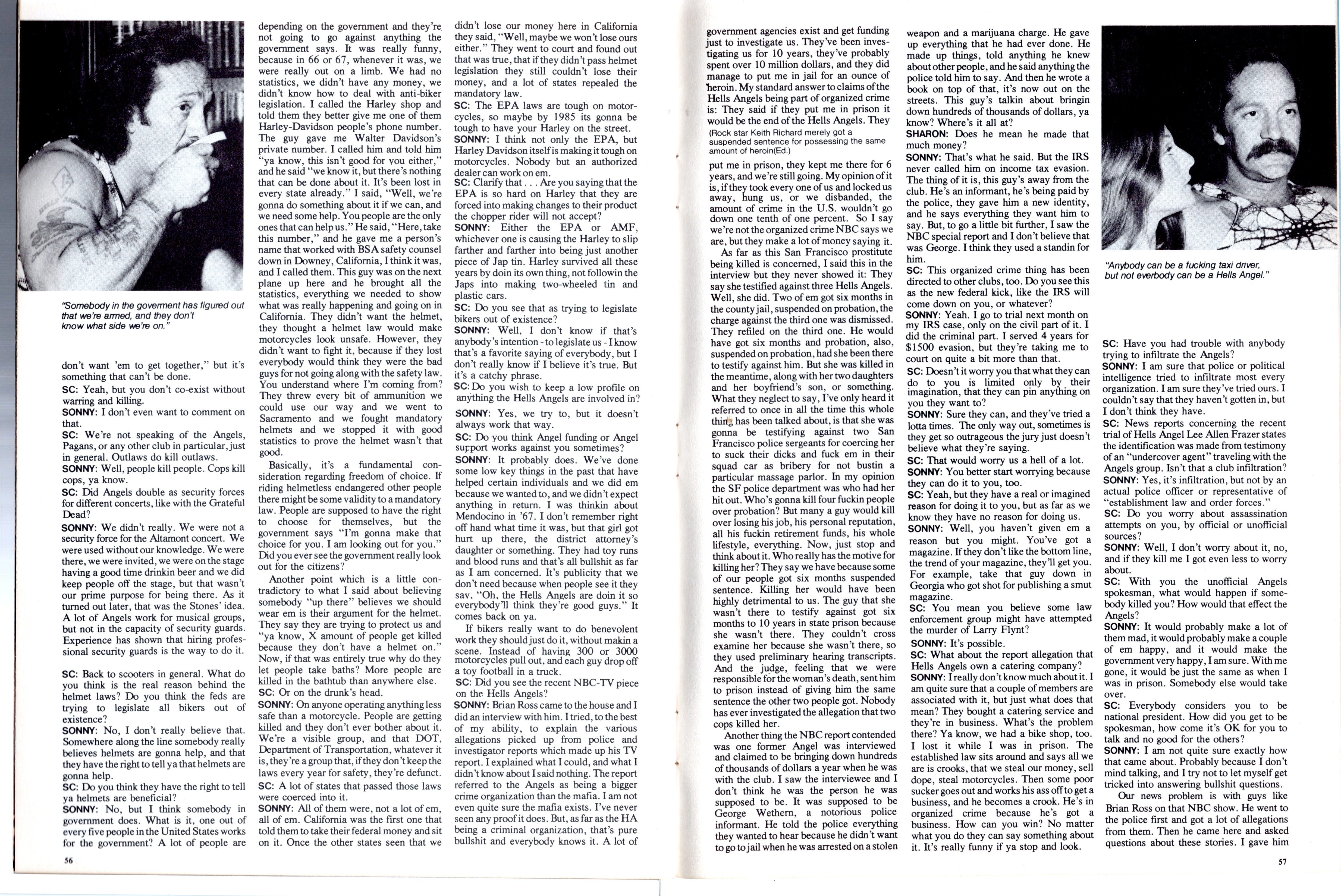
Barger was also in the headlines for numerous arrests on charges ranging from drugs and weapons charges to conspiracy and murder, and, while acquitted of the more serious charges, still spent several years in prison. During this time he gave several interviews to motorcycle magazines, including two for Supercycle, published in February and December, 1979.

Sonny speaks, and the ‘Voice of the American Biker’ listens.

SONNY BECOMES AN AUTHOR

During these years, and despite his numerous legal woes, Sonny discovered that he was a marketable commodity. The ‘Free Sonny’ t-shirts his wife sold during his incarceration were wildly popular, and other merchandise soon followed, but he really hit the jackpot when he teamed up with writers Keith and Kent Zimmerman and penned his memoir, Hell’s Angel: The Life and Times of Sonny Barger and the Hell’s Angels Motorcycle Club (William Morrow, 2000).

The book quickly became a best-seller, so he followed up with two biker-themed crime novels also co-authored by the Zimmerman Brothers – Dead in 5 Heartbeats and 6 Chambers, 1 Bullet (William Morrow, 2004 and 2006). He released a collection of road tales titled Ridin’ High, Livin’ Free: Hell-Raising Motorcycle Stories (William Morrow, 2003) and Freedom: Credos from the Road (William Morrow, 2005). Finally, with Darwin Holstrom, he co-authored Let’s Ride: Sonny Barger’s Guide to Motorcycling (William Morrow, 2010) in which he dissed American motorcycle manufacturer Harley-Davidson, for decades the only motorcycle Hells Angels were permitted to ride. In what can only be seen as heresy by those loyal to the brand, Barger wrote:

In terms of pure workmanship, personally, I don’t like Harleys. I ride them because I’m in the club, and that’s the image, but if I could I would seriously consider riding a Honda ST1100 or a BMW. We really missed the boat by not switching over to the Japanese models when they began building bigger bikes. I’ll usually say “Fuck Harley-Davidson.”

Sonny Barger

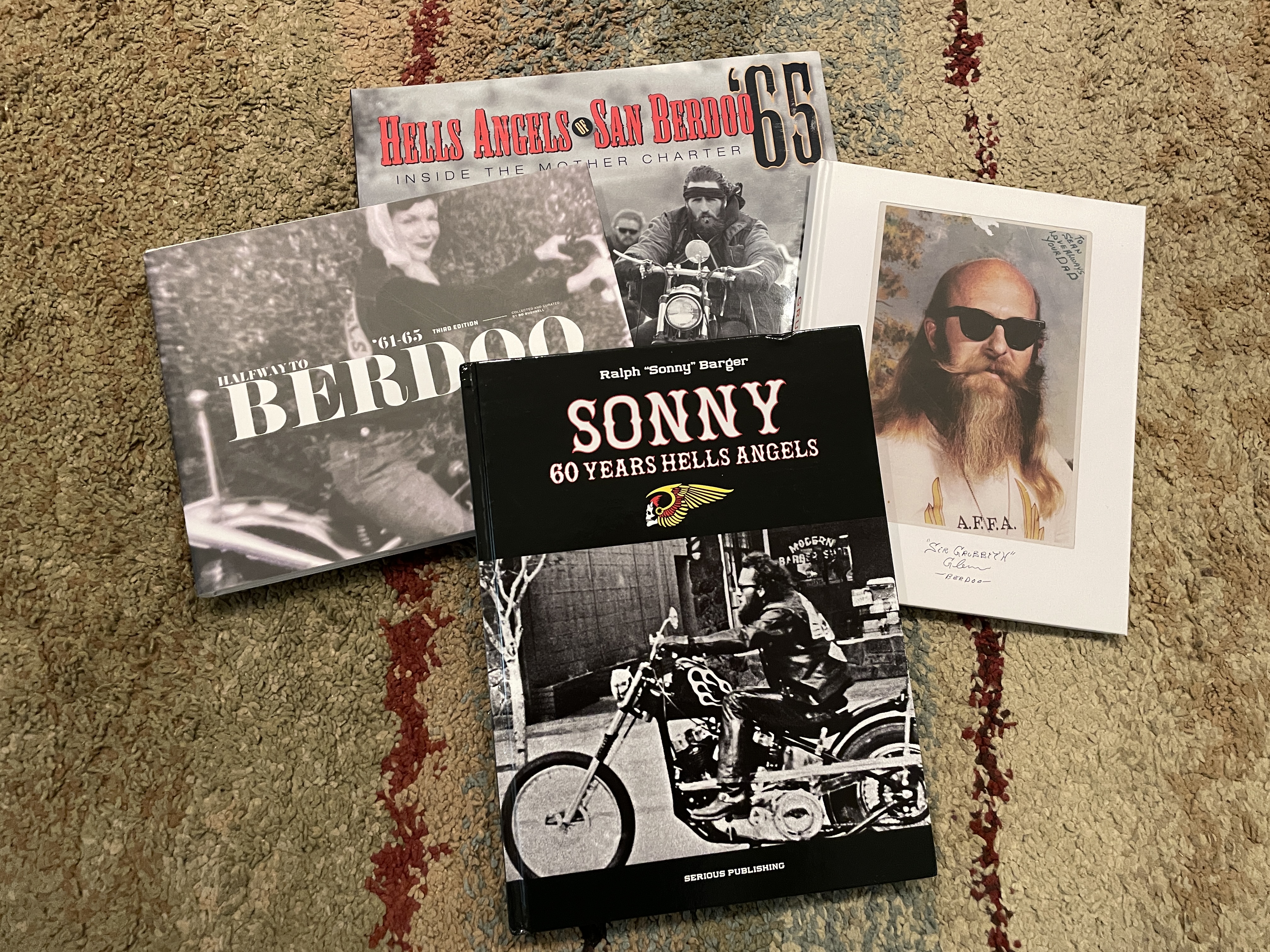
Sonny’s final contribution to the literature of motorcycling seems to be his massive scrapbook-styled tome, Sonny: 60 Years Hells Angels, published by the French imprint Serious Publishing in 2017. Copies are currently listed on Amazon at $357 USD! ๐Ÿ˜ณ I swear, I did not pay even a fifth of that for my copy! ๐Ÿ˜Ž

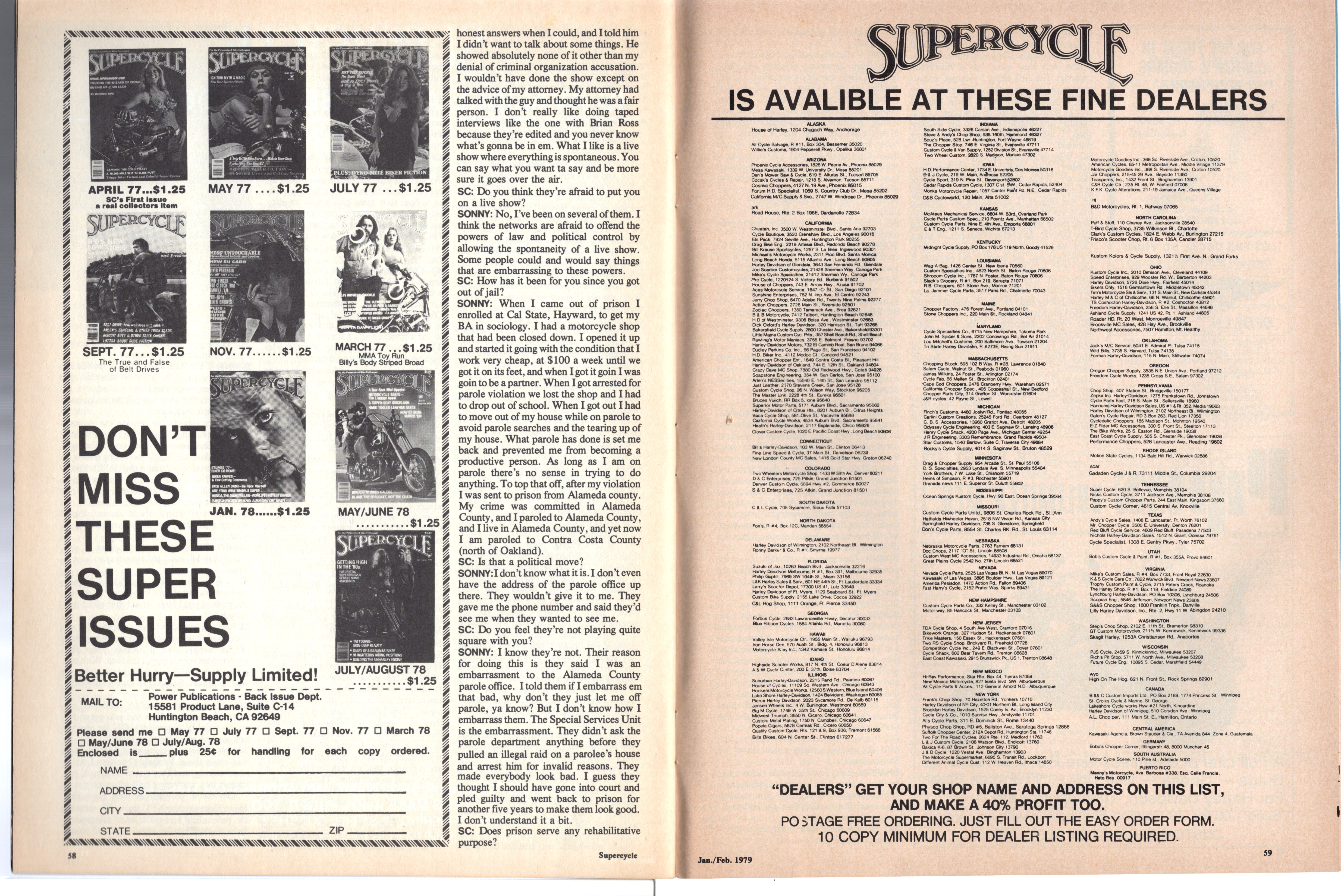
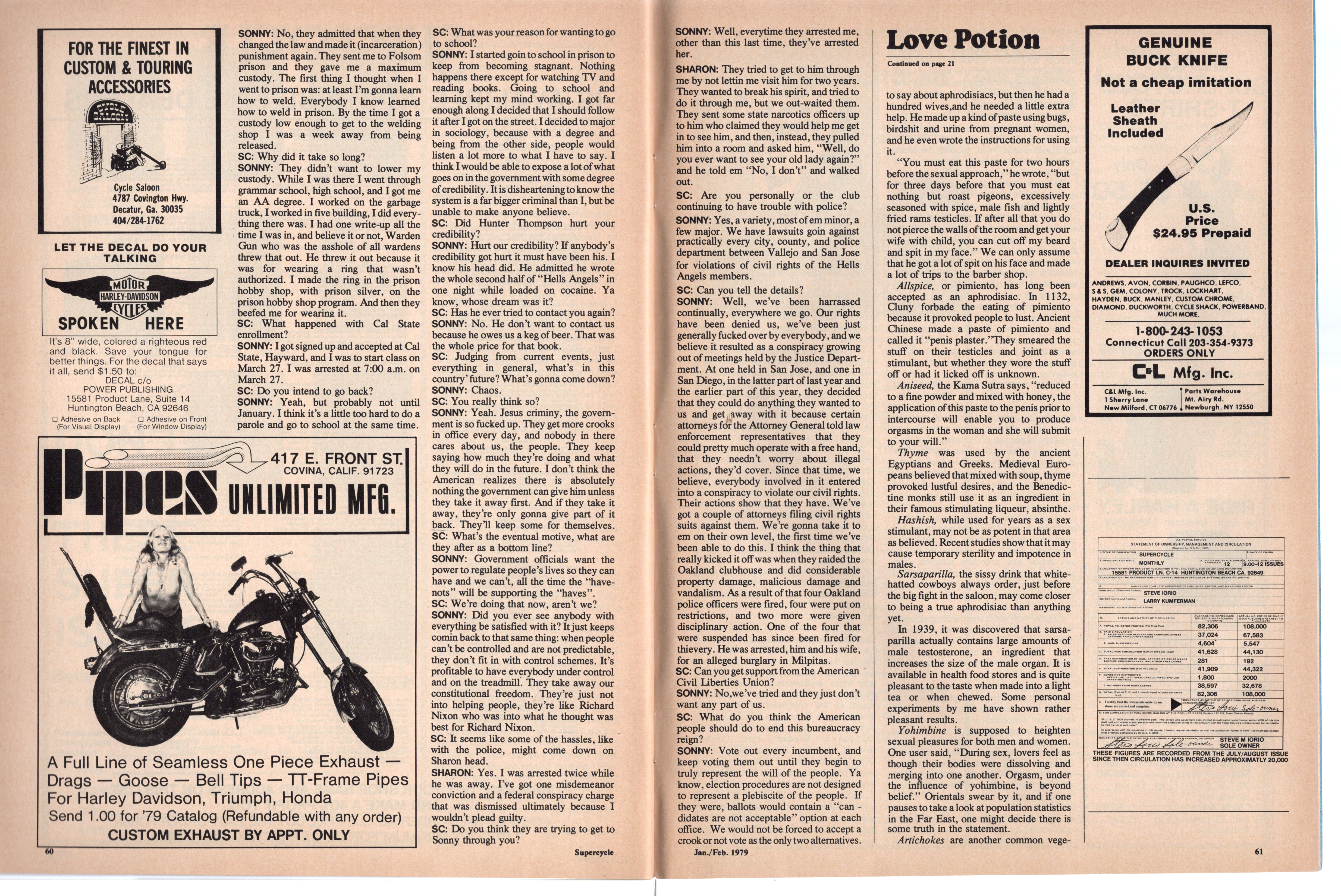
Anyway, here is the first of the two 1979 interviews:

Supercycle, February 1979

If enough folks are interested, I’ll post the second interview soon, along with some other articles about this and other clubs.

AS NOTED ABOVE: I am not associated with the Hells Angels Motorcycle Club (or any other club) and am only posting these images and this information in the interest of preserving and sharing the collective culture and history of the motorcycling world for historians and bikers like me, who are fascinated by it all. Slรกinte!